News
What Is FPC in an LCD Display? When Do You Need a Custom FPC?
What Is FPC in an LCD Display? When Do You Need a Custom FPC?
When selecting an LCD display, engineers usually focus on key specifications such as display size, resolution, brightness, interface, and operating temperature.
However, during actual product development and system integration, a common problem can occur:
The LCD display meets all the required specifications, but it cannot be properly connected or installed in the final product.
In many cases, the problem is not the LCD panel itself. Instead, the FPC (Flexible Printed Circuit) may not be compatible with the customer's mainboard or mechanical structure.
So, what exactly is an FPC in an LCD display? When does an LCD require a custom FPC? And what can be customized?
This article explains LCD FPC design and customization from a practical product integration perspective.
1. What Is FPC in an LCD Display?
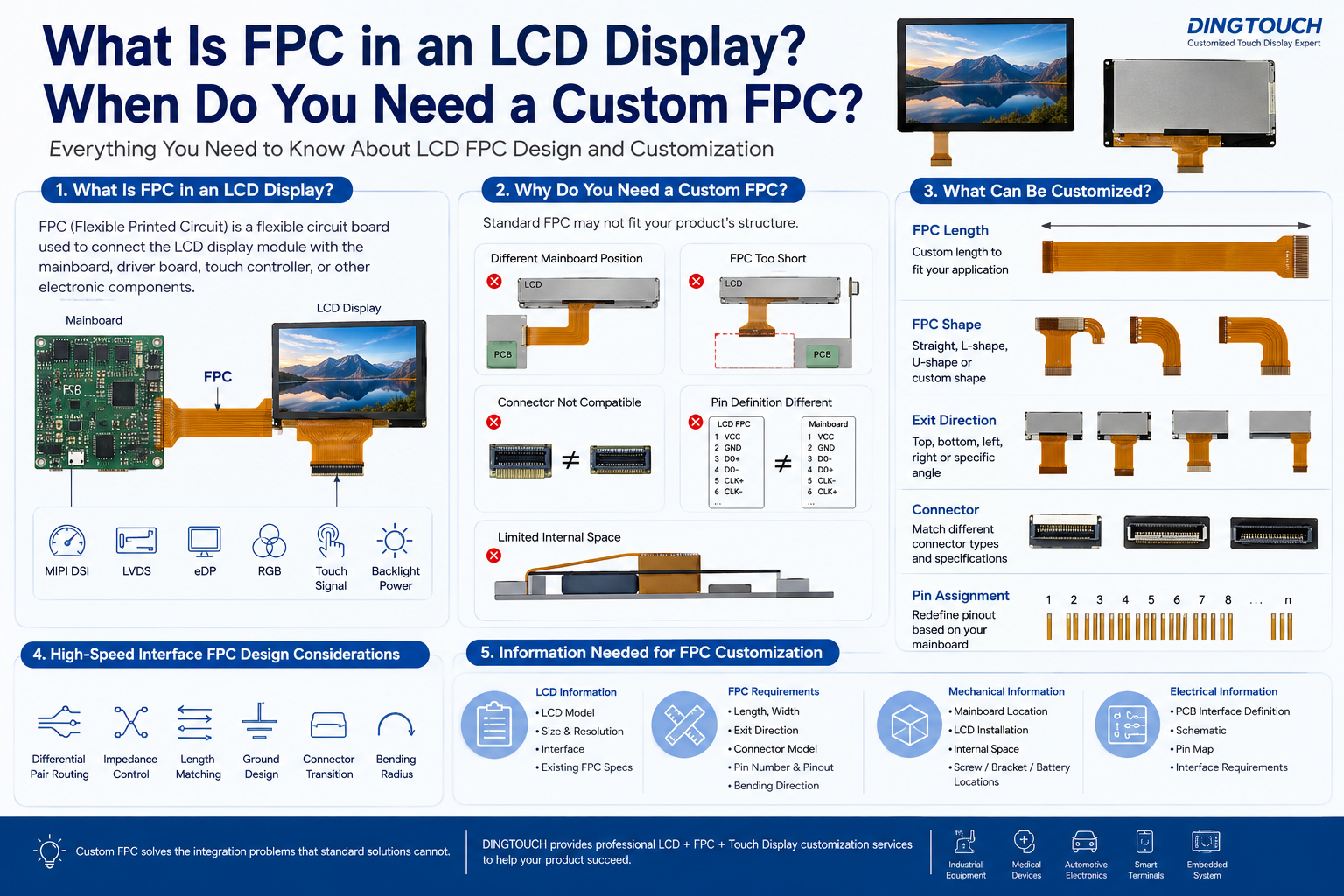
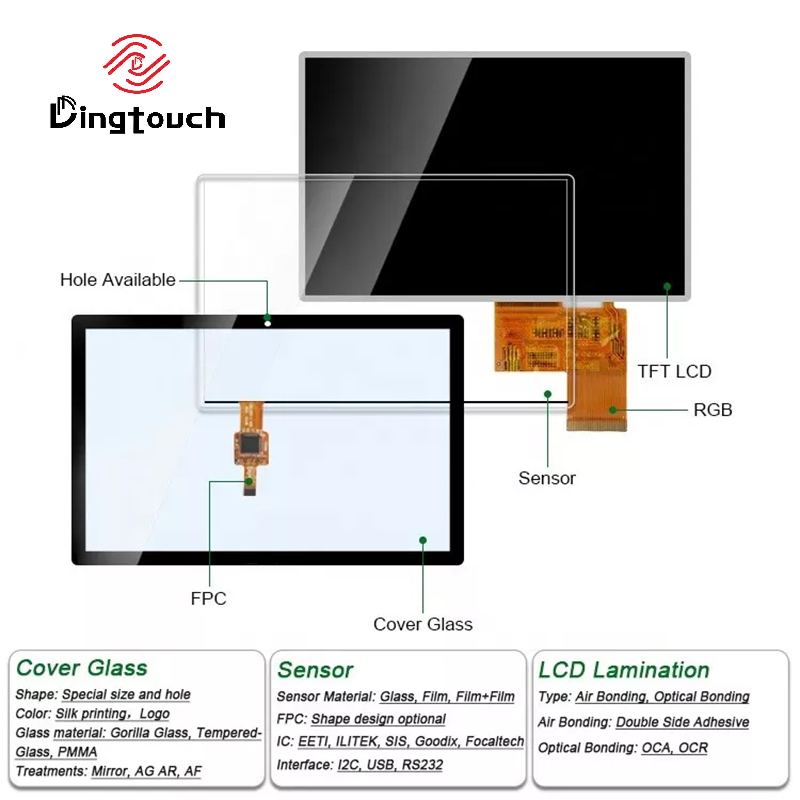
FPC (Flexible Printed Circuit) is a flexible printed circuit board used to electrically connect an LCD display module with a customer's mainboard, driver board, touch controller, or other electronic components.
Depending on the display architecture, the FPC may carry different types of signals, including:
- MIPI DSI
- LVDS
- eDP
- RGB
- I²C control signals
- Backlight power and control signals
- Touch signals
- Power and ground signals
Therefore, an LCD FPC is not simply a "flexible cable."
It is both an electrical connection path and an important part of the mechanical integration between the display module and the customer's product.
For industrial displays, embedded displays, medical equipment, automotive electronics, and smart terminals, proper FPC design can directly affect whether the display module can be successfully integrated into the final product.
2. Why Does a Standard LCD Display Sometimes Need a Custom FPC?
A common question from engineers is:
"If the LCD is already a standard model, why do we need to customize the FPC?"
This is a very common issue during product development.
A standard LCD normally comes with predefined FPC specifications, including:
- FPC length
- FPC width
- Exit direction
- Connector type
- Pin definition
- Number of pins
- FPC shape
- Interface position
These specifications may work perfectly in standard applications. However, they may not match the customer's actual product structure.
Example 1: Mainboard Position Does Not Match
The standard FPC exits from the bottom of the LCD, while the customer's PCB is located on the side.
Example 2: Standard FPC Is Too Short
The standard FPC may be 50 mm long, while the actual distance between the LCD and the mainboard requires an 80 mm or 100 mm connection.
Example 3: Connector Is Not Compatible
The LCD uses one connector specification, while the customer's mainboard uses another.
Example 4: Pin Definition Is Different
The standard LCD pin assignment does not match the customer's PCB interface and needs to be redesigned.
Example 5: Limited Internal Space
The FPC needs to avoid screws, brackets, batteries, or other components inside the product, but the standard FPC cannot be installed properly.
In these situations, the LCD size, resolution, brightness, and display interface may all meet the project requirements, but the display still cannot be directly integrated.
This is where a custom LCD FPC can provide a practical solution.
The purpose of custom FPC design is not necessarily to change the LCD panel itself, but to solve the electrical and mechanical integration problems between the LCD and the customer's product.
 3. What Can Be Customized on an LCD FPC?
Depending on the project requirements, several aspects of an LCD FPC can be customized.
3.1 FPC Length
The FPC length should be determined according to the actual distance between the LCD and the customer's mainboard.
Common customized lengths may include:
- 50 mm
- 70 mm
- 100 mm
- 150 mm
However, longer is not always better.
Increasing the FPC length may affect high-speed signal integrity, EMI performance, mechanical bending, and installation.
Therefore, FPC length should be designed by considering both electrical performance and mechanical requirements.
3.2 FPC Width and Shape
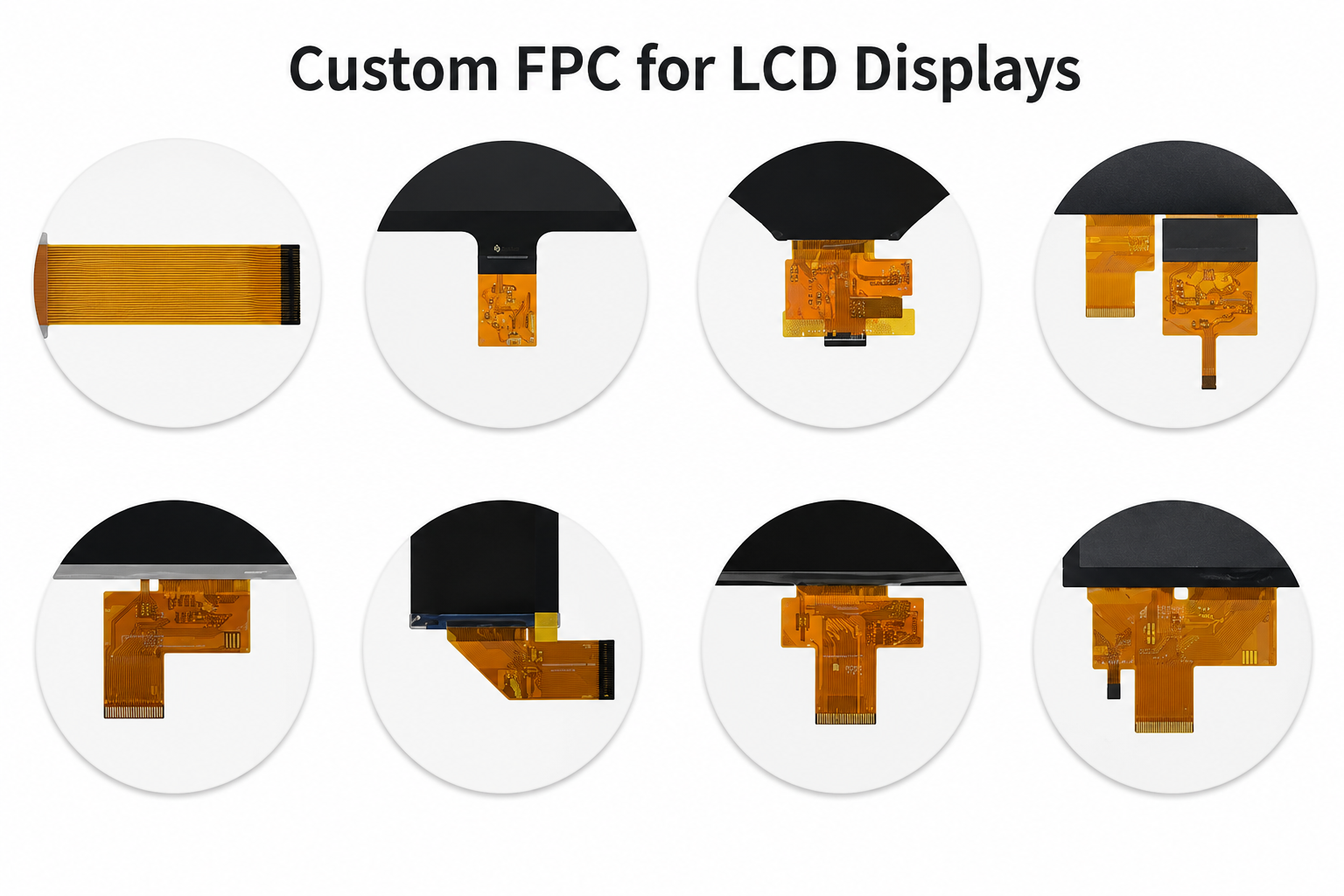
The FPC shape can be customized according to the available space inside the product.
Possible designs include:
- Straight FPC
- L-shaped FPC
- U-shaped FPC
- Irregular or customized FPC
- FPC with mechanical clearance areas
For compact industrial equipment and embedded products, a properly designed FPC can avoid interference with:
- Screw posts
- PCB components
- Batteries
- Metal brackets
- Housing structures
- Other electronic components
This can make final assembly easier and more reliable.
3.3 FPC Exit Direction
The FPC exit direction is another common customization requirement.
For example, a standard FPC may exit downward from the bottom of the LCD, while the customer's product may require the FPC to exit from:
- The left side
- The right side
- The top
- A specific angle or direction
Changing the FPC exit direction can help the display module fit the internal product structure while reducing unnecessary bending and occupied space.
3.4 Connector Type
The FPC connector must be compatible with the connector on the customer's mainboard.
During customization, engineers may need to confirm:
- Connector manufacturer
- Connector part number
- Number of pins
- Pin pitch
- Insertion direction
- Contact direction
- Connector position
If the standard LCD connector does not match the customer's PCB, a customized FPC may be required.
3.5 Pin Assignment
Different LCD modules can have different pin assignments.
Depending on the display architecture, the FPC may include:
- VCC
- GND
- MIPI data
- MIPI clock
- LVDS data
- Backlight enable
- PWM
- Touch I²C
- Reset
- Interrupt
If the LCD standard pin assignment does not match the customer's mainboard, the FPC can be redesigned according to the actual electrical architecture.
4. What Should You Consider When Designing a High-Speed LCD FPC?
For LCD displays using MIPI DSI, LVDS, or eDP, FPC design becomes even more important.
The FPC itself is part of the high-speed signal transmission path.
Therefore, customizing an FPC is not simply a matter of saying:
"Please make the FPC 100 mm long."
The electrical characteristics of the FPC must also be considered.
Important design factors include:
4.1 Differential Pair Routing
High-speed interfaces such as MIPI, LVDS, and eDP commonly use differential signaling. Proper differential pair routing is essential for stable signal transmission.
4.2 Impedance Control
High-speed FPCs require appropriate impedance design and control according to the interface requirements. Impedance discontinuities can negatively affect signal quality.
4.3 Differential Pair Length Matching
Relevant high-speed signal traces should be properly matched in length to reduce timing differences and maintain signal integrity.
4.4 Ground Design
Proper grounding helps improve signal integrity and reduce EMI-related risks.
4.5 Connector Transition
The transition between the FPC traces and the connector can also affect high-speed signal performance and should be considered as part of the overall design.
4.6 FPC Bending
Mechanical bending affects not only FPC reliability but may also influence high-speed signal performance.
Therefore, for high-speed LCD interfaces, electrical design and mechanical design should be considered together.
5. When Should You Choose a Custom LCD FPC?
Not every LCD project requires a custom FPC.
If the standard FPC meets all of the following requirements:
- Suitable FPC length
- Suitable FPC width
- Correct exit direction
- Compatible connector
- Matching pin assignment
- Sufficient installation space
- Suitable bending configuration
- Compatible display interface
then there is usually no need to customize the FPC.
However, a custom FPC may be worth considering when:
| Project Requirement | Custom FPC Recommended? |
|---|---|
| Standard FPC is too short | ✓ |
| Mainboard position does not match the standard exit direction | ✓ |
| Connector is incompatible | ✓ |
| Pin assignment is different | ✓ |
| Internal installation space is limited | ✓ |
| Special bending direction is required | ✓ |
| FPC needs to avoid mechanical structures | ✓ |
| MIPI/LVDS/eDP signal routing needs optimization | ✓ |
| Standard FPC already meets all requirements | Usually not necessary |
Custom FPC is not necessarily better than a standard FPC.
The real value of customization is solving integration problems that cannot be addressed by the standard design.
6. What Information Is Needed for LCD FPC Customization?
If you need an LCD manufacturer to customize an FPC, providing complete project information in advance can significantly improve design efficiency.
LCD Information
- LCD model
- Display size
- Resolution
- Display interface
- Existing FPC specifications
FPC Requirements
- Required FPC length
- FPC width
- Exit direction
- Connector model
- Number of pins
- Pin assignment
- Bending direction
- Minimum bending radius
Mechanical Information
- Mainboard location
- PCB connector location
- LCD installation position
- Available internal space
- Screw post and bracket locations
- Battery and component locations
Electrical Information
- PCB interface definition
- Schematic
- Pin map
- MIPI/LVDS/eDP interface requirements
If the customer can provide PCB drawings, mechanical drawings, 3D files, or internal dimensional information, it will be easier for the manufacturer to design an FPC that accurately matches the final product.
 7. How Can DINGTouch Help With Custom LCD FPC Design?
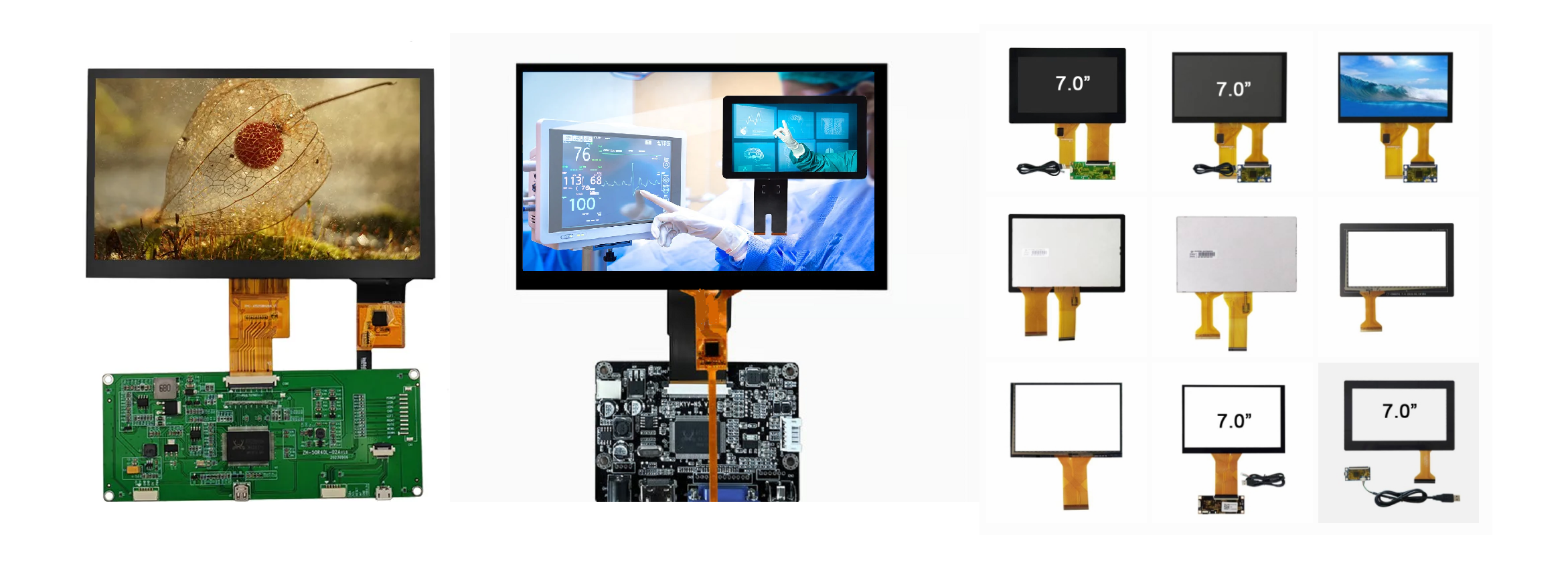
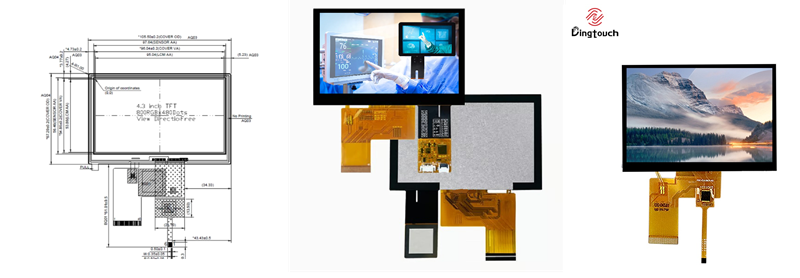
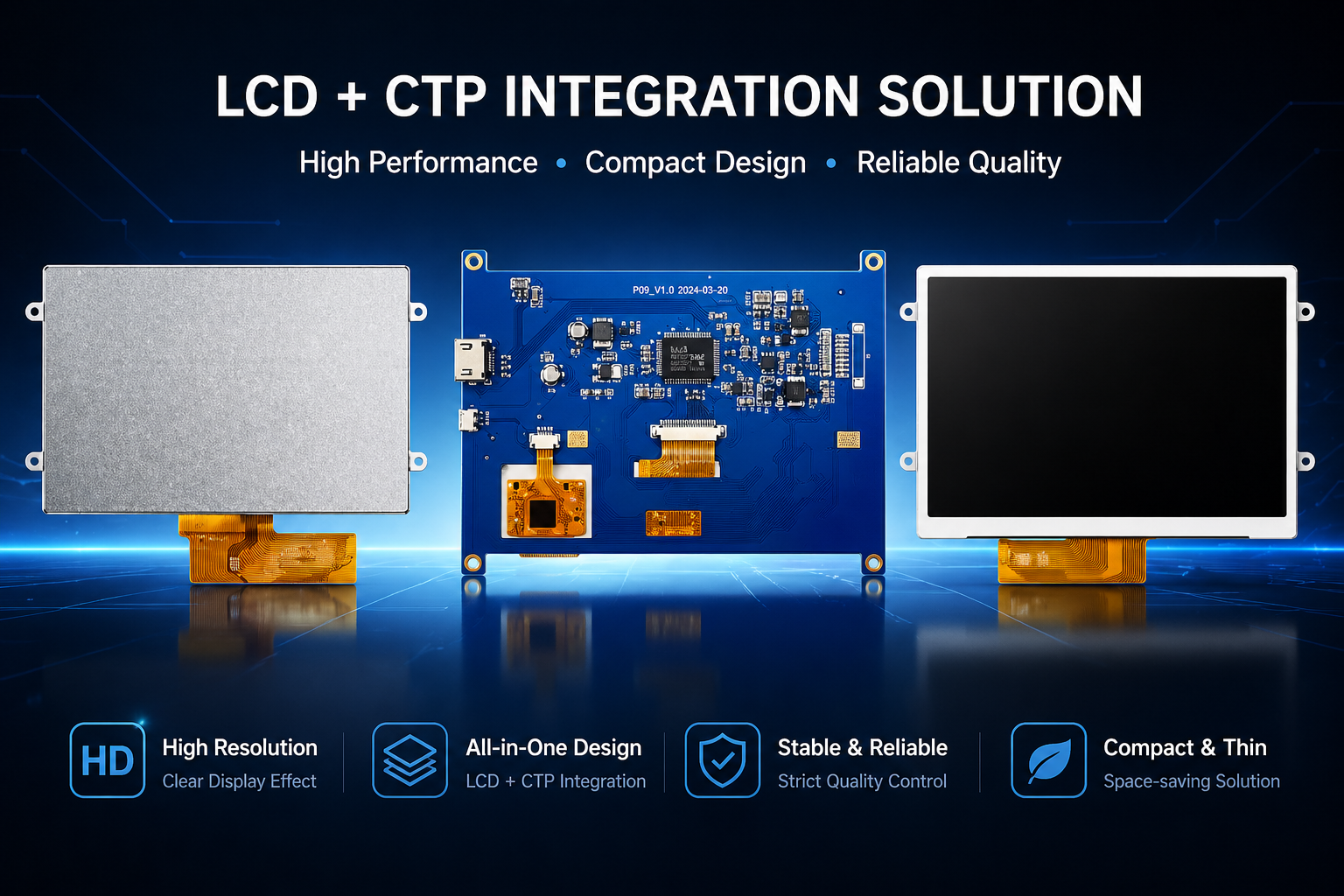
For customers who need a customized display solution, DINGTouch can develop the LCD module according to the actual electrical and mechanical requirements of the customer's product.
Customization can cover:
- LCD size
- Resolution
- Brightness
- Display interface
- FPC length
- FPC shape
- FPC exit direction
- Connector
- Pin assignment
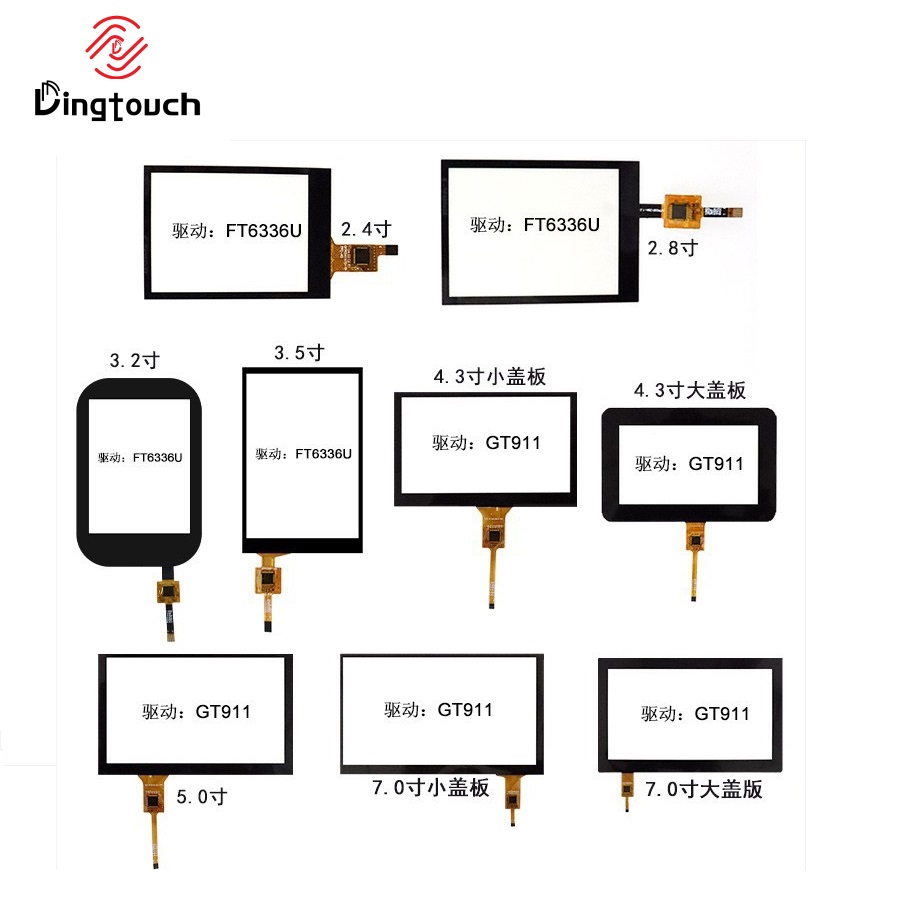
- PCAP touch screen
- Backlight solution
- OCA optical bonding
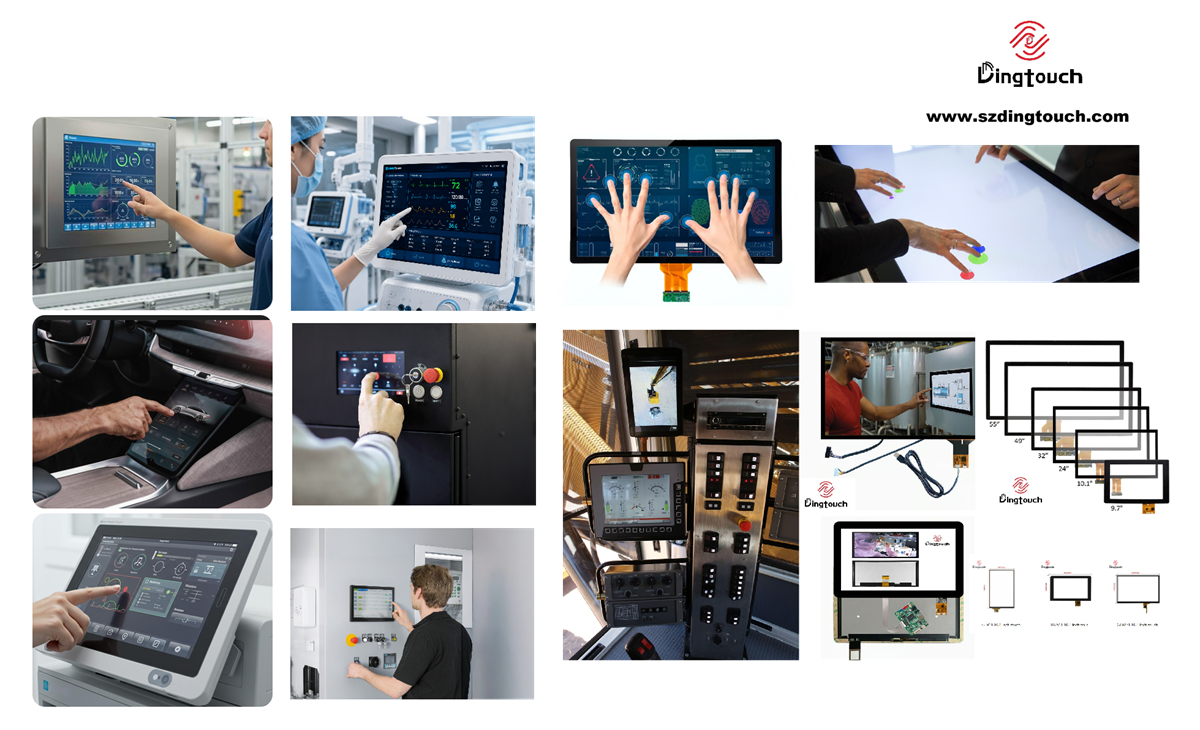
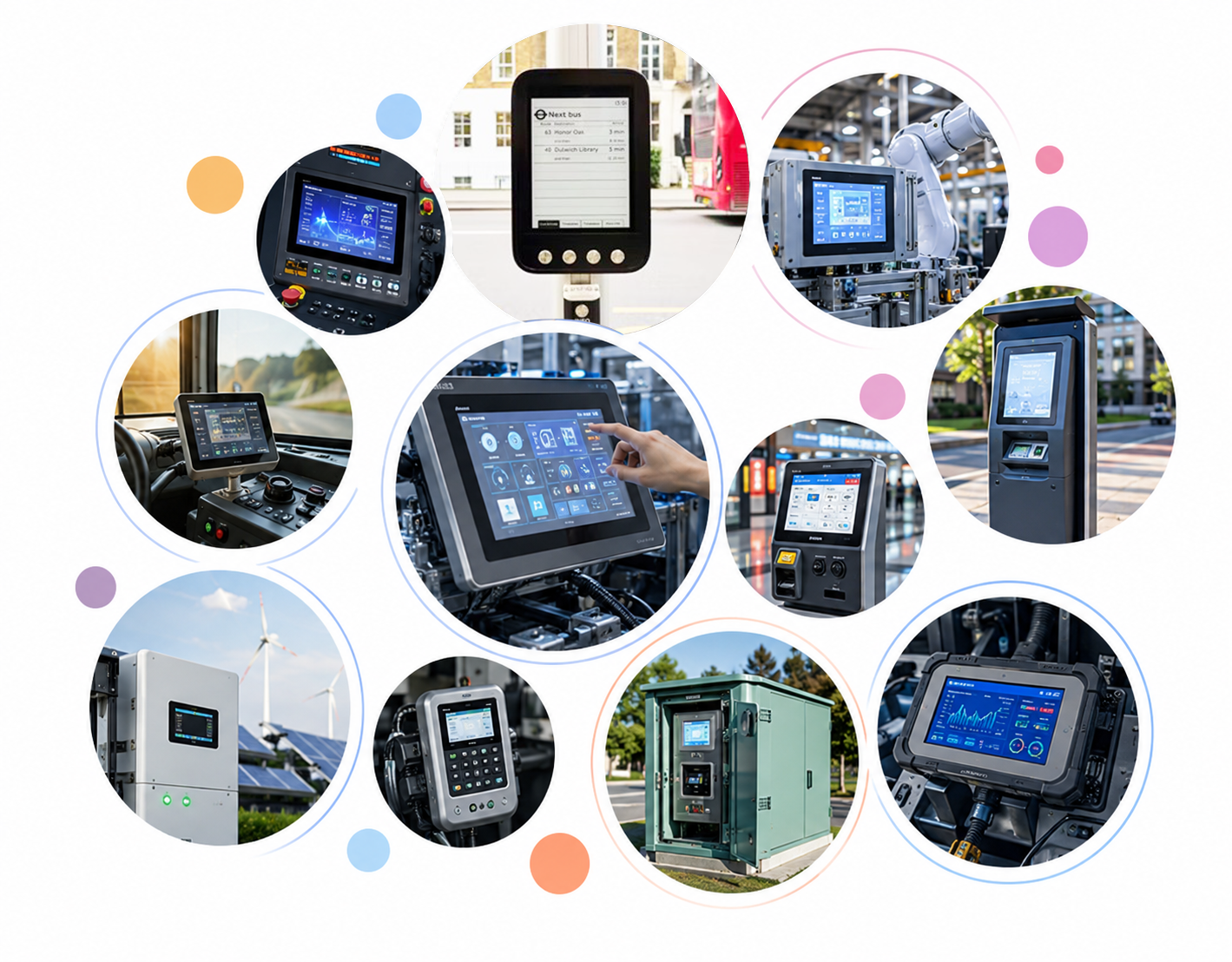
For industrial equipment, medical devices, embedded HMIs, outdoor equipment, smart terminals, and customized display systems, selecting an LCD is only one part of the overall solution.
The LCD, FPC, touch panel, backlight, connector, and mechanical structure all need to work together.
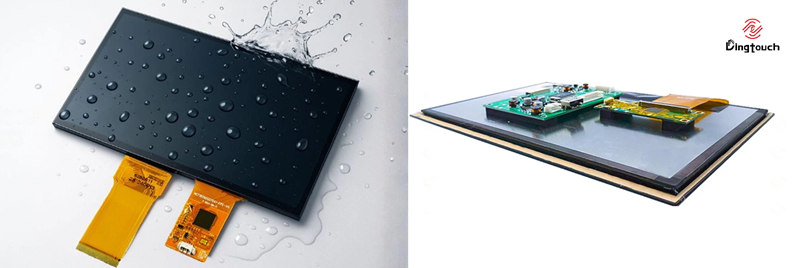
DINGTouch can help customers evaluate these requirements and develop a customized LCD + FPC + Touch Display solution based on the actual application.
8. LCD Display Integration: FPC Is Also a Critical Design Element
Choosing an LCD display is not simply about finding a panel with the right size and resolution.
In real-world product development, a seemingly small FPC issue—such as:
insufficient length, incorrect exit direction, incompatible connector, different pin assignment, or limited installation space—
can prevent a standard LCD from being integrated into the final product.
Therefore, the FPC is both an electrical connection component and an important part of the mechanical integration of an LCD display module.
If a standard FPC meets all project requirements, using the standard solution is usually the most efficient choice.
If the standard FPC cannot meet the customer's electrical or mechanical requirements, a custom LCD FPC can provide a more suitable solution.
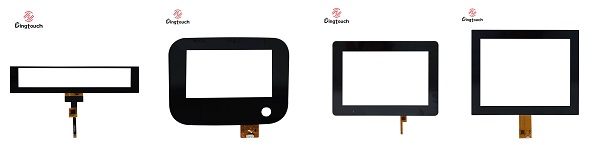
DINGTouch provides customized LCD, FPC, PCAP touch screen, and complete touch display solutions for industrial and embedded applications.
If your project has a situation where "the LCD specifications are correct, but the FPC cannot connect to the mainboard or fit inside the product," you may not need to replace the entire display solution.
In many cases, a properly designed custom FPC can be the key to successful LCD integration.
CATEGORIES
CONTACT US
Contact: Dingtouch
Phone: +8615815536116
Tel: +8615815536116
Email: sales@szdingtouch.com
Add: Building A, Bailu Plaza, No. 48, Gonghe Industrial Road, Gongle Community, Xixiang Street, Baoan District, Shenzhen,China. 518126
 Dingtouch