News
LCD Display Interface Explained: RGB, LVDS, MIPI, eDP, MCU & SPI Selection Guide
 LCD Display Interface Explained: RGB, LVDS, MIPI, eDP, MCU & SPI Selection Guide
How to Choose the Right LCD Interface for Industrial, Medical, Automotive and Smart Devices
In industrial control systems, medical equipment, automotive displays, smart wearables, and commercial display terminals, the LCD screen serves as the visual window of the product, directly affecting user experience, image quality, and system reliability.
When selecting an LCD display, many engineers focus mainly on:
- Screen size
- Resolution
- Brightness
- Touch technology
However, one critical factor is often overlooked — the display interface.
Choosing the wrong interface may result in:
- The display failing to turn on;
- Image distortion or flickering;
- Unstable signal transmission;
- Incompatibility between motherboard and LCD module;
- Increased development time and unnecessary costs.
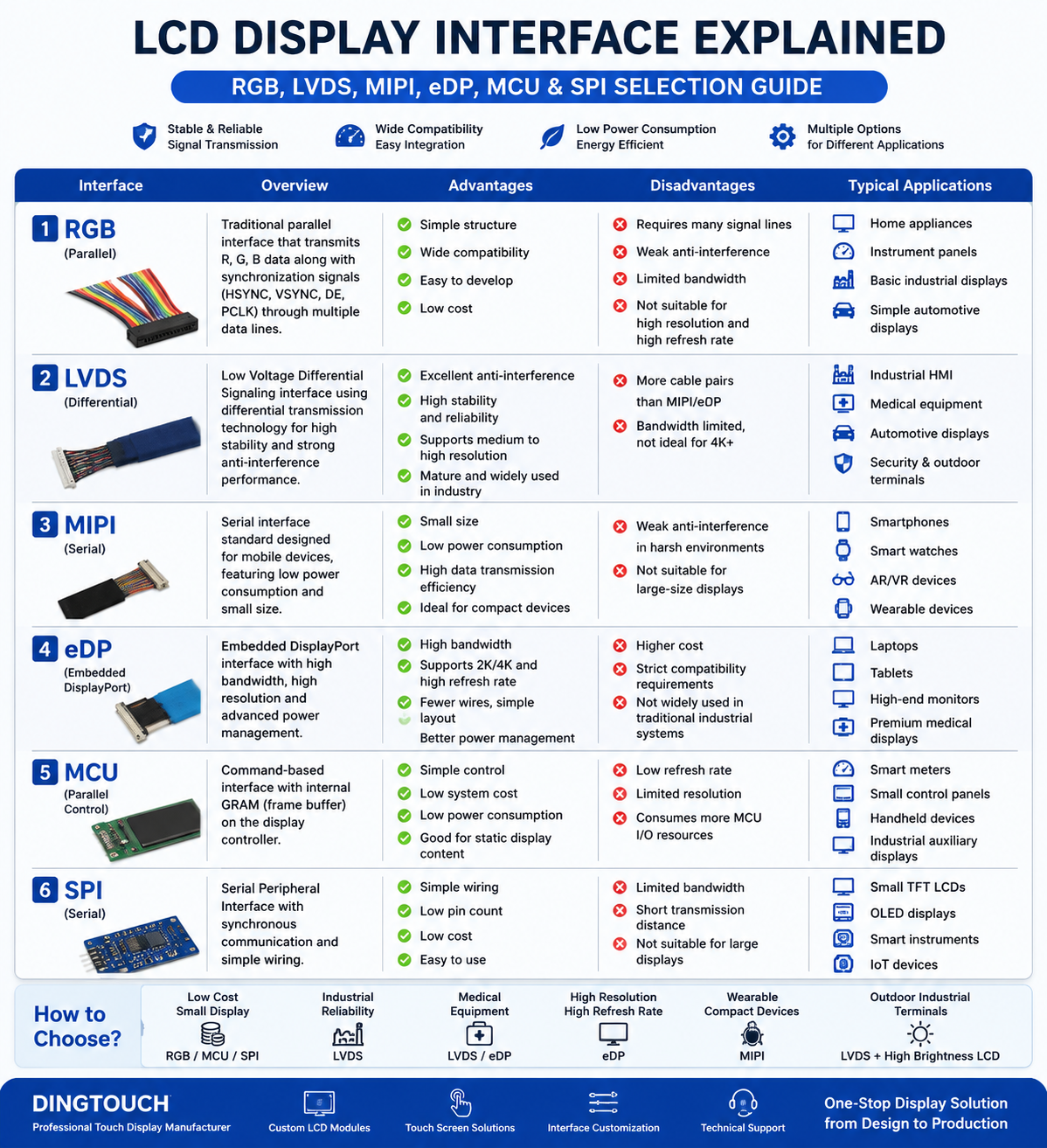
Different LCD interfaces are designed for different application scenarios:
- RGB — Cost-effective solution for basic displays;
- LVDS — The most reliable interface for industrial applications;
- MIPI — Designed for compact, low-power devices;
- eDP — High-resolution and high-refresh-rate display solution;
- MCU/SPI — Common interfaces for small-size LCD and OLED modules.
This article provides a complete explanation of six common LCD interfaces, including their working principles, advantages, disadvantages, and typical applications, helping engineers quickly select the right display solution for their projects.
1. RGB Interface: Simple Structure with Excellent Cost Performance
RGB (Red, Green, Blue) is one of the most traditional LCD display interfaces.
It transmits color data through multiple parallel data lines while also transmitting synchronization signals such as:
- HSYNC (Horizontal Synchronization)
- VSYNC (Vertical Synchronization)
- Pixel Clock
Because of its simple structure and low development difficulty, RGB interfaces are widely used in basic display products.
01 Advantages of RGB Interface
✔ Simple Hardware Structure
RGB directly transfers pixel data without requiring complex conversion chips, reducing hardware design difficulty.
✔ Wide Compatibility
It supports various MCUs, MPUs, and display controllers with relatively simple driver development.
✔ Low Cost
For cost-sensitive products, RGB provides an economical display solution.
02 Limitations of RGB Interface
✘ Requires Many Signal Lines
RGB uses parallel transmission, requiring a large number of data lines, which increases PCB layout complexity.
✘ Weak Anti-Interference Performance
Since RGB uses single-ended signal transmission, it is more sensitive to electromagnetic interference (EMI), which may cause:
- Flickering;
- Horizontal noise lines;
- Image distortion.
✘ Limited High-Resolution Capability
For large-size displays, high refresh rates, and ultra-high resolutions, RGB bandwidth becomes insufficient.
03 Typical Applications
RGB interfaces are commonly used in:
- Home appliance displays;
- Small instrument panels;
- Basic industrial displays;
- Simple automotive display systems.
2. LVDS Interface: The Most Reliable Choice for Industrial Displays
LVDS (Low Voltage Differential Signaling) is one of the most widely used interfaces in industrial, medical, and automotive display applications.
Compared with RGB single-ended transmission, LVDS uses differential signaling technology, greatly improving signal stability and EMI resistance.
01 Advantages of LVDS Interface
✔ Excellent EMI Resistance
Differential signal transmission provides strong resistance against electromagnetic interference, making it ideal for harsh environments.
✔ High Reliability and Stability
After years of industrial application validation, LVDS has become one of the most mature LCD interfaces.
✔ Supports Medium and High Resolution Displays
Common resolutions include:
- 800×480
- 1024×768
- 1280×800
- 1920×1080 Full HD
02 Limitations of LVDS Interface
✘ Larger Cable and Connector Size
Compared with MIPI and eDP, LVDS requires more signal lines and occupies more space.
✘ Limited Bandwidth
For 4K resolution and high-refresh-rate displays, LVDS has limitations compared with eDP.
03 Typical Applications
LVDS is widely used in:
- Industrial HMI displays;
- Medical equipment displays;
- Automotive control panels;
- Outdoor industrial terminals;
- Automation systems.


3. MIPI Interface: The Preferred Solution for Small and Low-Power Devices
MIPI (Mobile Industry Processor Interface) was originally developed for mobile devices and has become a popular interface for compact display applications.
01 Advantages of MIPI Interface
✔ Ultra-Compact Design
MIPI requires fewer signal lines, making it ideal for space-limited products.
✔ Low Power Consumption
It is suitable for battery-powered devices requiring long operating time.
✔ Supports High Pixel Density Displays
MIPI is widely used for small-size high-resolution LCD and OLED displays.
02 Limitations of MIPI Interface
✘ Limited Industrial Adaptability
In strong electromagnetic environments, additional EMI optimization may be required.
✘ Not Ideal for Large Displays
MIPI is mainly designed for small and medium-size displays.
03 Typical Applications
MIPI interfaces are commonly found in:
- Smartphones;
- Smart watches;
- AR/VR devices;
- Wearable electronics;
- Small industrial terminals.
4. eDP Interface: The Future Trend for High-Resolution Displays
eDP (Embedded DisplayPort) is an advanced display interface developed from DisplayPort technology.
It is widely used in high-end display products and is gradually replacing LVDS in many applications.
01 Advantages of eDP Interface
✔ High Bandwidth Transmission
eDP supports:
- 2K resolution;
- 4K UHD displays;
- High refresh rate applications.
✔ Simplified Wiring Design
Compared with LVDS, eDP requires fewer cables, helping achieve thinner product designs.
✔ Better Power Management
Supports:
- Display sleep mode;
- Intelligent power control;
- Lower power operation.
02 Limitations of eDP Interface
✘ Higher Cost
eDP requires more advanced controllers and stricter compatibility matching.
✘ Industrial Compatibility Requires Verification
Many traditional industrial systems still use LVDS-based designs.
03 Typical Applications
eDP is suitable for:
- Laptop displays;
- High-resolution industrial monitors;
- Tablets;
- Premium medical displays;
- Thin touch display systems.
5. MCU Interface: Low-Cost Solution for Small Displays
MCU interface is a command-based display control method, usually working with internal GRAM (Graphic RAM) inside the display controller.
01 Advantages of MCU Interface
✔ Easy Development
Simple control logic reduces software development difficulty.
✔ Lower System Cost
Requires fewer hardware resources.
✔ Low Power Consumption
Suitable for battery-powered devices.
02 Limitations of MCU Interface
✘ Limited Refresh Rate
Not suitable for high-speed video playback.
✘ Limited Resolution
Mostly used for small-size displays.
✘ Higher MCU Resource Usage
Requires more I/O resources from the main controller.
03 Typical Applications
Common applications include:
- Smart meters;
- Small control panels;
- Handheld devices;
- Industrial auxiliary displays.
6. SPI Interface: Flexible Control Solution for Small LCD and OLED Displays
SPI (Serial Peripheral Interface) is a synchronous serial communication interface that transfers display data through a small number of signal lines.
01 Advantages of SPI Interface
✔ Simple Connection
Typical SPI signals include:
- CLK
- MOSI
- CS
- DC
- RESET
✔ Low Pin Count
Ideal for embedded systems with limited resources.
✔ Low Hardware Cost
Simple circuit design makes it suitable for mass production.
02 Limitations of SPI Interface
✘ Limited Data Bandwidth
Not suitable for large displays or high-refresh-rate applications.
✘ Short Transmission Distance
Mostly used for internal device connections.
03 Typical Applications
SPI is commonly used for:
- Small TFT LCD modules;
- OLED displays;
- Smart instruments;
- IoT devices.
How to Select the Right LCD Interface?
There is no single “best” interface. The correct choice depends on the product requirements and operating environment.
| Application Requirement | Recommended Interface |
|---|---|
| Low-cost small display | RGB / MCU / SPI |
| Industrial reliability | LVDS |
| Medical display equipment | LVDS / eDP |
| High-resolution and high refresh rate | eDP |
| Wearable and compact devices | MIPI |
| Outdoor industrial terminals | LVDS + High Brightness LCD |

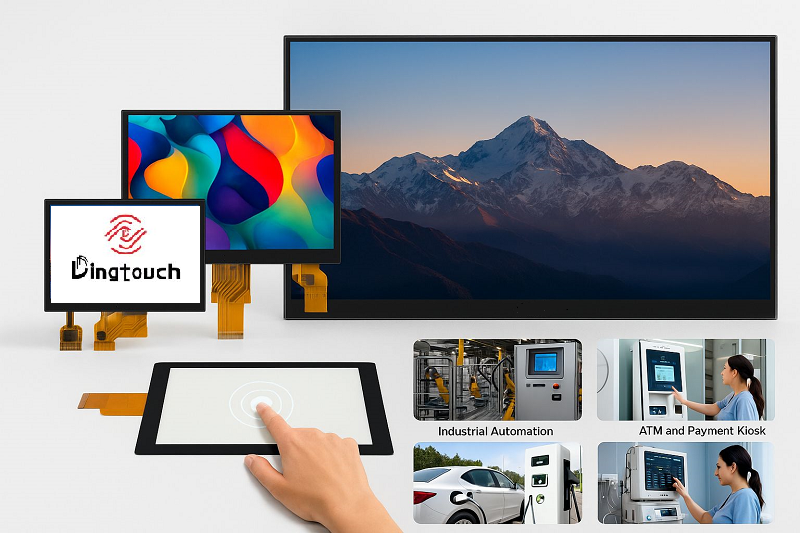
DINGTouch: Professional Custom Touch Display and LCD Solution Provider
As a professional touch display manufacturer, DINGTouch focuses on industrial, medical, automotive, and commercial display solutions.
We provide:
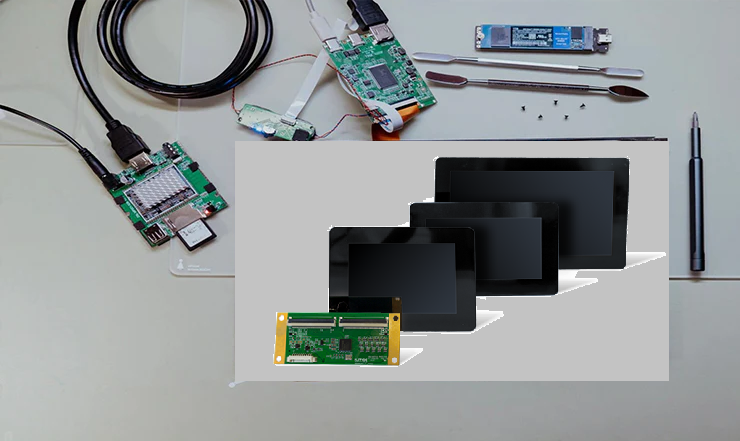
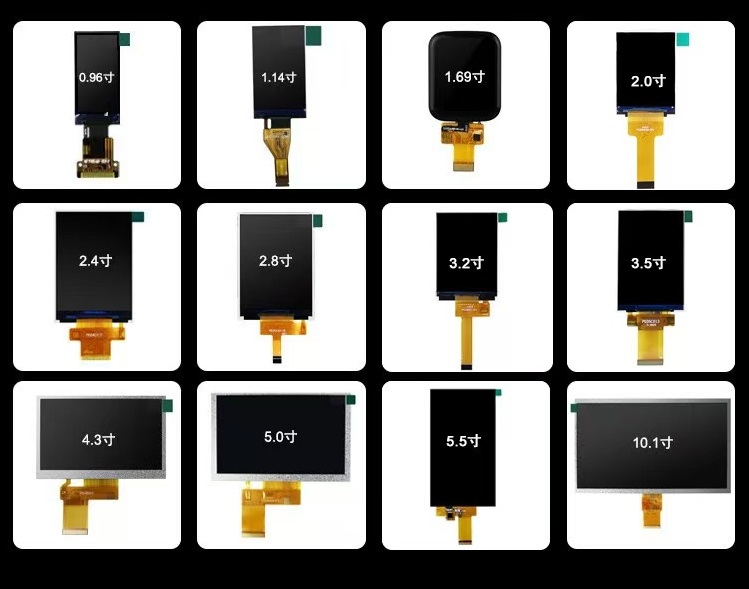
✔ Custom LCD display modules
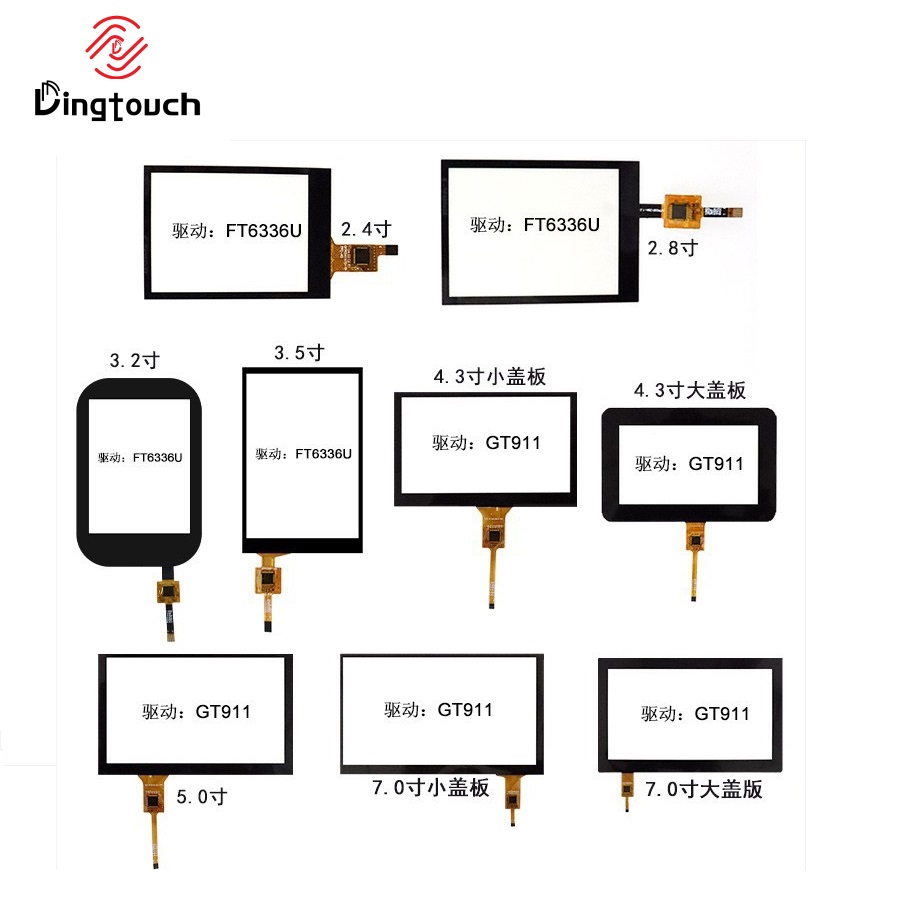
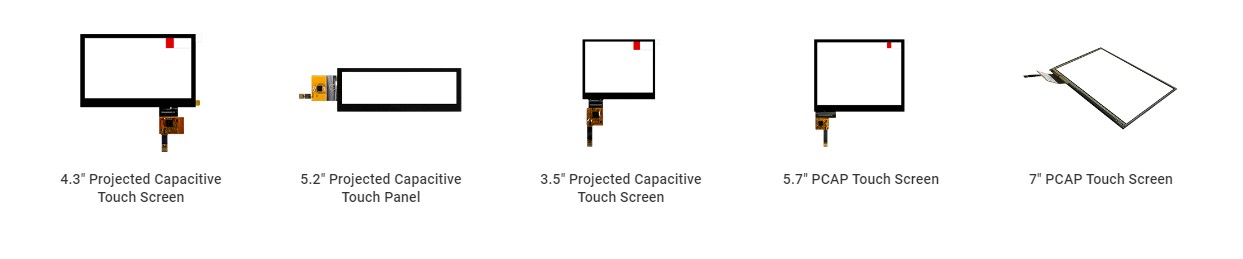
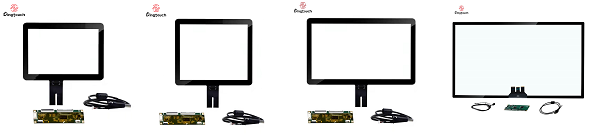
✔ PCAP capacitive touch screen solutions
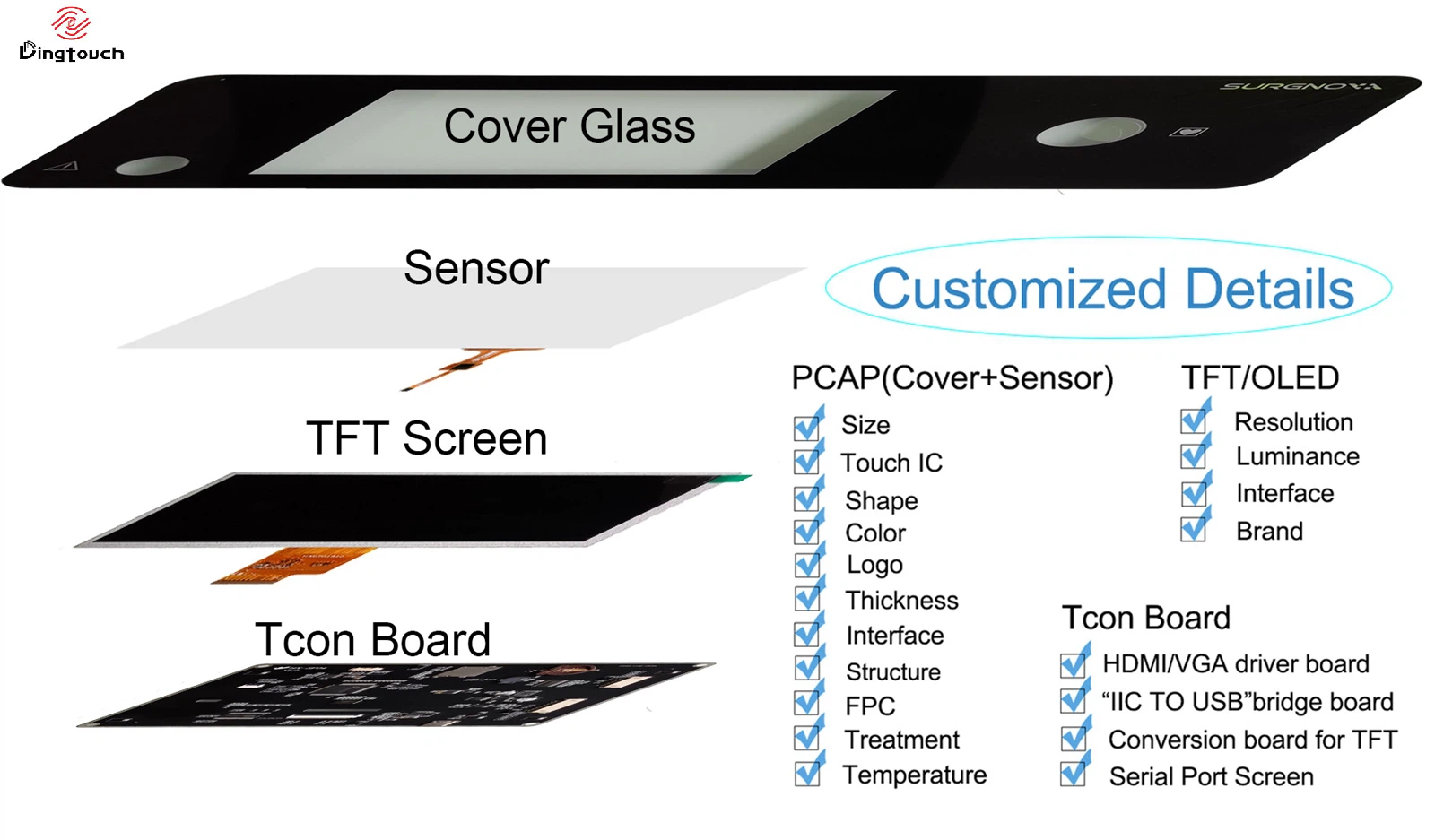
✔ TP + LCD integrated touch displays
✔ RGB / LVDS / MIPI / eDP interface customization
✔ Display driver matching and debugging support
✔ Optical bonding solutions
With extensive experience in display customization, DINGTouch helps customers select the right interface, optimize display performance, and accelerate product development from prototype to mass production.
Whether you need LCD interface selection, display replacement, touch screen integration, or customized display solutions, DINGTouch provides professional technical support to reduce development risks and improve product reliability.

 Email: Sales@szdingtouch.com
 Website: www.szdingtouch.com
Ready to Build Your Outdoor Display Solution?
Get in touch with us at sales@szdingtouch.com. Our expert engineers will help you design a cost-effective, tailored solution to meet your project’s exact specifications.

DINGTouch :Committed to continuous innovation and improvement of product quality to meet customers' high requirements and expectations.
DINGTouch is a manufacturer that provides high quality touch screen panels. Focus on the design, manufacturing and sales of touch screen panels, and are committed to providing customized solutions that satisfy customers.
DINGTouch: In the process of customizing touch screen panels, we focus on close cooperation and communication with customers. Understanding customers' needs and providing customized solutions will meet customers' individual needs. The company's products are favored by customers for their high quality and reliability, and provide them with the best touchscreen panel solutions.
DINGTouch :Committed to continuous innovation and improvement of product quality to meet customers' high requirements and expectations.
DINGTouch is a manufacturer that provides high quality touch screen panels. Focus on the design, manufacturing and sales of touch screen panels, and are committed to providing customized solutions that satisfy customers.
DINGTouch: In the process of customizing touch screen panels, we focus on close cooperation and communication with customers. Understanding customers' needs and providing customized solutions will meet customers' individual needs. The company's products are favored by customers for their high quality and reliability, and provide them with the best touchscreen panel solutions.
At DINGTOUCH, we are the world's leading touchscreen manufacturer, helping businesses around the world take advantage of this exciting technology. For more information, please visit the home page now.
Find the DINGTouch technical team to achieve the success of your company's new project.

DINGTouch is a company specializing in the R&D and production of touch screen technology, headquartered in Shenzhen, China. As a professional touch screen supplier, DINGTouch is committed to providing high-quality, stable and reliable touch screen products to meet the diverse needs of customers. We continue to carry out technological innovation and product optimization to ensure that its touch screen products have good sensitivity, accuracy and durability.
In addition to the products themselves, we also focus on cooperation and communication with customers, and are committed to providing customized solutions and excellent after-sales services. Through continuous efforts to improve product quality and customer satisfaction, we have established a good reputation in the touchscreen industry and won widespread market recognition.
In addition to the products themselves, we also focus on cooperation and communication with customers, and are committed to providing customized solutions and excellent after-sales services. Through continuous efforts to improve product quality and customer satisfaction, we have established a good reputation in the touchscreen industry and won widespread market recognition.
What DINGTOUCH can do:
• PCAP maximum size 65”
• Multi-touch (Touch screen can be customized to your needs.)
• Optical bonding service/air bonding
• LCD interface: HDMI/RGB/MIPI/LVDS/EDP, etc.
• PCAP interface: IIC/USB interface
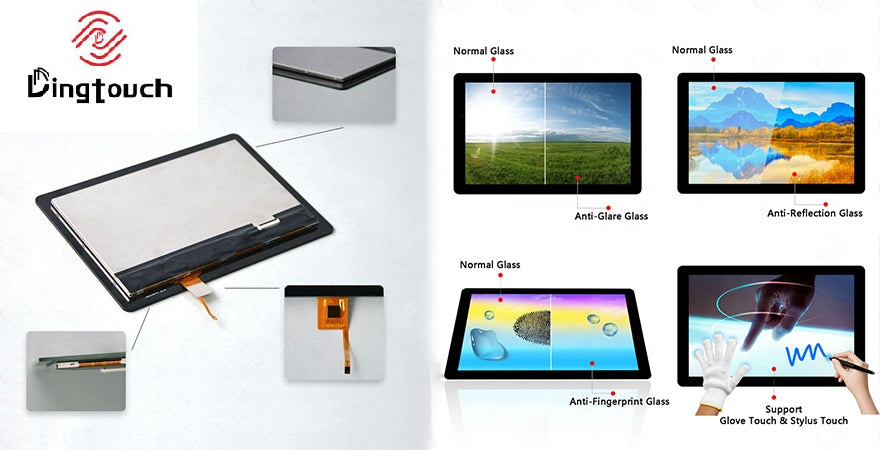
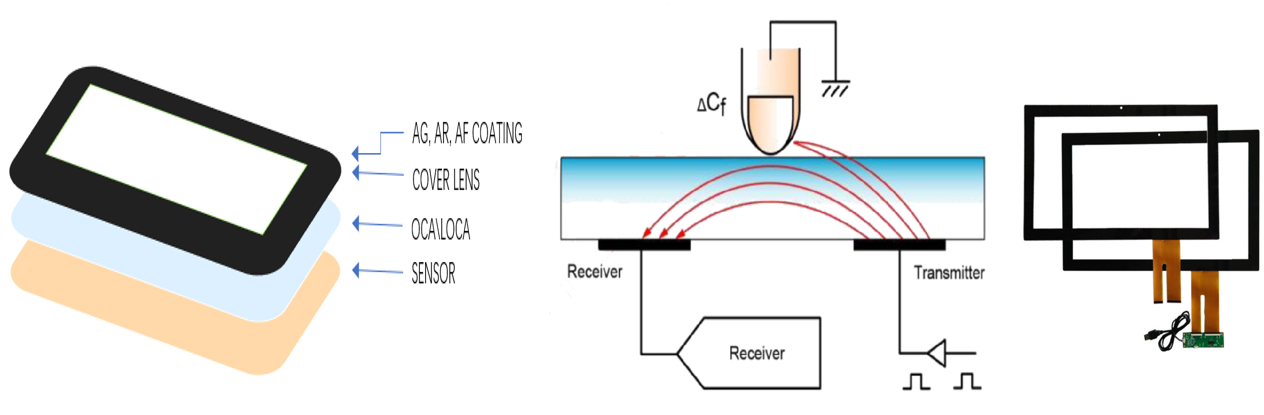
• CTP can customize the cover glass surface treatment process AG (anti-glare), AR (anti-reflection), AF (anti-fingerprint), waterproof, and glove touch
• Supports 0.55 mm-12 mm coverslip touch.
• Support operating temperature: -40℃-90℃.
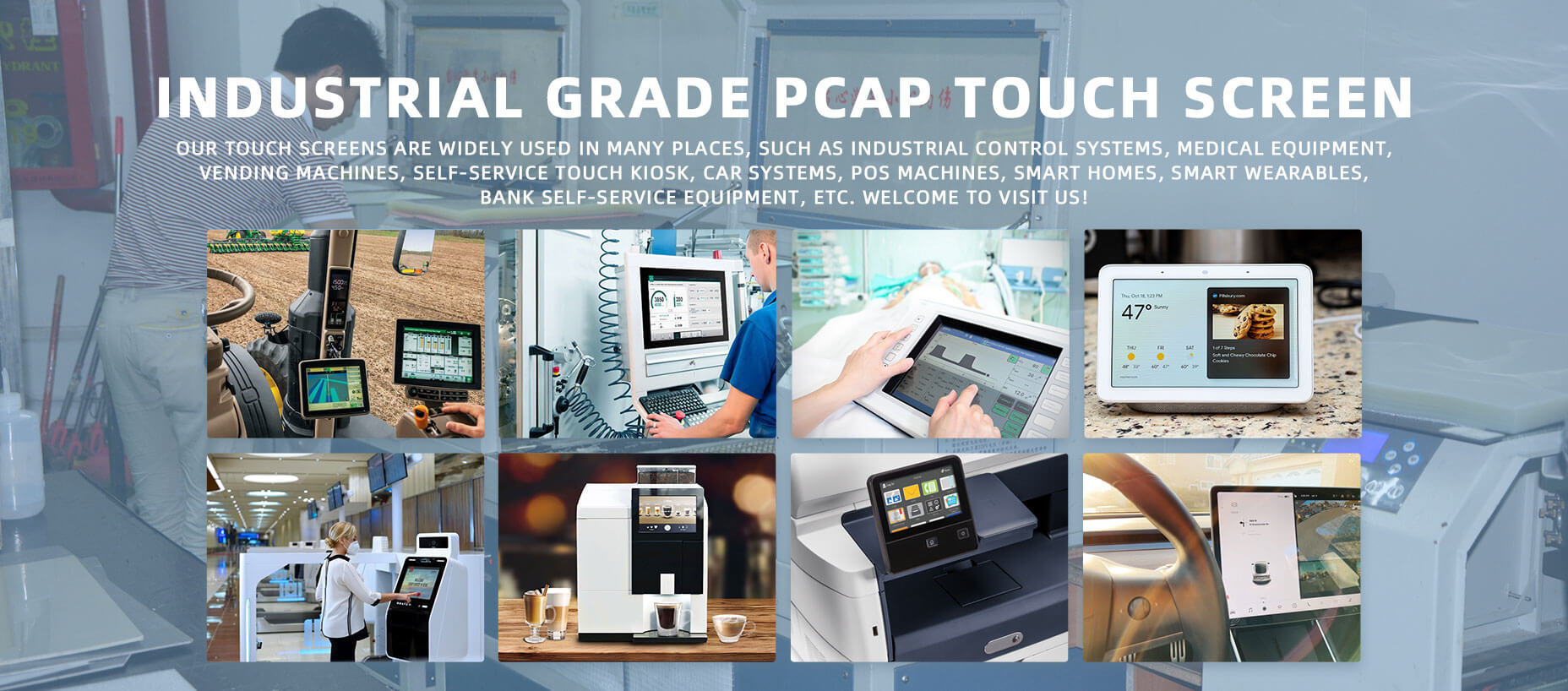
Dingtouch Industrial capacitive touch screen Manufacturer
In conclusion, Dingtouch as a professional touch screen manufacturer with more than 10 years touch screen experience.We have many capacitive touch screen. Such as5 inch touch screen,7 inch touch screen,10.1inch touch screen,15 inch touch screen,15.6 inch touch screen,17 inch touch screen,18.5 inch touch screen,19 inch touch screen,21.5 inch touch screen,32 inch touch screen, However, we also welcome to customize your own touch screen . Contact our team today to learn what capacitive touch screen are best for our retail business needs.
Contact us NOW! sales@szdingtouch.com
CATEGORIES
CONTACT US
Contact: Dingtouch
Phone: +8615815536116
Tel: +8615815536116
Email: sales@szdingtouch.com
Add: Building A, Bailu Plaza, No. 48, Gonghe Industrial Road, Gongle Community, Xixiang Street, Baoan District, Shenzhen,China. 518126
 Dingtouch