News
Capacitive Touchscreen Thickness: Customization Options and Key Benefits for Industrial Applications
 Capacitive touchscreen Thickness: Customization Options and Key Benefits for Industrial Applications
Capacitive touchscreen thickness plays an important role in product durability, touch performance, optical clarity, and mechanical integration. While thin touchscreens are often preferred for consumer electronics, industrial equipment, medical devices, outdoor terminals, and other demanding applications may require thicker cover glass or specialized multilayer structures.
Choosing the right thickness is not simply a matter of making a touchscreen thinner or thicker. It requires balancing mechanical strength, touch sensitivity, optical performance, installation requirements, and the operating environment.
At DINGTouch, we provide customized industrial capacitive touchscreen solutions designed around specific application requirements. From ultra-thin touch structures to thick-glass and double-layer configurations, our engineering team helps customers select suitable materials, thicknesses, and structural designs for their projects.
1. Common Capacitive touchscreen Cover Glass Thicknesses
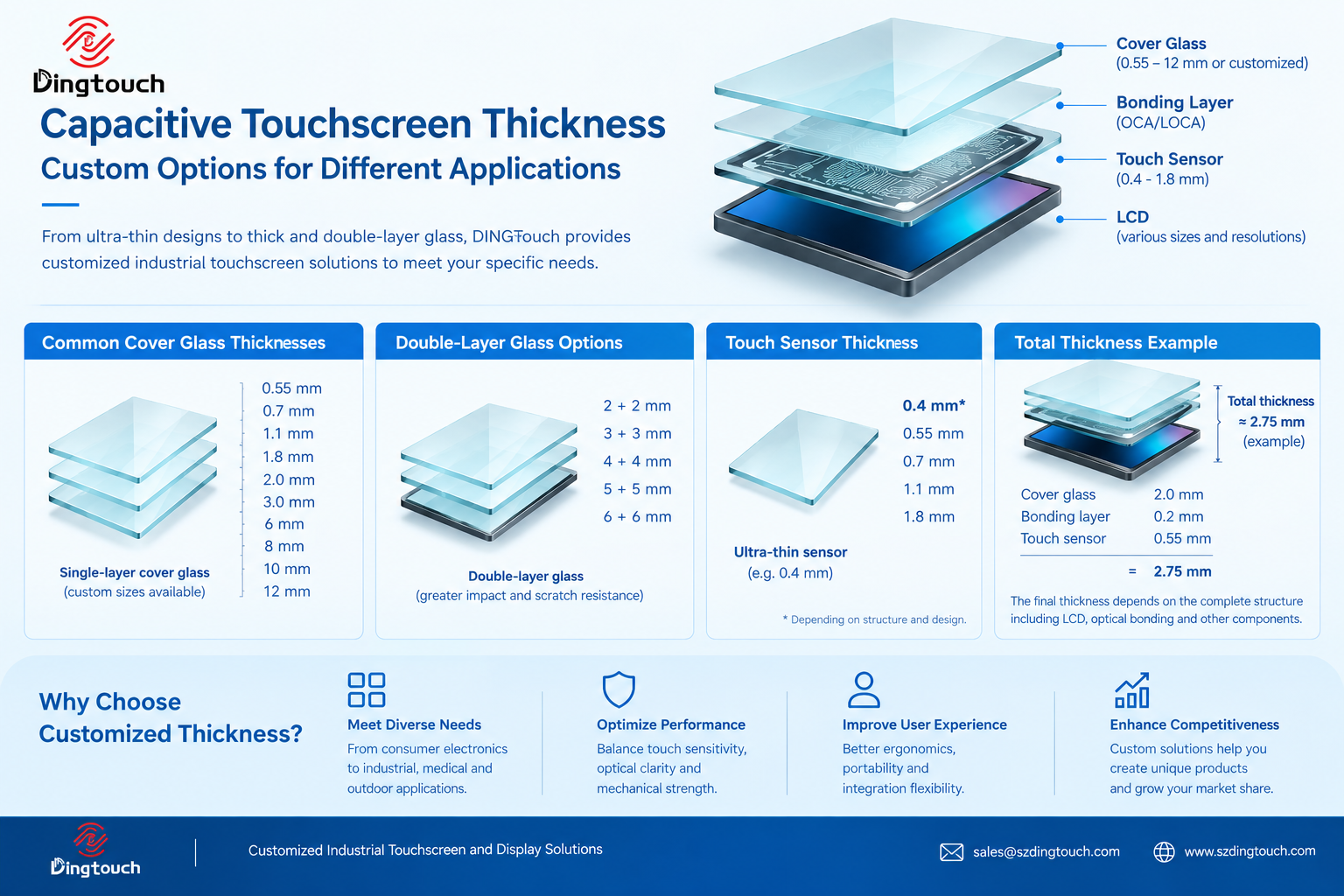
The cover glass is the outer protective layer of a capacitive touchscreen. It protects the underlying touch sensor from scratches, accidental impacts, contamination, and daily wear.
Common cover glass thicknesses include:
-
0.55 mm and 0.7 mm: Suitable for applications requiring a slim, lightweight design.
-
1.1 mm and 1.8 mm: Practical options for balancing appearance, mechanical strength, and integration requirements.
-
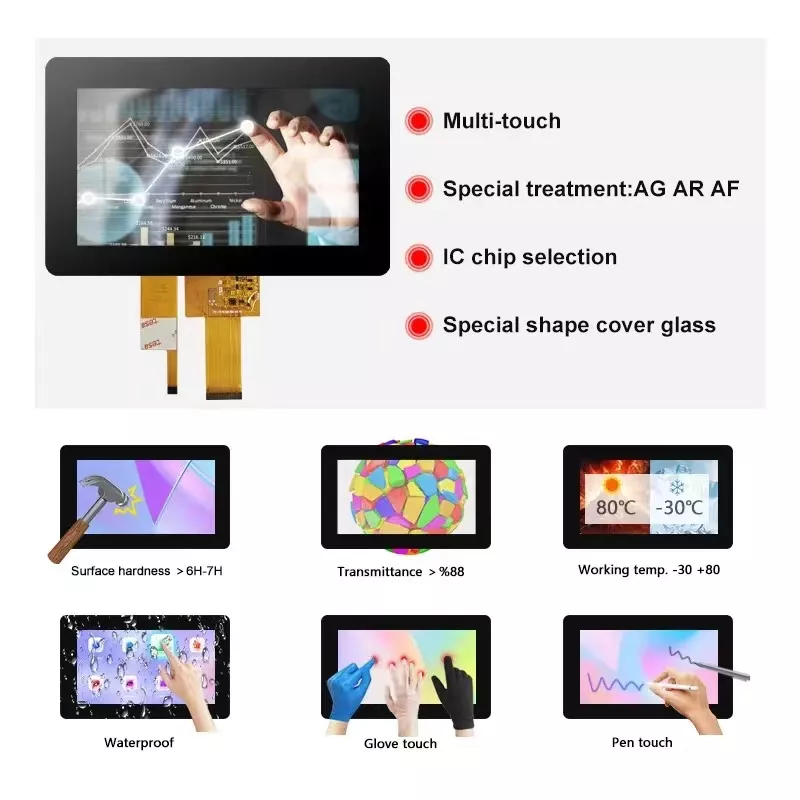
2.0 mm and 3.0 mm: Often considered for industrial control panels, interactive terminals, and equipment requiring enhanced surface protection.
-
6 mm, 8 mm, 10 mm, and 12 mm: Potential solutions for specialized industrial, outdoor, and rugged applications where thicker glass may be necessary.
These thicknesses are examples of available customization options rather than universal standards. The appropriate specification depends on the touchscreen dimensions, mounting method, glass material, support structure, impact requirements, and touch controller capabilities.

How Does Cover Glass Thickness Affect Performance?
Thicker glass can improve structural rigidity and may provide better resistance to certain mechanical loads when properly designed. However, increasing glass thickness also increases weight and can affect optical performance and projected capacitive touch sensitivity.
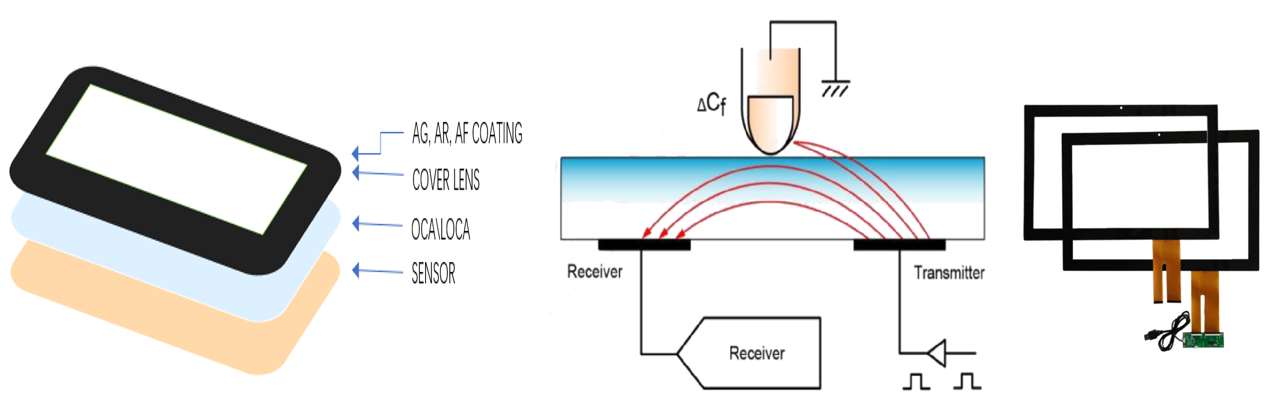
For PCAP touchscreens, the sensor must detect changes in the electric field through the cover glass. As the distance between the finger and sensing electrodes increases, the available touch signal generally becomes weaker.
For this reason, thick-glass applications may require optimized sensor patterns, controller selection, firmware tuning, and electrical noise management.
At DINGTouch, we evaluate the complete touch structure rather than selecting cover glass thickness in isolation.
2. Customized Double-Layer Glass Structures
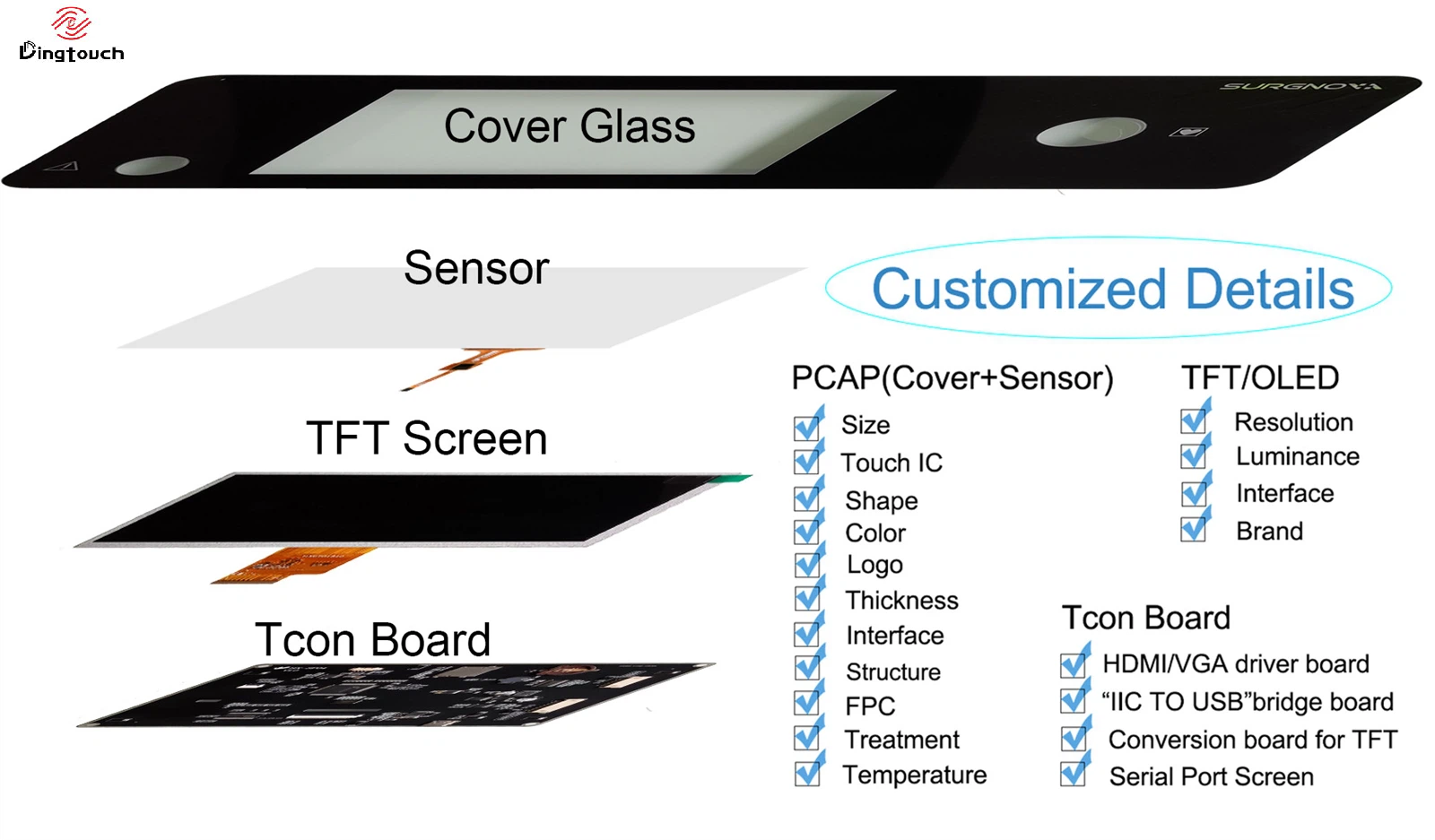
For applications requiring specialized mechanical protection, DINGTouch can evaluate customized double-layer glass configurations, including:
-
2 + 2 mm
-
3 + 3 mm
-
4 + 4 mm
-
5 + 5 mm
-
6 + 6 mm
These configurations describe the nominal thicknesses of the two glass layers. The final assembly thickness will also depend on the bonding layer and any additional structural components.
Why Consider a Double-Layer Glass Design?
A double-layer structure can provide additional design flexibility for applications that require a protective outer layer and a separate inner structural or optical layer.
Potential advantages include:
-
Enhanced structural design: The two layers can be engineered to distribute loads and support specific mechanical requirements.
-
Flexible material selection: Different glass specifications or surface treatments may be considered for the individual layers.
-
Application-specific protection: The assembly can be designed around particular scratch, impact, environmental, and installation requirements.
-
Integration flexibility: A multilayer structure may accommodate specialized optical bonding or equipment enclosure designs.
However, double-layer glass is not automatically stronger than every single-layer alternative. Actual impact resistance depends on glass type, strengthening process, edge design, bonding materials, mounting conditions, and test requirements.
For industrial equipment, DINGTouch can assess the complete assembly to determine whether a single thick cover glass or a double-layer structure is more appropriate.
3. Glass Touch Sensor Thickness and Ultra-Thin Designs
The touch sensor is another important component of a capacitive touchscreen. Its thickness, electrode structure, substrate material, and distance from the user's finger all influence the overall design.
Depending on the manufacturing process and sensor architecture, glass-based touch sensor structures may use thicknesses such as 0.4 mm, 0.55 mm, 0.7 mm, or 1.1 mm. Other configurations, including 1.8 mm structures, may also be considered for specific designs.
An ultra-thin sensor structure around 0.4 mm may be feasible for selected applications, subject to material availability, sensor construction, and mechanical requirements.
Advantages of Ultra-Thin Touch Structures
Reduced overall thickness
A thinner sensor can help reduce the overall stack height, making it easier to integrate touch functionality into compact electronic devices.
Lower component weight
Reducing glass thickness can help decrease module weight, particularly in portable equipment and handheld instruments.
Greater design flexibility
An ultra-thin structure may provide more room for other components or help designers achieve a lower-profile enclosure.
Potential optical benefits
Reducing the number or thickness of optical layers may help improve overall light transmission. Actual optical performance depends on the complete stack, including coatings, adhesives, substrates, and interfaces.
It is important to distinguish the touch sensor's thickness from the cover glass thickness. These are separate design parameters, and reducing one does not necessarily require reducing the other.
4. How to Calculate Total Capacitive touchscreen Thickness
The total thickness of a capacitive touchscreen assembly depends on its individual layers and the selected bonding method.
For a basic cover-glass-and-sensor structure, the nominal thickness can be estimated as:
Total thickness = Cover glass + Bonding layer + Touch sensor
For example, consider a touchscreen with:
-
Cover glass: 2.0 mm
-
Bonding layer: 0.2 mm
-
Touch sensor: 0.55 mm
The nominal combined thickness is approximately 2.75 mm, excluding any additional protective films, coatings that contribute measurable thickness, or supporting components.
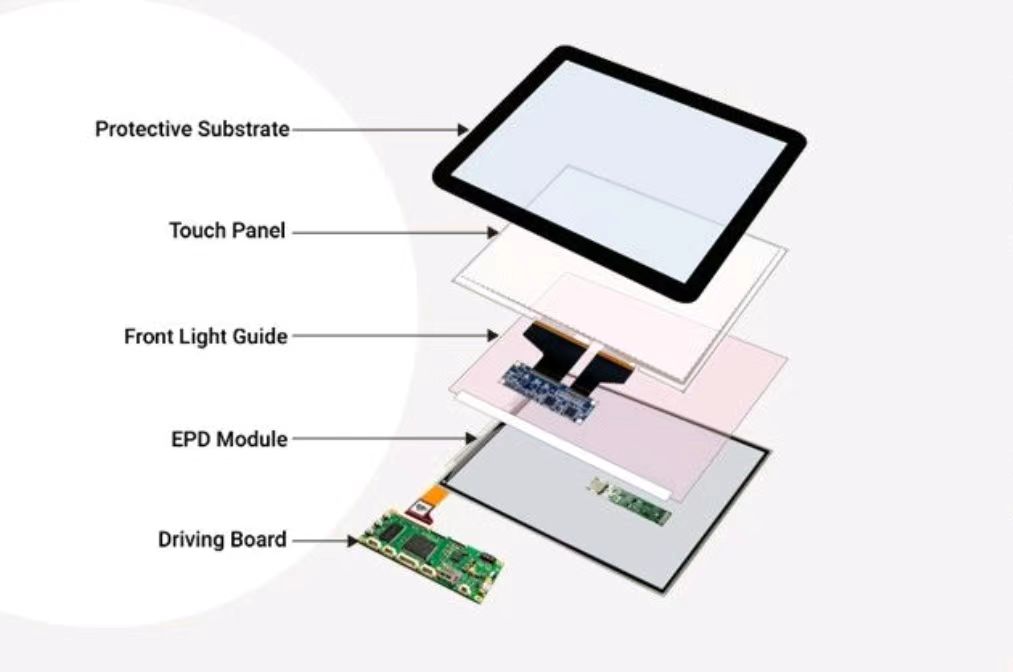
For a complete touch display module, the calculation may also need to include the LCD, optical bonding layers, polarizer, backing structure, mounting frame, and other components.
Full Optical Bonding vs. Air-Gap Structures
The bonding method also affects the final mechanical stack and optical performance.
Optical bonding
Optical bonding uses a transparent adhesive, such as OCA or LOCA, to bond optical components together. Depending on the design, it can reduce internal air interfaces, improve readability, and help reduce reflections. It can also support a more integrated module structure.
Air-gap bonding
An air-gap structure leaves a gap between the cover glass and the display or sensor assembly. It may simplify certain designs or servicing requirements, but internal reflections and the additional gap must be considered.
The final thickness and performance depend on the selected bonding process and adhesive specifications. DINGTouch can evaluate the appropriate structure based on display integration, environmental requirements, and mechanical constraints.
5. Four Key Benefits of Customized touchscreen Thickness
5.1 Meeting Different Application Requirements
Different industries have different priorities.
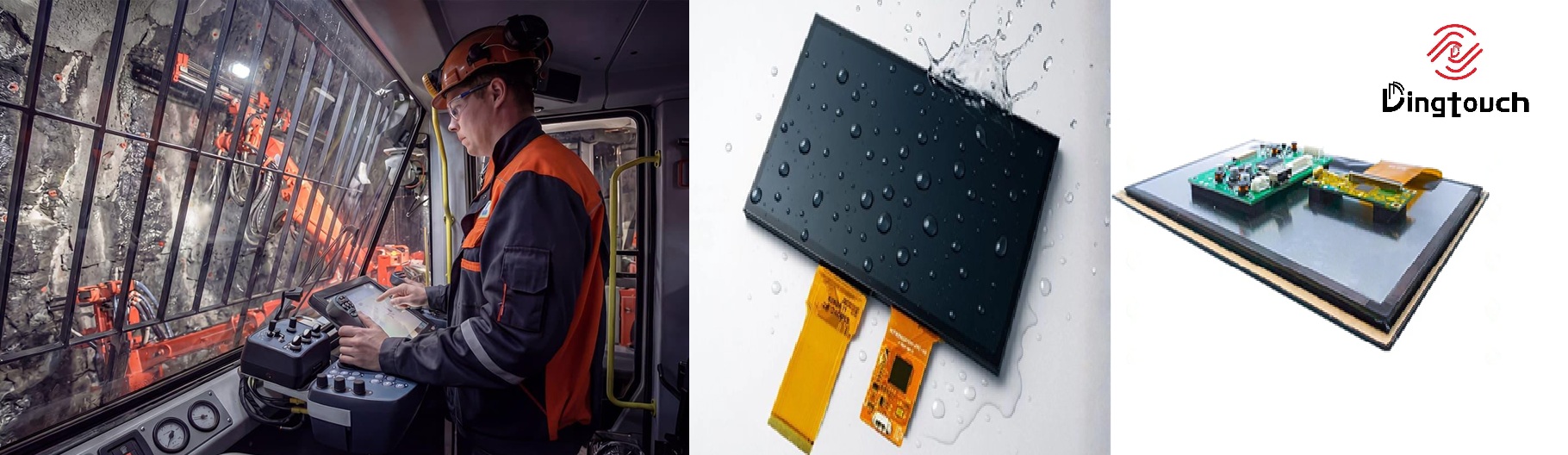
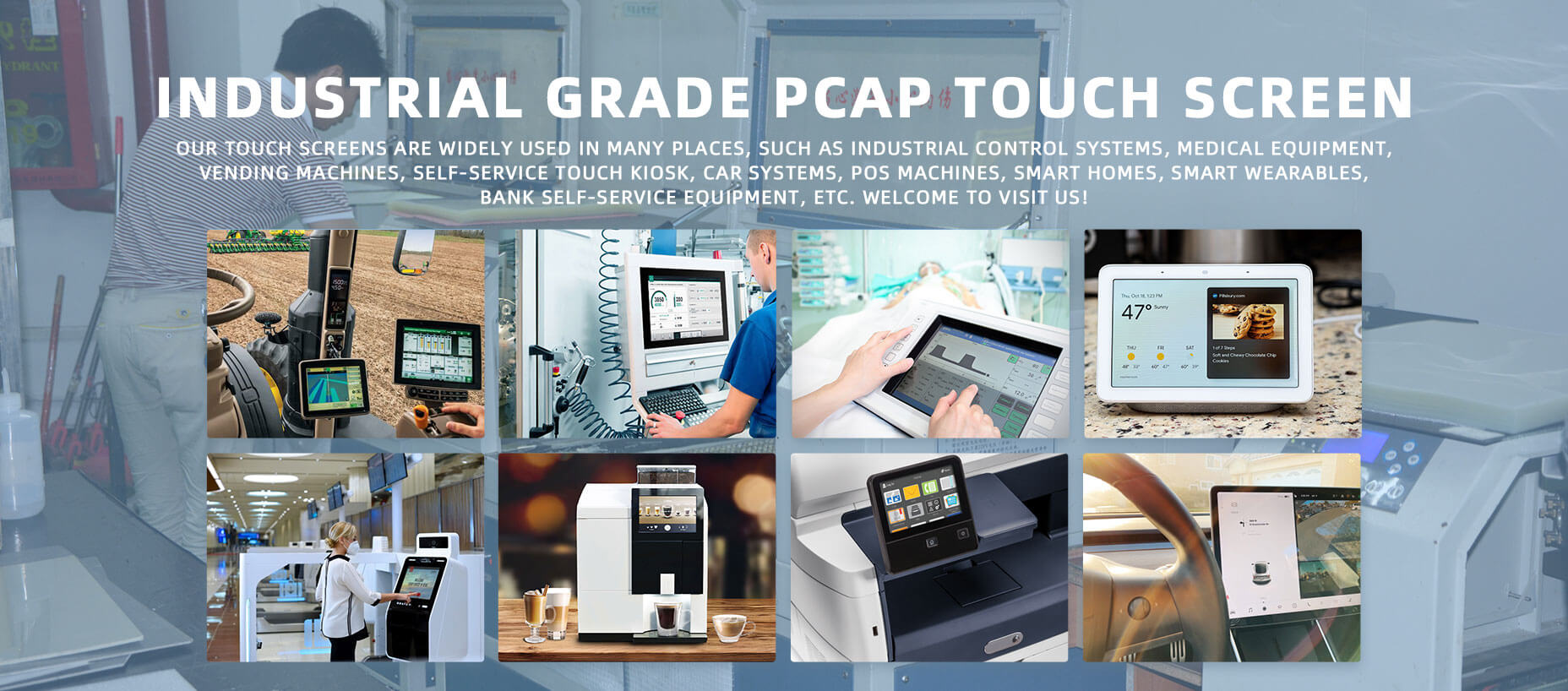
Consumer electronics often prioritize compact dimensions, low weight, and a refined appearance. Industrial control panels may require a more robust cover surface, while outdoor terminals may need additional protection against environmental exposure and mechanical damage.
Medical devices, vehicle-mounted equipment, and specialized industrial systems may also have specific cleaning, integration, or reliability requirements.
Custom thickness options allow manufacturers to select a structure suited to the intended application instead of relying on a one-size-fits-all design.
5.2 Balancing Touch Sensitivity and Mechanical Strength
touchscreen design involves a trade-off between mechanical protection and touch performance.
Thicker cover glass may improve rigidity or support particular impact-resistance requirements, but it can also weaken the capacitive signal reaching the sensor.
A thinner structure may improve touch signal coupling, but its mechanical suitability must be verified for the intended environment.
DINGTouch can help optimize the cover glass, sensor design, touch controller, and firmware as a coordinated system. Where necessary, engineering evaluation can include testing with gloves, moisture, electrical noise, or other application-specific conditions.
5.3 Improving Product Integration and User Experience
Customized thickness helps product designers manage enclosure depth, mounting tolerances, weight, appearance, and interaction requirements.
For handheld equipment, a thinner structure may improve portability. For a fixed industrial control panel, a thicker glass surface may be more suitable if supported by the mechanical design and verified against the required tests.
The objective is not to maximize or minimize thickness, but to achieve the right combination of usability, protection, and integration.
5.4 Differentiating Products and Strengthening Competitiveness
Customized touchscreens allow OEM and equipment manufacturers to create products that better reflect their functional and industrial design requirements.
Customization may extend beyond thickness to include:
-
Cover glass dimensions and outlines
-
Custom cutouts and mounting holes
-
Glass edge finishing and surface treatments
-
Anti-glare (AG), anti-reflection (AR), and anti-fingerprint (AF) coatings
-
Custom printing, colors, and logos
-
Touch sensor electrode design
-
Controller and interface selection
-
Optical bonding and display integration
These options help manufacturers develop a more application-specific product while maintaining control over mechanical, optical, and electrical requirements.
6. How to Choose the Right touchscreen Thickness
Before confirming a custom touchscreen design, several technical factors should be evaluated.
1. Screen dimensions
Larger glass panels generally require greater attention to bending, support, mounting, and impact loads. A thickness suitable for a small touchscreen may not be appropriate for a large panel.
2. Mechanical protection requirements
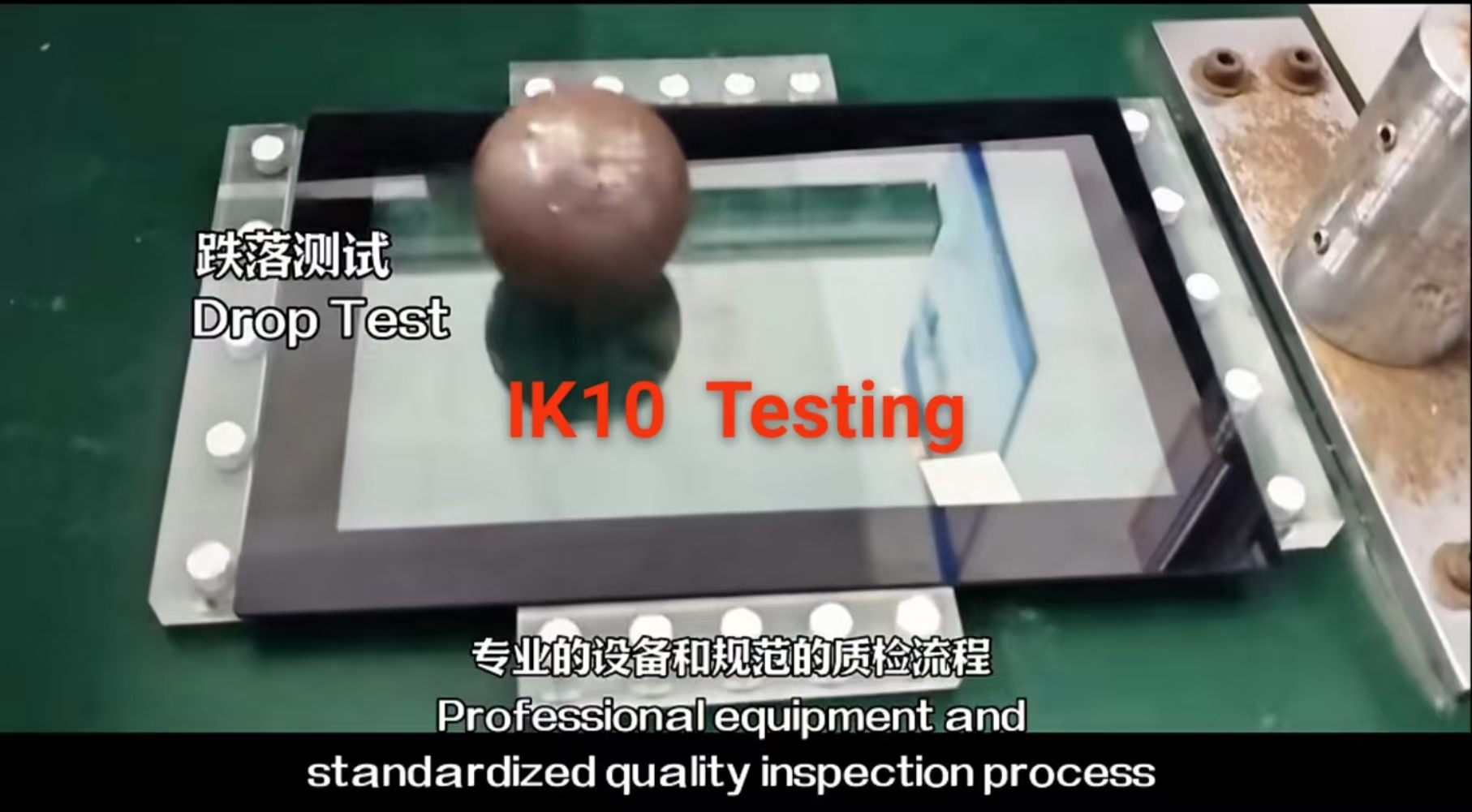
Define the expected operating loads, accidental impacts, scratch exposure, and any required impact-resistance standards. Glass thickness alone does not establish an IP rating or an IK rating.
3. Touch performance
Specify the required number of touch points, operating finger or glove conditions, moisture exposure, and acceptable response behavior. Thick-glass applications may require dedicated controller tuning and validation.
4. Optical performance
Consider light transmission, surface reflections, outdoor readability, and the effect of coatings and adhesive layers.
5. Environmental conditions
Temperature range, humidity, UV exposure, cleaning chemicals, and electromagnetic interference can influence material and structural choices.
6. Mechanical and electrical integration
Provide the available installation space, mounting method, display specifications, touch interface, and host platform. These details help determine the appropriate sensor architecture and final module thickness.
7. Verification and testing
Prototype testing should confirm touch accuracy, mechanical integrity, optical performance, and environmental suitability under representative operating conditions.

7. DINGTouch: Customized Capacitive touchscreen Solutions
DINGTouch is an industrial touch display manufacturer providing customized capacitive touchscreens and integrated display solutions for OEM and ODM projects.
Our capabilities include cover glass customization, PCAP touch sensor development, touch controller selection, optical bonding, and touch display integration.
We support projects that require:
-
Thin and lightweight touchscreen structures
-
Thick cover glass for specialized industrial applications
-
Customized double-layer glass configurations
-
Full optical bonding with OCA or LOCA
-
AG, AR, and AF surface treatments
-
Glove-touch and water-tolerant touch performance
-
Customized dimensions, cutouts, printing, and interfaces
-
Engineering evaluation for industrial operating environments
Rather than selecting glass thickness based on a single specification, our engineering team considers the complete touchscreen structure and its intended operating conditions.
Whether you are developing a compact embedded interface, a rugged industrial control panel, or a customized touch display module, DINGTouch can help evaluate a suitable design for your project.
8. Frequently Asked Questions
What is the standard thickness of a capacitive touchscreen?
There is no single standard thickness for all capacitive touchscreens. Common cover glass options include 0.55 mm, 0.7 mm, 1.1 mm, and 1.8 mm, while industrial applications may use thicker glass depending on mechanical and touch-performance requirements.
Can DINGTouch customize cover glass thickness?
Yes. DINGTouch can evaluate customized cover glass thicknesses and structures according to project requirements, subject to glass availability, processing limitations, and engineering validation.
Does thicker cover glass reduce touch sensitivity?
It can. Greater separation between the finger and touch sensor generally weakens the capacitive signal. Suitable sensor designs, controllers, and firmware tuning can help compensate, but the final performance must be verified in the intended assembly.
Is double-layer glass better than single-layer glass?
Not in every application. Double-layer glass offers additional structural and material-design options, but its performance depends on glass specifications, bonding, mounting, and the relevant test requirements. A properly designed single-layer structure may be more suitable for some projects.
Can an ultra-thin touchscreen still be durable?
Yes, if the complete structure is designed for the required loads and operating environment. Durability depends on material selection, dimensions, edge design, mounting, and validation testing rather than thickness alone.
How can I request a customized touchscreen solution?
Contact DINGTouch with your target dimensions, cover glass thickness, display specifications, touch requirements, operating environment, and mechanical drawings if available. Our engineering team can evaluate the proposed structure and recommend suitable options.
Conclusion
Touchscreen thickness is a critical design parameter that affects mechanical strength, touch sensitivity, optical performance, product dimensions, and user experience.
A successful design balances these factors according to the actual application. Customized cover glass, sensor structures, bonding methods, and controller configurations give equipment manufacturers greater flexibility to achieve that balance.
DINGTouch provides customized capacitive touchscreen and industrial touch display solutions to support your product development from structural evaluation to prototype validation.
For technical consultation or project evaluation, contact us at sales@szdingtouch.com or visit www.szdingtouch.com.
DINGTouch — Customized Industrial Touchscreen and Display Solutions.
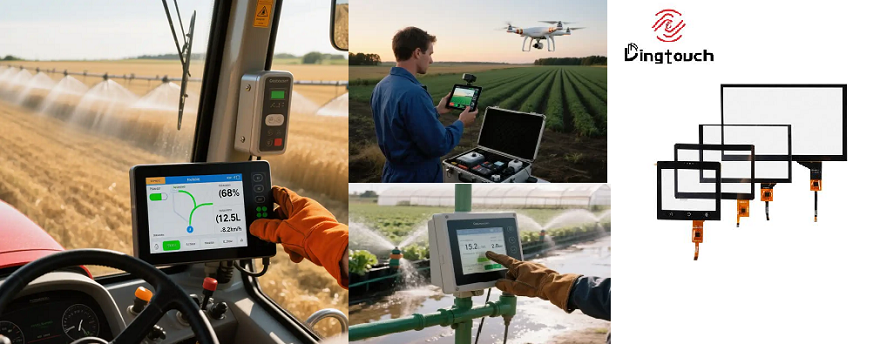



Ready to Build Your Outdoor Display Solution?
Get in touch with us at sales@szdingtouch.com. Our expert engineers will help you design a cost-effective, tailored solution to meet your project’s exact specifications.
DINGTouch:Committed to continuous innovation and improvement of product quality to meet customers' high requirements and expectations.
DINGTouch is a manufacturer that provides high quality touch screen panels. Focus on the design, manufacturing and sales of touch screen panels, and are committed to providing customized solutions that satisfy customers.
DINGTouch: In the process of customizing touch screen panels, we focus on close cooperation and communication with customers. Understanding customers' needs and providing customized solutions will meet customers' individual needs. The company's products are favored by customers for their high quality and reliability, and provide them with the best Touchscreen panel solutions.
At DINGTOUCH, we are the world's leading touchscreen manufacturer, helping businesses around the world take advantage of this exciting technology. For more information, please visit the home page now.

DINGTouch is a company specializing in the R&D and production of touch screen technology, headquartered in Shenzhen, China. As a professional touch screen supplier, DINGTouch is committed to providing high-quality, stable and reliable touch screen products to meet the diverse needs of customers. We continue to carry out technological innovation and product optimization to ensure that its touch screen products have good sensitivity, accuracy and durability.
In addition to the products themselves, we also focus on cooperation and communication with customers, and are committed to providing customized solutions and excellent after-sales services. Through continuous efforts to improve product quality and customer satisfaction, we have established a good reputation in the touchscreen industry and won widespread market recognition.
In addition to the products themselves, we also focus on cooperation and communication with customers, and are committed to providing customized solutions and excellent after-sales services. Through continuous efforts to improve product quality and customer satisfaction, we have established a good reputation in the touchscreen industry and won widespread market recognition.
What DINGTOUCH can do:
• PCAP maximum size 65”
• Multi-touch (Touch screen can be customized to your needs.)
• Optical bonding service/air bonding
• LCD interface: HDMI/RGB/MIPI/LVDS/EDP, etc.
• PCAP interface: IIC/USB interface
• CTP can customize the cover glass surface treatment process AG (anti-glare), AR (anti-reflection), AF (anti-fingerprint), waterproof, and glove touch
• Supports 0.55 mm-12 mm coverslip touch.
• Support operating temperature: -40℃-90℃.
Dingtouch Industrial capacitive touch screen Manufacturer
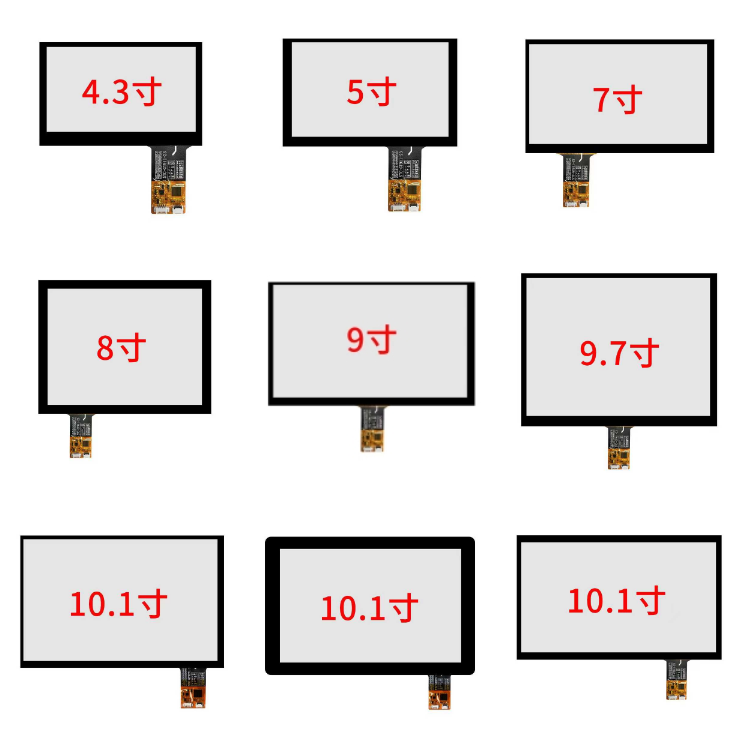
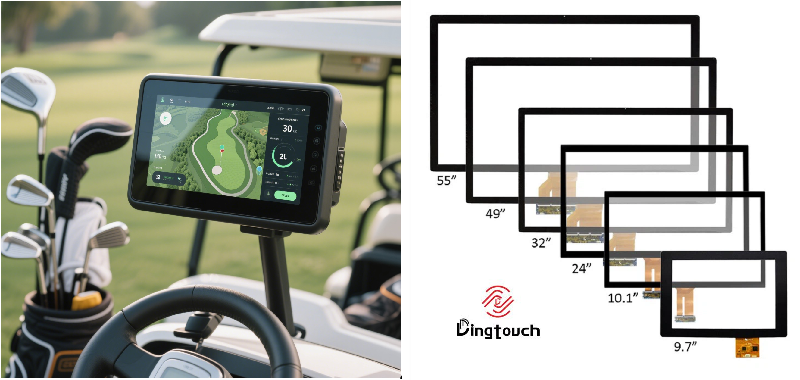
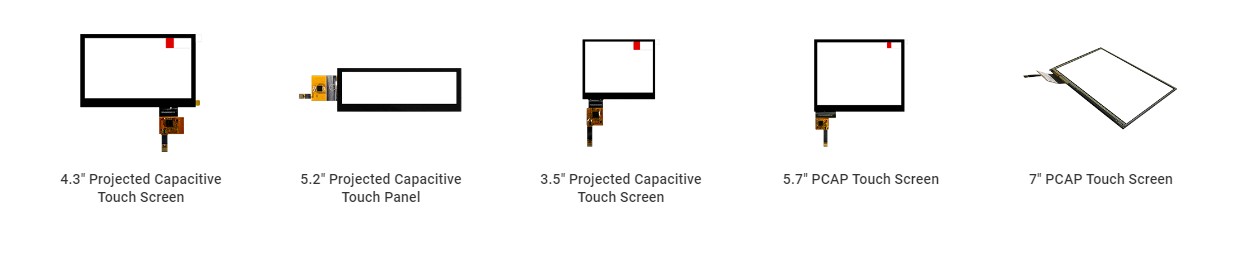
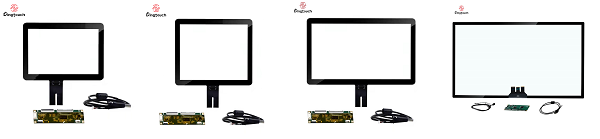
In conclusion, Dingtouch as a professional touch screen manufacturer with more than 10 years touch screen experience.We have many capacitive touch screen. Such as 5 inch touch screen,7 inch touch screen,10.1inch touch screen,15 inch touch screen,15.6 inch touch screen,17 inch touch screen,18.5 inch touch screen,19 inch touch screen,21.5 inch touch screen,32 inch touch screen, However, we also welcome to customize your own touch screen . Contact our team today to learn what capacitive touch screen are best for our retail business needs.
Contact us NOW! sales@szdingtouch.com
#Medicaltouchscreencalibration, #capacitivetouchcalibrationguide, #IEC60601touchscreen, #DINGTouchmedicaldisplay, #touchscreenaccuracy, #touchscreen driftfix, #medicalequipmenttouchsolutions, #IP65touchpanel, #IK10medicaltouchscreen, #glove touch medical monitor,#ILITEKTouchControllerICSelectionGuide ,#OCAtoOCR #GT911,#CustomizedWideTemperatureTouchScreenSolutions,#Waterproof Touchscreen,
#highbrightnessLCD, #sunlightreadabledisplay,#industrialLCDbacklight, #outdoor displaymodule, #customLCDsolution, #1000–2000nitsdisplay, #DINGTouchtouchscreen.
DINGTouch — Custom Touch Display Solutions Expert
Every touch, clear and precise, ready for any environment.
Every touch, clear and precise, ready for any environment.
CATEGORIES
CONTACT US
Contact: Dingtouch
Phone: +8615815536116
Tel: +8615815536116
Email: sales@szdingtouch.com
Add: Building A, Bailu Plaza, No. 48, Gonghe Industrial Road, Gongle Community, Xixiang Street, Baoan District, Shenzhen,China. 518126
 Dingtouch