News
Standard Display or Custom Display? Why Customized Cover Glass Can Be the Smarter Choice
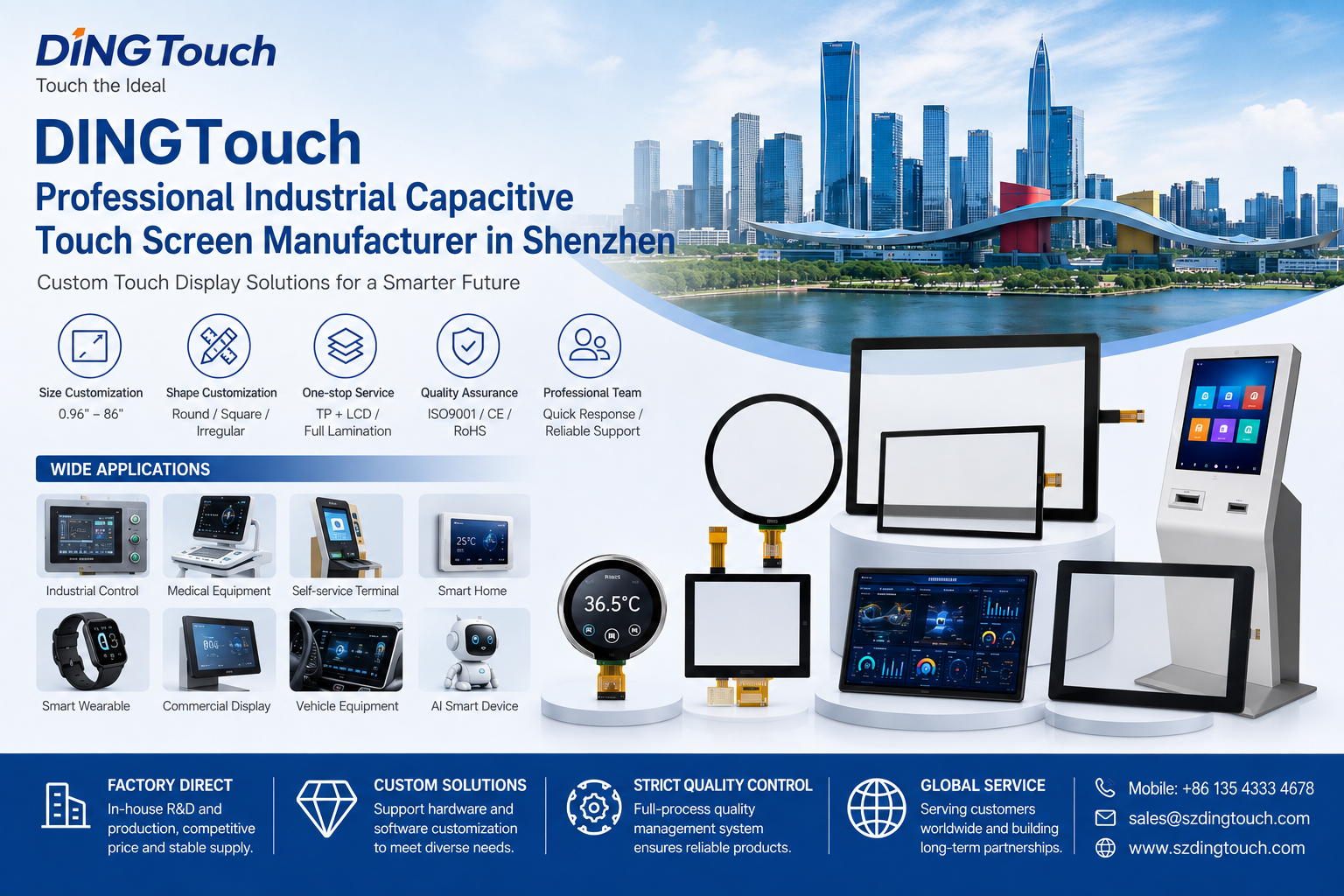 Standard Display or Custom Display? Why Customized Cover Glass Can Be the Smarter Choice
When developing industrial equipment, medical devices, smart terminals, and human-machine interface (HMI) systems, customers often ask us a common question:
Can the display be customized?
Of course! At DINGTouch, we provide customized touch display solutions for a wide range of applications. However, from the perspectives of development cost, product reliability, and delivery efficiency, we often recommend a more practical approach:
Use a standard display module whenever possible, and customize the cover glass when your product needs a distinctive design.
Why do we recommend this strategy? In this article, we will explain how combining standard display modules with customized cover glass can help OEM control development costs while creating differentiated products.
1. Why Choose a Standard Display Module Whenever Possible?
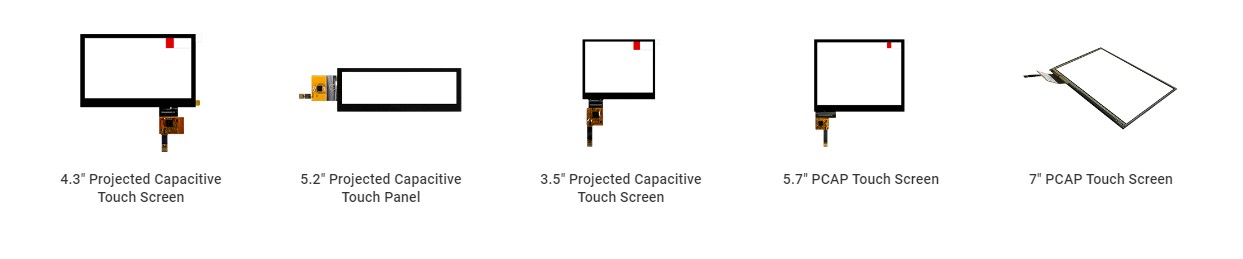
DINGTouch specializes in industrial touch display development and manufacturing, with product sizes ranging from approximately 2 inch to 65 inch.
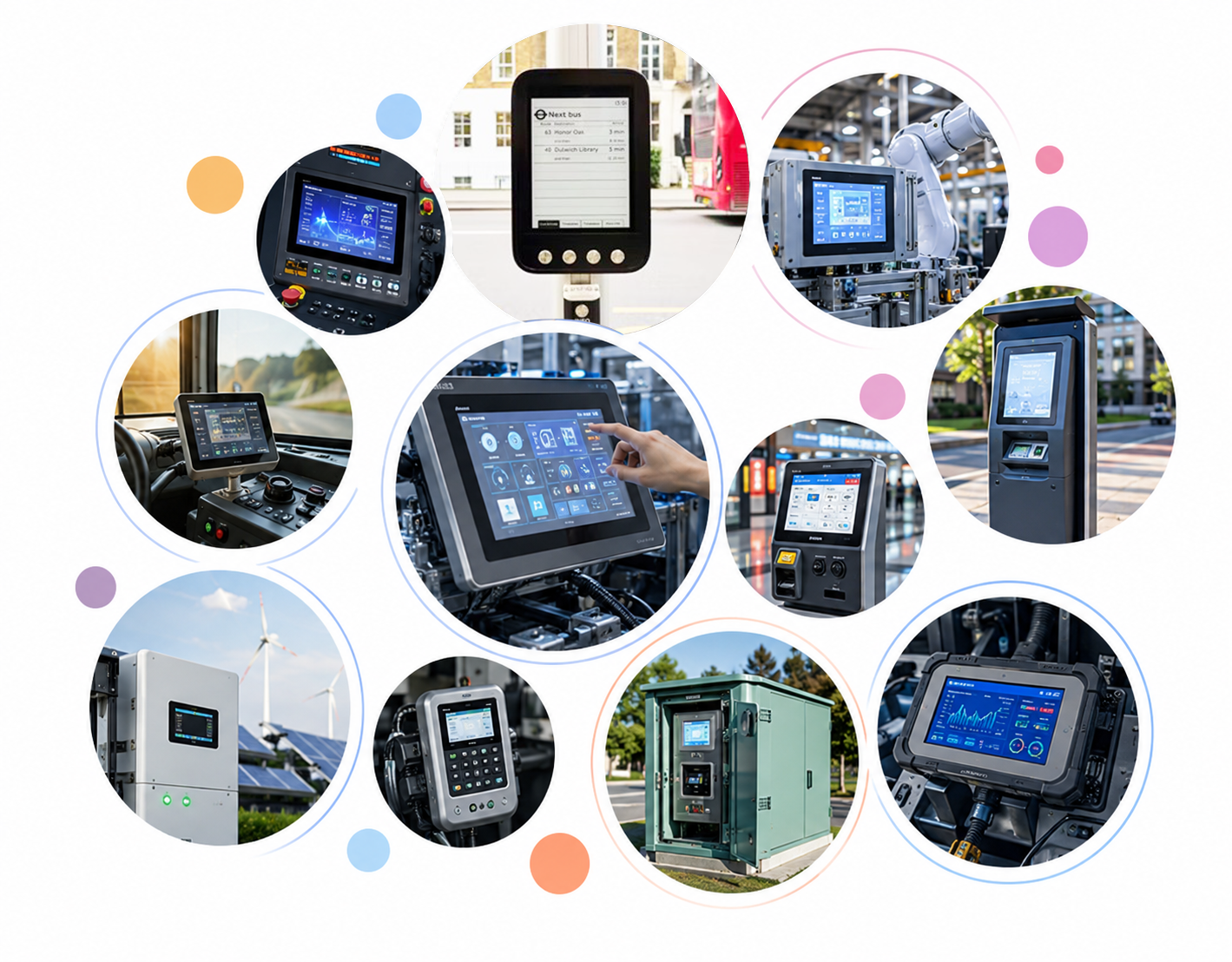
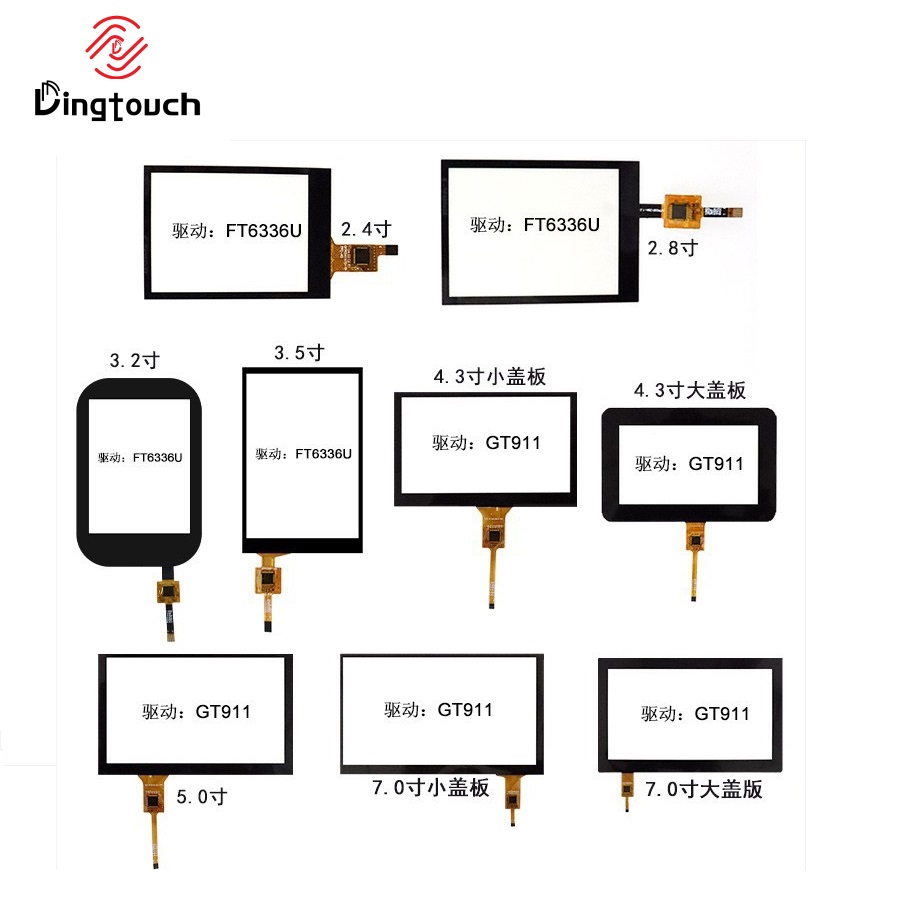
Our product portfolio covers a wide variety of standard display modules, including compact embedded displays, medium and large industrial displays, high-brightness displays, wide-temperature displays, circular displays, and selected irregular-shaped solutions.
Depending on your application requirements, available options may include:
-
Wide-temperature displays: Designed for industrial control equipment, outdoor terminals, and demanding operating environments.
-
High-brightness displays: Suitable for outdoor equipment, self-service terminals, EV charging stations, and applications exposed to strong ambient light.
-
Standard-size displays: Available in various sizes, resolutions, brightness levels, and interface configurations.
-
Circular displays: Ideal for instruments, meters, control panels, and distinctive HMI designs.
-
Irregular-shaped displays: Suitable for applications requiring special display geometries or specific mechanical layouts.
-
Multiple interface options: RGB, LVDS, MIPI, eDP, HDMI, and other interfaces, depending on the selected module and system requirements.
If an existing standard display already meets your requirements for resolution, brightness, operating temperature, interface, and installation dimensions, using that solution is often the most practical choice.
1.1 Reduce Development Costs
Developing a customized display module may involve additional engineering, special tooling, material preparation, and verification work, depending on the requirements.
If the display itself does not need to change, there is little reason to invest in unnecessary customization simply to achieve a different product appearance.
By selecting a suitable standard display module, OEMs can reduce avoidable development work and potentially lower tooling and initial engineering costs.
1.2 Benefit from a More Mature Design
Standard display modules often have an established design and manufacturing process, providing a useful foundation for product development.
When a standard module already satisfies the application requirements, retaining that proven design can reduce unnecessary engineering changes and additional validation work.
Of course, a standard product is not automatically suitable for every application. Buyers should still verify operating temperature, brightness, electrical characteristics, interface compatibility, mechanical dimensions, and long-term availability.
Our recommendation is simple: evaluate existing standard products first, then customize only the parts that genuinely require modification.
2. Why Custom Cover Glass Is Worth Considering
If the display module already meets the functional requirements, where can you create a more distinctive product design?
In many cases, the answer is the cover glass.
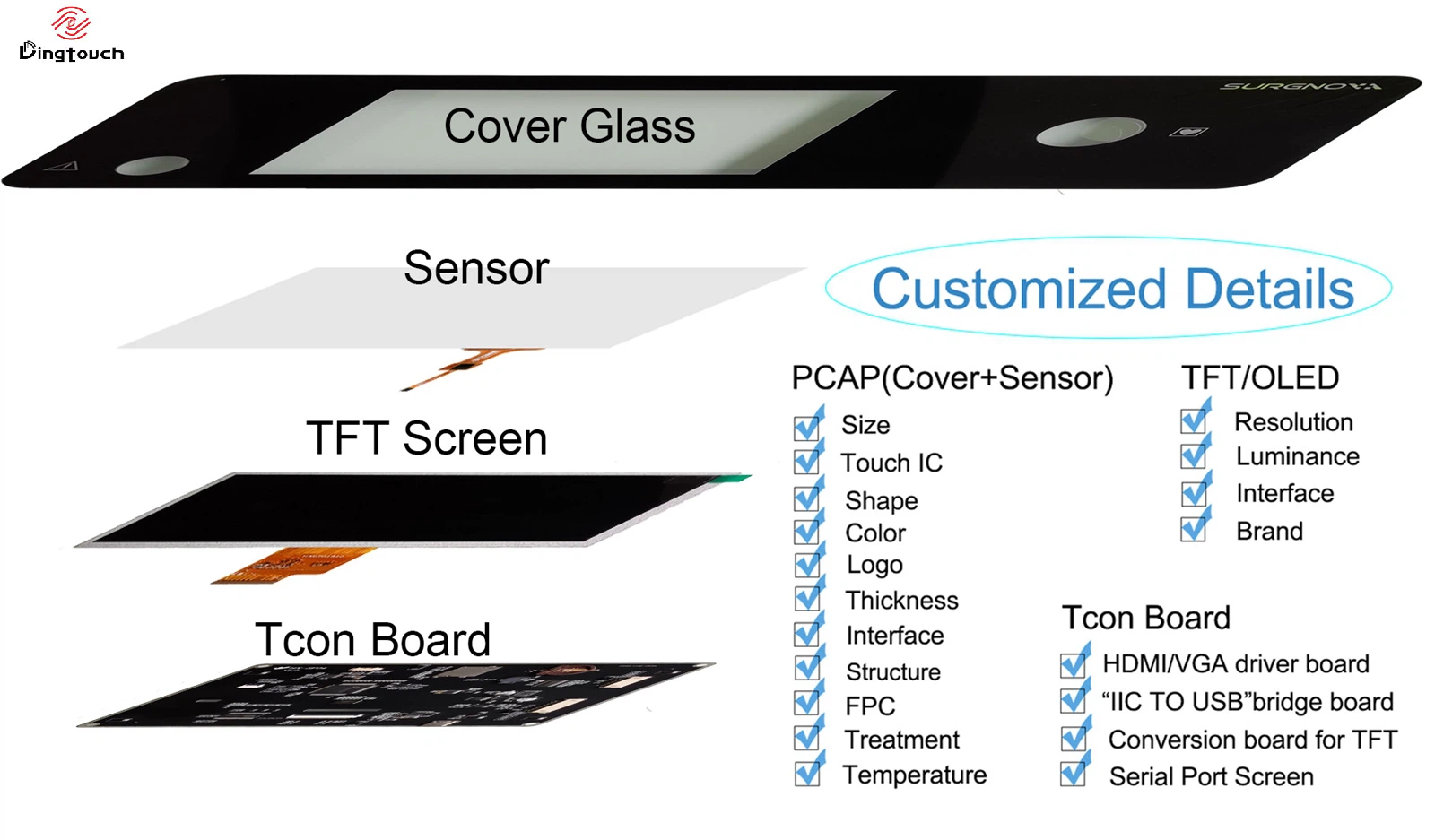
The cover glass is not only a protective layer for a touch display. It is also one of the most visible components of the finished product and an important part of its industrial design.
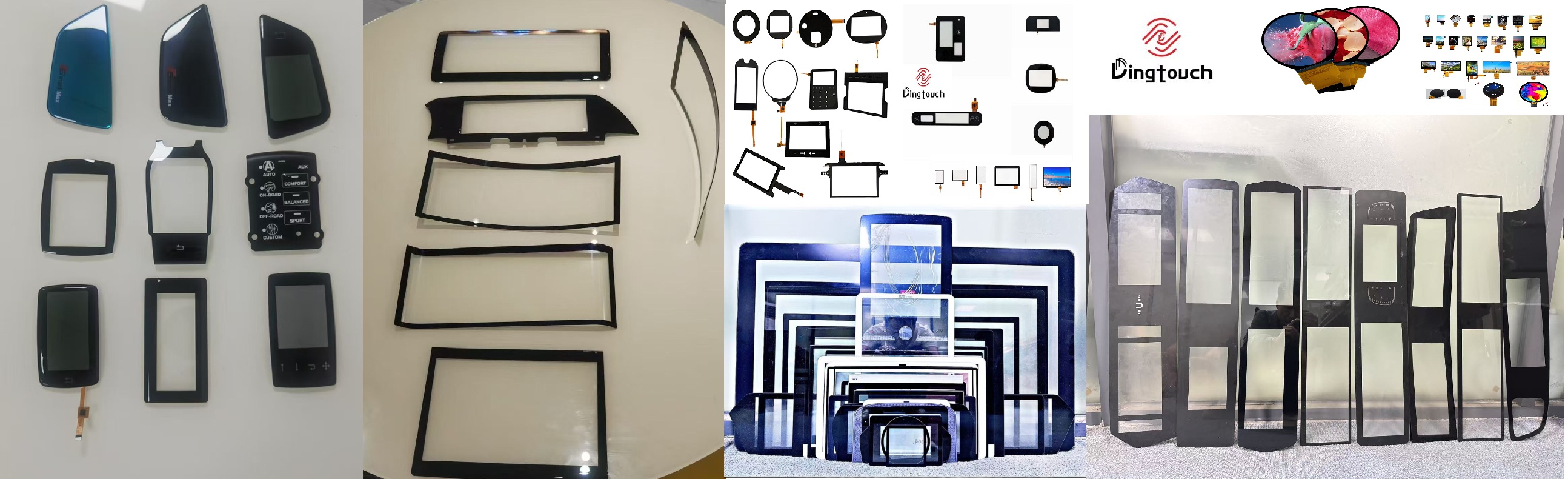
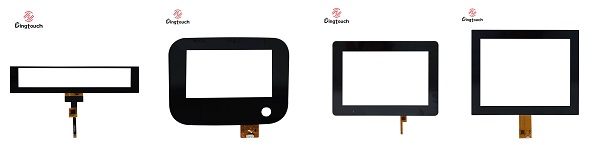
By customizing its shape, cutouts, edge profile, surface treatment, and curvature, manufacturers can adapt the same standard display module to different enclosures and product designs.
Depending on the application, customized cover glass may include the following features.
-
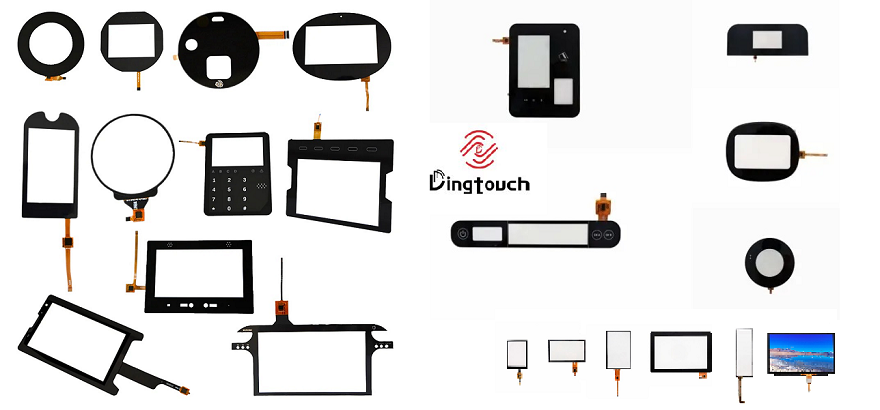
Special outlines: Circular, irregular, asymmetrical, or uniquely contoured shapes.
-
Precision cutouts: Openings for cameras, sensors, indicator lights, physical buttons, and other functional components.
-
3D thermoformed glass: Curved glass designed to complement the enclosure and create a more integrated appearance.
-
Surface treatments: Options such as AG (anti-glare), AR (anti-reflection), and AF (anti-fingerprint), subject to application requirements.
-
Customized appearance: Silk-screen printing, decorative borders, colors, and branding elements.
These design modifications do not necessarily require changes to the display module itself, yet they can significantly transform the appearance of the finished device.
3. A Practical Design Example: Standard Display + Customized Cover Glass
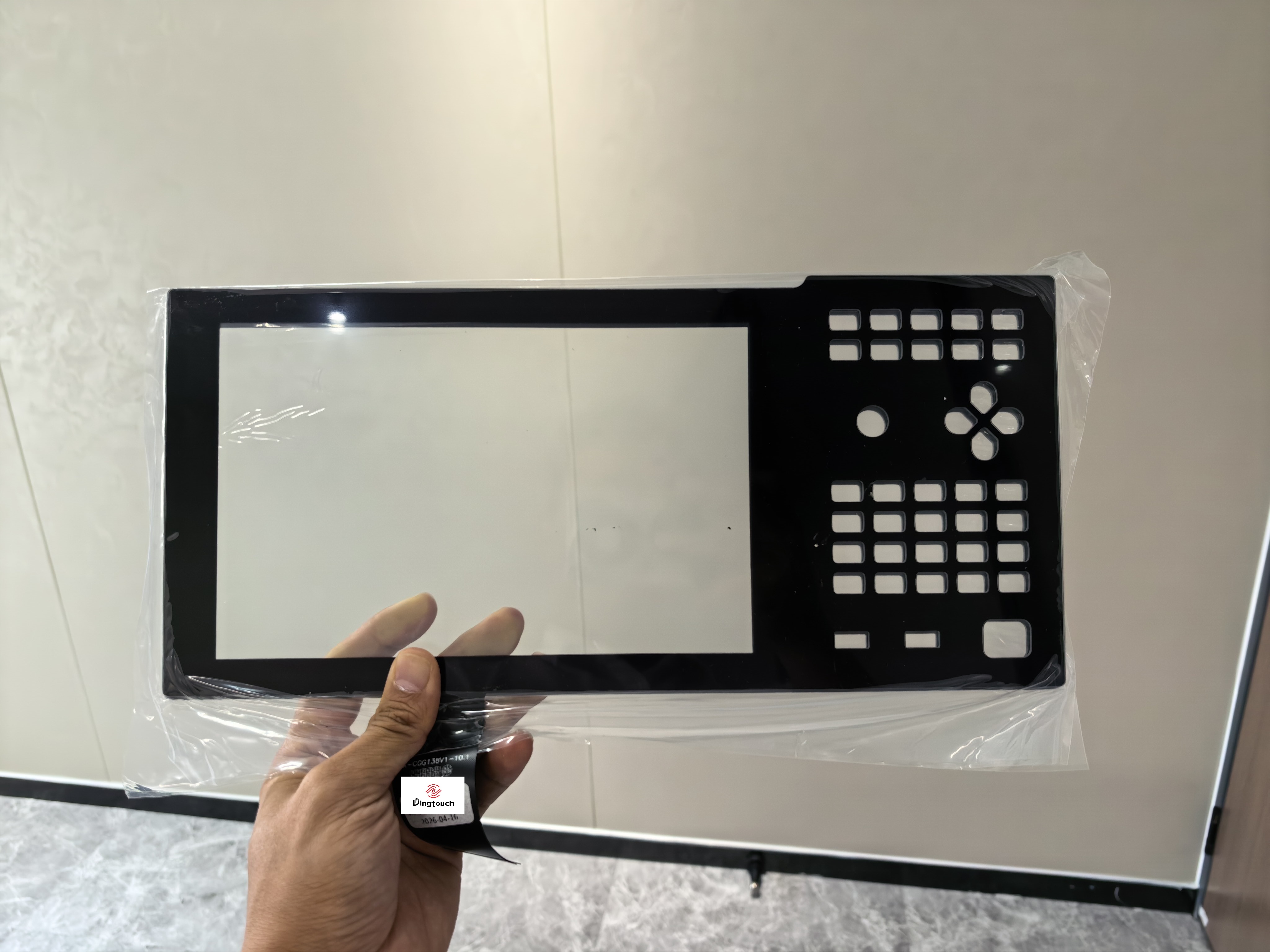
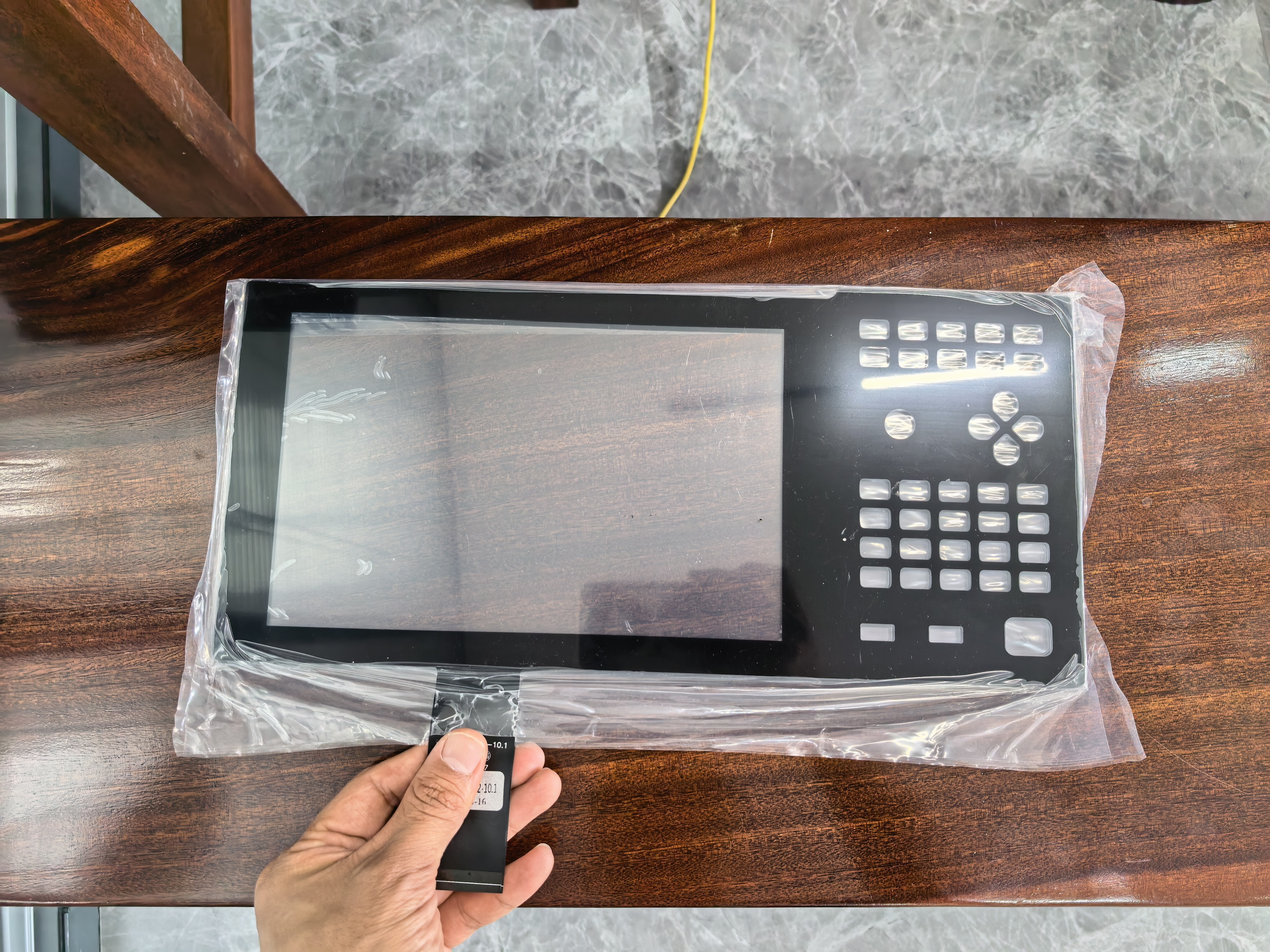
Consider a product design we have worked with.
The display uses a standard display module. The module itself does not require extensive redevelopment to accommodate the overall product appearance.
The main customization is concentrated on the cover glass.
The glass features a special outline, multiple functional cutouts, and a thermoformed structure that creates a three-dimensional shape better suited to the device's overall design.
This combination offers several potential advantages.
3.1 Retain an Established Display Solution
When a standard display module meets the project requirements, the manufacturer can retain that module rather than investing in unnecessary display customization.
This helps preserve the existing display design and avoid additional development costs where they are not needed.
3.2 Create a Distinctive Product Appearance
Special cutouts, curved contours, and customized glass edges can help a product stand out from conventional rectangular-screen designs.
This is particularly valuable for industrial instruments, control panels, medical equipment, smart terminals, and other devices where appearance and functionality must work together.
3.3 Improve Mechanical Integration
The cover glass can be designed around the enclosure, mounting method, internal components, and functional openings.
With proper mechanical planning, the display area and the overall product structure can form a more cohesive design.
3.4 Balance Design Flexibility and Cost
Concentrating customization on the components that directly influence product appearance and user interaction can be an effective way to balance engineering flexibility with development cost.
The actual savings depend on the project. Special cutouts, thermoforming, surface treatments, and order quantities all influence the final cost.
For this reason, the best approach is to evaluate the complete design rather than assume that every customized cover glass will automatically be inexpensive.
4. What Should You Consider When Customizing Cover Glass?
Customized cover glass involves more than cutting a piece of glass into a particular shape.
For industrial touch display projects, several technical details should be confirmed early in the design process.
4.1 Dimensions, Cutouts, and Mechanical Design
Provide a complete 2D drawing or 3D mechanical file whenever possible.
Important details include:
-
Overall glass dimensions
-
Cutout locations and sizes
-
Edge profiles and corner radii
-
Mounting requirements
-
Clearances between the glass, display area, enclosure, and internal components
Accurate drawings help reduce mechanical interference and avoid unnecessary design revisions during prototyping.
4.2 Glass Thickness and Mechanical Strength
Glass thickness and strengthening requirements should be selected according to the application, mounting method, impact requirements, and touch performance.
For industrial and outdoor equipment, the design may also need to account for vibration, temperature variation, cleaning procedures, and long-term use.
The appropriate glass specification should be determined by the actual operating conditions rather than appearance alone.
4.3 Thermoforming and Curved Glass Compatibility
For products requiring 3D curved glass, the design team should confirm the curvature, bending direction, dimensional tolerances, and fit with the device enclosure.
The curved structure should also be evaluated for its effect on the visible display area, touch interaction, and assembly process.
Early engineering evaluation can help identify potential issues before tooling and sample production begin.
4.4 Matching the Cover Glass with the Touch Sensor
For capacitive touch displays, the cover glass must be compatible with the touch sensor and controller.
Factors such as glass thickness, material properties, sensor structure, controller tuning, and operating conditions can influence touch performance.
Applications involving thick glass, curved surfaces, glove operation, or wet environments may require additional controller tuning and practical testing.
At DINGTouch, we recommend evaluating the cover glass, touch sensor, and controller as a complete touch system rather than treating them as independent components.
4.5 Bonding Method and Optical Performance
Depending on the mechanical structure, optical requirements, budget, and service strategy, the project may use air-gap bonding or optical bonding.
Optical bonding can reduce reflections associated with the air gap and improve readability in many applications. However, the best bonding method depends on the display structure, environmental requirements, maintenance considerations, and total project cost.
Selecting the appropriate bonding process early can help avoid compatibility issues during final assembly.
The earlier you confirm the display, cover glass, touch sensor, and mechanical structure, the easier it is to reduce redesigns and repeated prototyping.
5. DINGTouch: Combining Standard Products with Customized Solutions
DINGTouch specializes in industrial display modules, projected capacitive touch screens, integrated touch display assemblies, and customized display solutions.
We help customers evaluate existing standard display modules and identify the most appropriate solution for their equipment. When necessary, we can also assess customized cover glass, touch integration, and bonding options.
Our development approach is straightforward:
-
Use standard display modules whenever practical. Select an existing solution when it meets the project's technical requirements.
-
Customize the cover glass when the design requires it. Develop special outlines and functional cutouts to match the product structure.
-
Evaluate thermoformed glass for curved designs. Explore 3D glass solutions when a curved appearance is an important design requirement.
-
Customize performance where necessary. Assess brightness, operating temperature, touch performance, environmental protection, and other application-specific requirements.
Our goal is to help customers find the right balance between design flexibility, development cost, product reliability, and delivery efficiency.
Customization should solve a real engineering or product design challenge, not simply add complexity to the project.
6. Conclusion: Keep the Display Standard and Customize What Makes Your Product Different
For many industrial equipment and smart terminal projects, the most practical solution is not to customize every component of the display assembly.
Instead, combine a mature standard display module with customized cover glass to achieve a distinctive design without unnecessary development work.
The display module provides the required visual performance, while the cover glass offers flexibility in appearance, functional cutouts, curved geometry, surface treatment, and product branding.
If you are developing industrial control equipment, medical instruments, outdoor terminals, self-service devices, or other products requiring a customized appearance, DINGTouch can help you evaluate the right approach.
Share your display size, mechanical requirements, operating environment, or preliminary drawings with our team. We can help assess which components are suitable for standard products, which parts may benefit from customization, and how to optimize the overall development process.
DINGTouch — Standard Display Modules, Customized Cover Glass, Tailored Touch Display Solutions.

Ready to Build Your Outdoor Display Solution?
Get in touch with us at sales@szdingtouch.com. Our expert engineers will help you design a cost-effective, tailored solution to meet your project’s exact specifications.
DINGTouch:Committed to continuous innovation and improvement of product quality to meet customers' high requirements and expectations.
DINGTouch is a manufacturer that provides high quality touch screen panels. Focus on the design, manufacturing and sales of touch screen panels, and are committed to providing customized solutions that satisfy customers.
DINGTouch: In the process of customizing touch screen panels, we focus on close cooperation and communication with customers. Understanding customers' needs and providing customized solutions will meet customers' individual needs. The company's products are favored by customers for their high quality and reliability, and provide them with the best touchscreen panel solutions.
DINGTouch:Committed to continuous innovation and improvement of product quality to meet customers' high requirements and expectations.
DINGTouch is a manufacturer that provides high quality touch screen panels. Focus on the design, manufacturing and sales of touch screen panels, and are committed to providing customized solutions that satisfy customers.
DINGTouch: In the process of customizing touch screen panels, we focus on close cooperation and communication with customers. Understanding customers' needs and providing customized solutions will meet customers' individual needs. The company's products are favored by customers for their high quality and reliability, and provide them with the best touchscreen panel solutions.
At DINGTOUCH, we are the world's leading touchscreen manufacturer, helping businesses around the world take advantage of this exciting technology. For more information, please visit the home page now.

DINGTouch is a company specializing in the R&D and production of touch screen technology, headquartered in Shenzhen, China. As a professional touch screen supplier, DINGTouch is committed to providing high-quality, stable and reliable touch screen products to meet the diverse needs of customers. We continue to carry out technological innovation and product optimization to ensure that its touch screen products have good sensitivity, accuracy and durability.
In addition to the products themselves, we also focus on cooperation and communication with customers, and are committed to providing customized solutions and excellent after-sales services. Through continuous efforts to improve product quality and customer satisfaction, we have established a good reputation in the touchscreen industry and won widespread market recognition.
In addition to the products themselves, we also focus on cooperation and communication with customers, and are committed to providing customized solutions and excellent after-sales services. Through continuous efforts to improve product quality and customer satisfaction, we have established a good reputation in the touchscreen industry and won widespread market recognition.
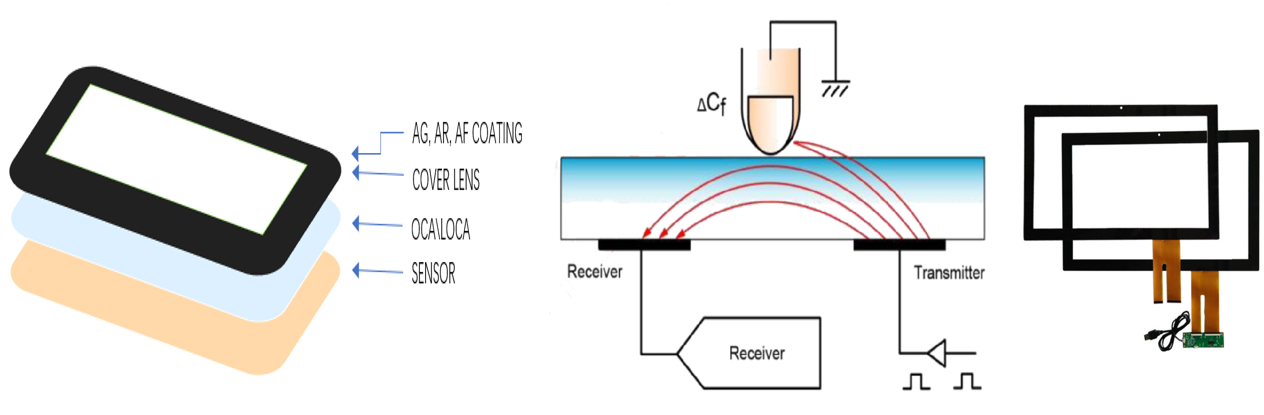
What DINGTOUCH can do:
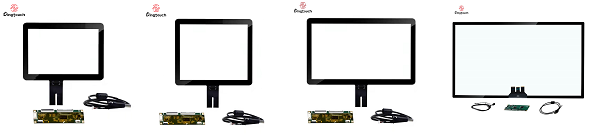
• PCAP maximum size 65”
• Multi-touch (Touch screen can be customized to your needs.)
• Optical bonding service/air bonding
• LCD interface: HDMI/RGB/MIPI/LVDS/EDP, etc.
• PCAP interface: IIC/USB interface
• CTP can customize the cover glass surface treatment process AG (anti-glare), AR (anti-reflection), AF (anti-fingerprint), waterproof, and glove touch
• Supports 0.55 mm-12 mm coverslip touch.
• Support operating temperature: -40℃-90℃.
Dingtouch Industrial capacitive touch screen Manufacturer
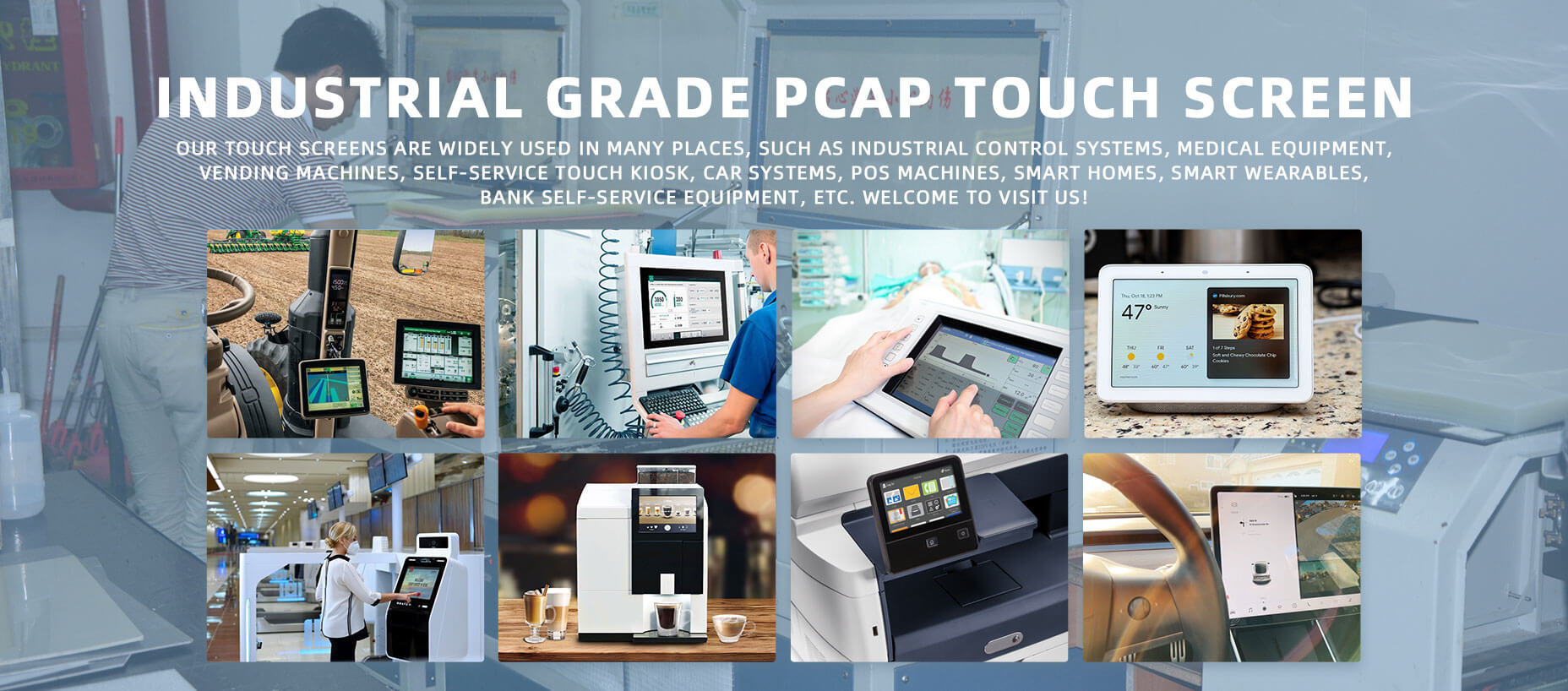
In conclusion, Dingtouch as a professional touch screen manufacturer with more than 10 years touch screen experience.We have many capacitive touch screen . Such as 5 inch touch screen,7 inch touch screen,10.1inch touch screen,15 inch touch screen,15.6 inch touch screen,17 inch touch screen,18.5 inch touch screen,19 inch touch screen,21.5 inch touch screen,32 inch touch screen, However, we also welcome to customize your own touch screen . Contact our team today to learn what capacitive touch screen are best for our retail business needs.
Contact us NOW! sales@szdingtouch.com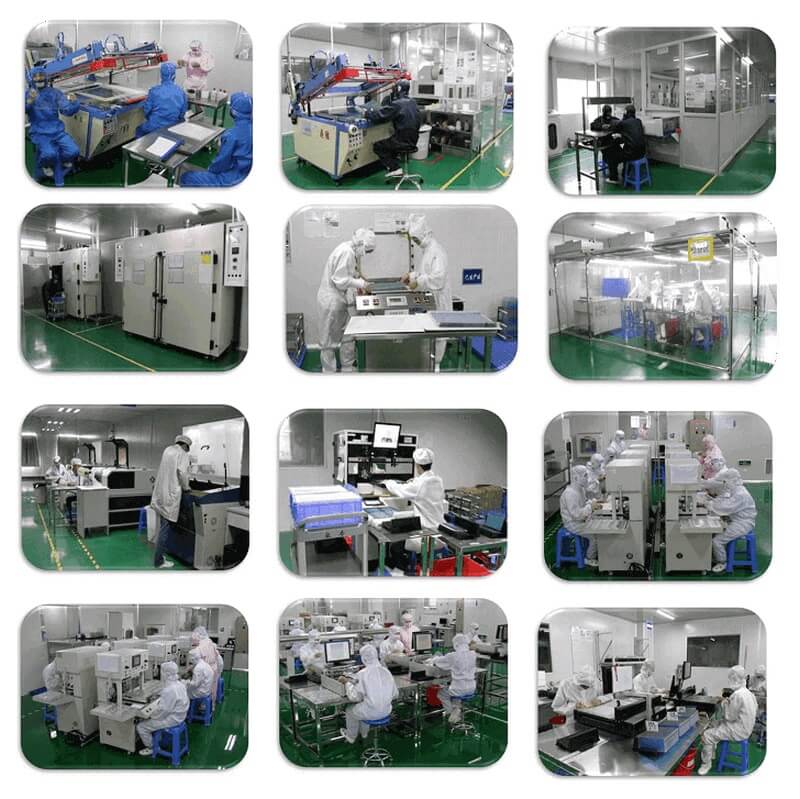
#Medicaltouchscreencalibration, #capacitivetouchcalibrationguide, #IEC60601touchscreen, #DINGTouchmedicaldisplay, #touchscreenaccuracy, #touchscreen driftfix, #medicalequipmenttouchsolutions, #IP65touchpanel, #IK10medicaltouchscreen, #glove touch medical monitor,#ILITEKTouchControllerICSelectionGuide ,#OCAtoOCR #GT911,#CustomizedWideTemperatureTouchScreenSolutions,#Waterproof Touchscreen,
#highbrightnessLCD, #sunlightreadabledisplay,#industrialLCDbacklight, #outdoor displaymodule, #customLCDsolution, #1000–2000nitsdisplay, #DINGTouchtouchscreen.
#capacitivetouchscreen, #EMI/EMCoptimization, #anti-interferencetechnology, #DINGTouch,#customtouchscreensolutions, #industrialtouchdisplay, #medicaltouch screen, #5Gtouchscreen, #AIanti-interferencealgorithm, #smarttouchdisplay,
#10_4InchDisplay #1024x768Display #MIPIDisplay #IndustrialDisplay #HighBrightnessDisplay #WideTemperatureDisplay #PCAPTouchScreen #TouchDisplay #EmbeddedDisplay #IndustrialHMI #OutdoorDisplay #HandheldDevice #SmartTerminal #DINGTouch
DINGTouch — Custom Touch Display Solutions Expert
Every touch, clear and precise, ready for any environment.
#10_4InchDisplay #1024x768Display #MIPIDisplay #IndustrialDisplay #HighBrightnessDisplay #WideTemperatureDisplay #PCAPTouchScreen #TouchDisplay #EmbeddedDisplay #IndustrialHMI #OutdoorDisplay #HandheldDevice #SmartTerminal #DINGTouch
Every touch, clear and precise, ready for any environment.
CATEGORIES
CONTACT US
Contact: Dingtouch
Phone: +8615815536116
Tel: +8615815536116
Email: sales@szdingtouch.com
Add: Building A, Bailu Plaza, No. 48, Gonghe Industrial Road, Gongle Community, Xixiang Street, Baoan District, Shenzhen,China. 518126
 Dingtouch