News
Chemically Strengthened Glass vs. Tempered Glass: Which Is Better for Industrial Touch Screen?
 Chemically Strengthened Glass vs. Tempered Glass: Which Is Better for Industrial touch screen?
Choosing the right cover glass is one of the most critical decisions in the design of an industrial touch display. Although the cover glass represents only a small portion of the overall display assembly, it directly affects durability, impact resistance, optical performance, touch sensitivity, long-term reliability, and even the product's appearance.
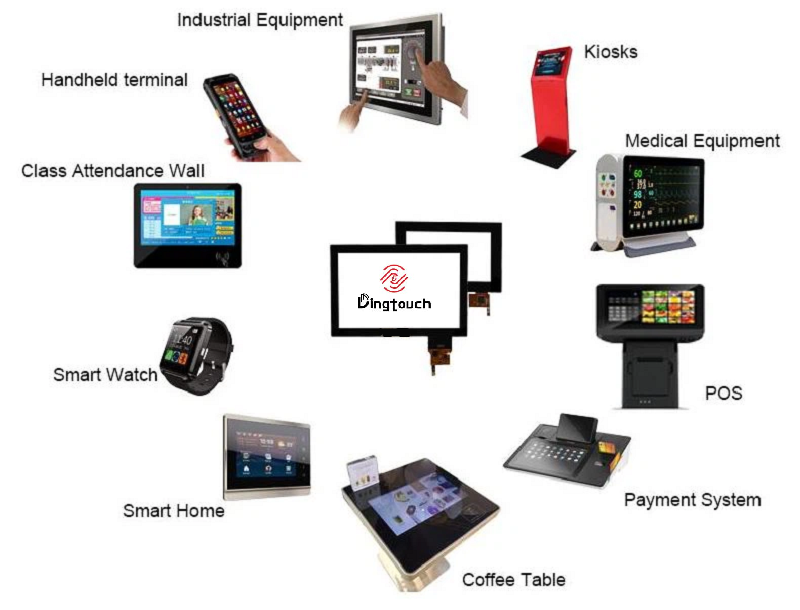
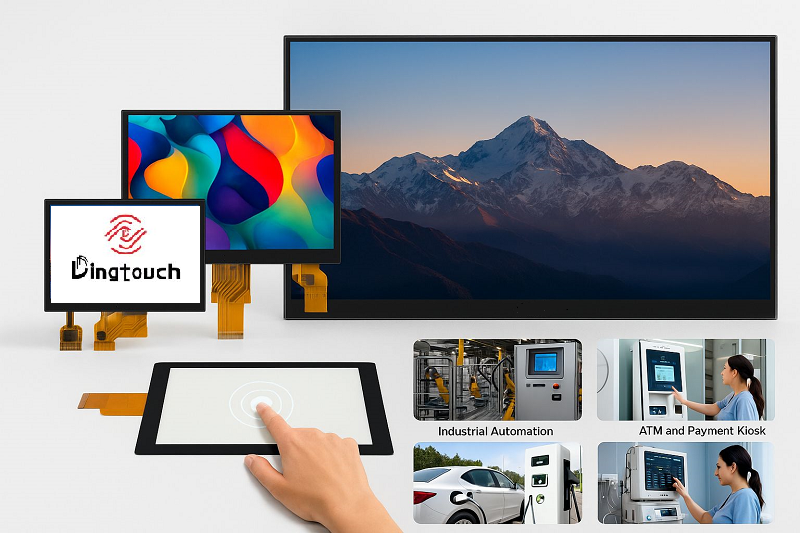
For industrial equipment operating in harsh environments—such as factory automation systems, medical devices, outdoor kiosks, marine electronics, transportation terminals, mining machinery, and EV charging stations—the cover glass must withstand mechanical impacts, scratches, vibration, chemicals, temperature fluctuations, and years of continuous use.
Two strengthening technologies dominate the industry:
- Chemically Strengthened Glass
- Thermally Tempered Glass (Physical Tempering)
Both significantly improve the mechanical strength of glass compared with untreated glass, yet they rely on entirely different strengthening mechanisms and deliver different performance characteristics.
Many engineers and purchasing managers assume that tempered glass is always stronger because it is widely used in architectural applications. In reality, this assumption is often incorrect when designing industrial touch screens.
For modern projected capacitive (PCAP) touch displays, chemically strengthened aluminosilicate glass has become the preferred solution due to its superior surface compressive stress, excellent optical quality, thinner profile, and better compatibility with precision machining.
This guide explains the science behind both technologies, compares their advantages and limitations, and provides practical engineering recommendations to help OEMs and product designers choose the most suitable glass for industrial applications.
Why Cover Glass Matters More Than Ever
Industrial displays have evolved dramatically over the past decade. Today's touch screens are expected to deliver:
- High optical clarity
- Excellent touch sensitivity
- Long service life
- Reliable outdoor performance
- Resistance to accidental impacts
- Compatibility with optical bonding
- Support for AG, AR, and AF surface treatments
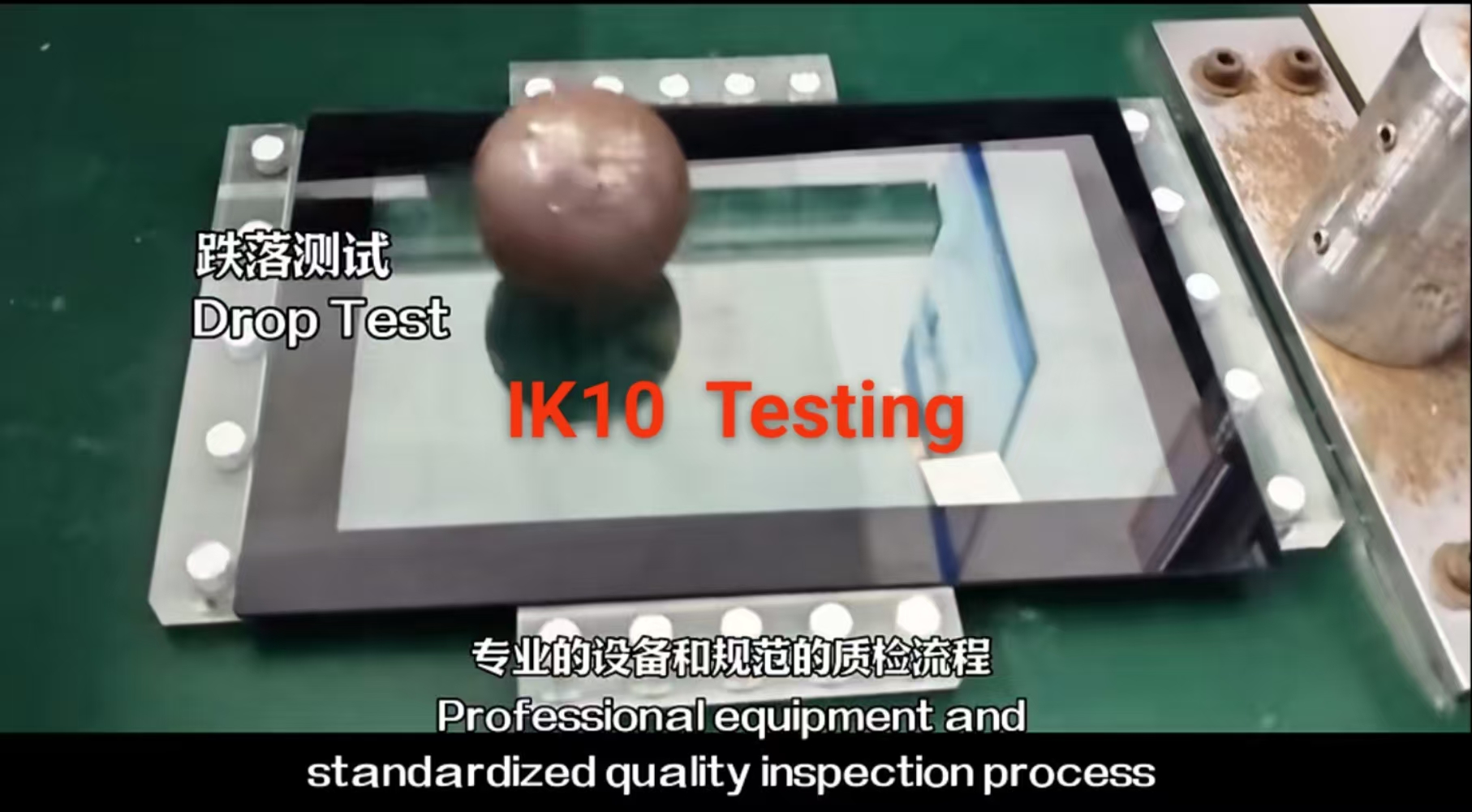
- Compliance with IK and IP protection requirements
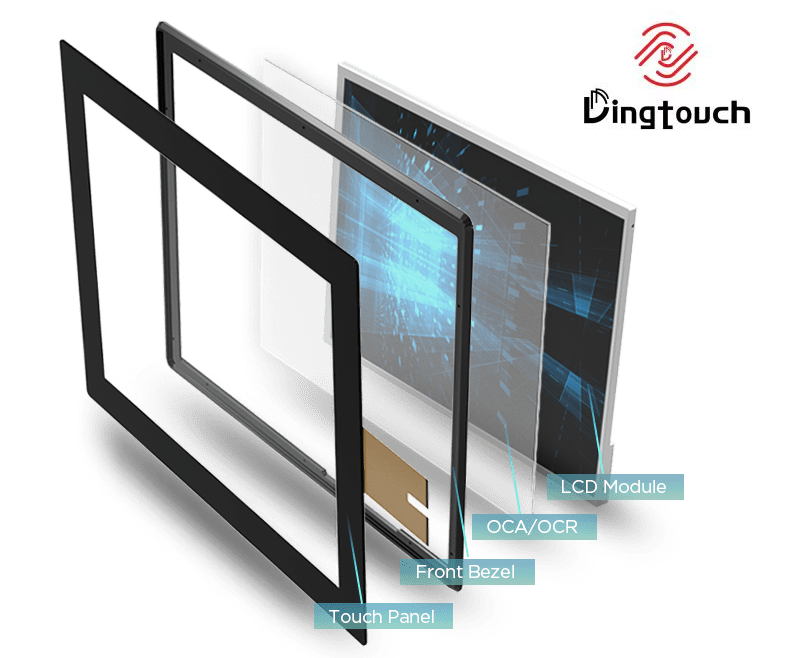
As display technology advances, cover glass has become more than just a protective layer. It is now an integral structural and optical component of the complete human–machine interface (HMI).
Selecting the wrong strengthening process may lead to:
- Edge cracking during assembly
- Reduced impact resistance
- Poor machining quality
- Optical distortion
- Premature field failures
- Higher maintenance costs
For this reason, understanding the differences between chemically strengthened glass and tempered glass is essential before beginning product development.
What Is Chemically Strengthened Glass?
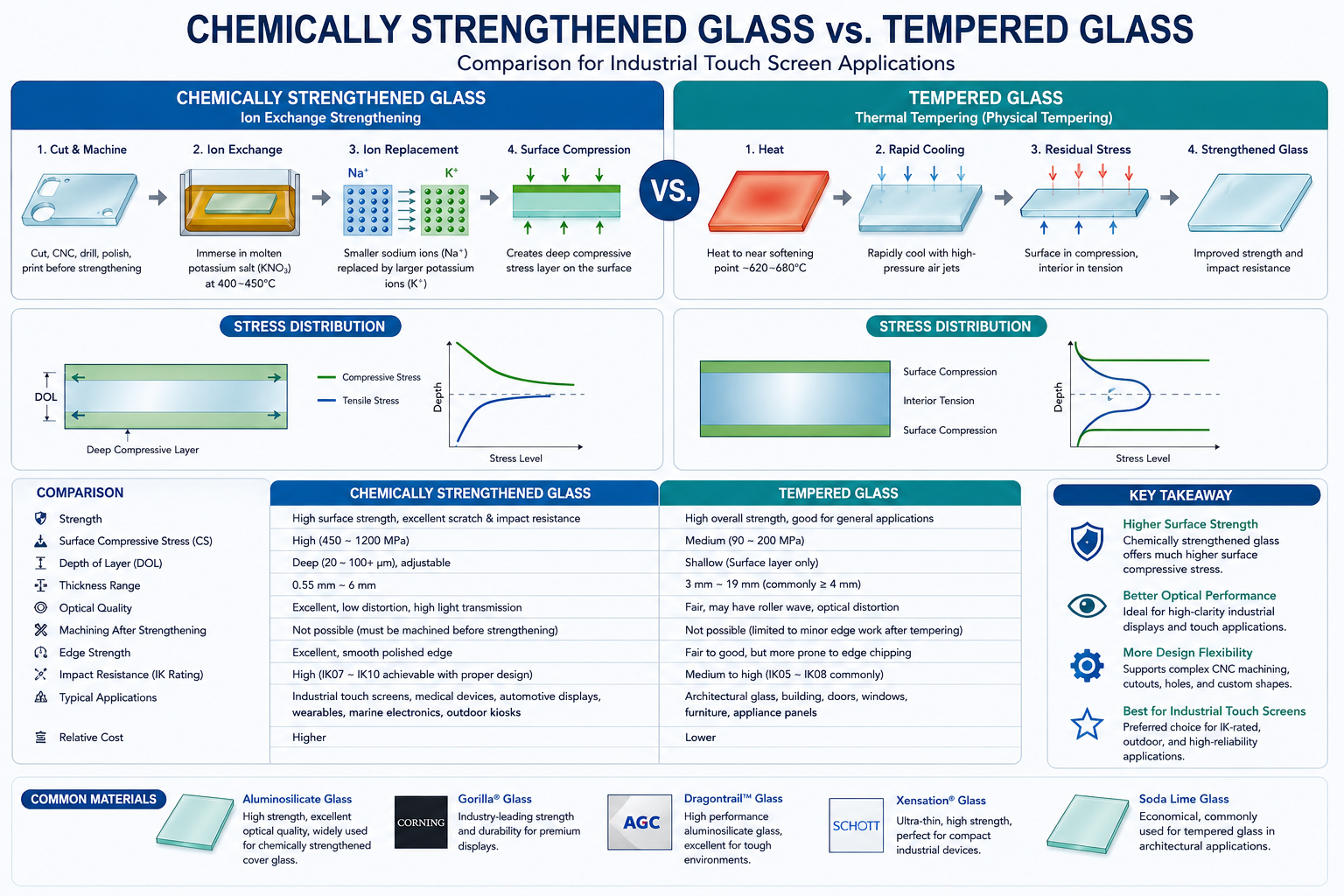
Chemically strengthened glass is produced through an ion-exchange process that creates a highly compressed surface layer without exposing the glass to thermal distortion.
The process begins with aluminosilicate glass that has already been cut, drilled, polished, silk-screen printed, and machined into its final shape.
The finished glass is then immersed in a molten potassium salt bath, typically potassium nitrate (KNO₃), at approximately 400–450°C.
During this process, smaller sodium ions (Na⁺) within the glass surface are replaced by larger potassium ions (K⁺). Because the larger ions occupy the same lattice positions, they generate a permanent compressive stress layer on the glass surface.
Unlike thermal tempering, this strengthening mechanism does not rely on rapid cooling. Instead, it modifies the glass at the molecular level, producing a surface that is significantly more resistant to crack initiation and propagation.
This process is commonly referred to as Ion Exchange Strengthening.
How Ion Exchange Works
The strengthening mechanism can be simplified into four stages:
- Glass Preparation – The cover glass is cut, CNC-machined, drilled, polished, and cleaned.
- Salt Bath Immersion – The glass is submerged in molten potassium nitrate at a controlled temperature.
- Ion Replacement – Sodium ions near the surface are exchanged with larger potassium ions.
- Surface Compression Formation – The resulting compressive stress layer significantly increases resistance to scratches, impacts, and bending forces.
Unlike coatings or surface films, this compressive layer becomes an integral part of the glass structure and cannot peel or wear away during normal use.
Advantages of Chemically Strengthened Glass
The ion-exchange process provides several benefits that make chemically strengthened glass particularly suitable for industrial touch screens:
Higher Surface Strength
The compressive stress generated by ion exchange effectively suppresses the initiation and growth of surface cracks, improving resistance to impacts and scratches.
Thin Glass Compatibility
Chemical strengthening can be applied to very thin glass, typically ranging from 0.55 mm to 6 mm, making it ideal for compact industrial devices and high-performance touch interfaces.
Excellent Optical Quality
Because the process does not involve rapid heating and cooling, chemically strengthened glass maintains exceptional flatness, low optical distortion, and high light transmission.
Precision Machining
All CNC machining, drilling, edge polishing, and complex shaping are completed before strengthening. This allows intricate designs, sensor windows, camera openings, and irregular geometries without compromising final strength.
Superior Surface Treatments
Chemically strengthened glass is highly compatible with:
- Anti-Glare (AG)
- Anti-Reflection (AR)
- Anti-Fingerprint (AF)
- Optical Bonding (OCA)
These treatments are widely used in industrial, medical, and outdoor display applications.
What Is Thermally Tempered Glass?
Thermally tempered glass, often referred to simply as tempered glass, is strengthened through a controlled heating and rapid cooling process.
The glass is heated to approximately 620–680°C, near its softening point. It is then rapidly cooled using high-pressure air jets.
This rapid quenching causes the outer surfaces to cool and solidify first while the interior remains hot. As the inner core cools and contracts, it places the outer surfaces into compression and the interior into tension.
This residual stress distribution significantly improves mechanical strength compared with untreated glass.
Thermally tempered glass is widely used in:
- Building facades
- Glass doors
- Shower enclosures
- Furniture
- Automotive side windows
- Architectural glazing
However, the requirements of industrial touch screens differ significantly from those of architectural glass.
Characteristics of Tempered Glass
Thermally tempered glass offers several advantages:
- High impact resistance
- Improved bending strength
- Safe fragmentation into small blunt particles when broken
- Cost-effective production for large panels
- Excellent suitability for construction applications
Despite these strengths, thermal tempering also introduces limitations that are important for industrial display designers to consider:
- Increased optical distortion
- Roller wave and surface waviness
- Difficulty producing very thin glass
- Limited compatibility with precision post-processing
- Lower flexibility for complex CNC geometries after tempering
These factors often make thermally tempered glass less suitable for high-performance touch displays requiring tight dimensional tolerances and premium optical quality.
Engineering Insight: Why Industrial Touch Screens Favor Chemical Strengthening
Modern industrial touch displays require a combination of mechanical durability, optical excellence, and manufacturing flexibility.
Chemically strengthened glass meets these demands because it can deliver:
- High surface compressive stress
- Superior optical clarity
- Thin and lightweight designs
- Excellent compatibility with OCA optical bonding
- Reliable support for AG, AR, and AF coatings
- Precision CNC machining before strengthening
- Improved resistance to edge chipping
These characteristics explain why chemically strengthened aluminosilicate glass has become the preferred material for industrial HMIs, medical devices, outdoor terminals, marine electronics, and other demanding applications where long-term reliability is essential.



Ready to Build Your Outdoor Display Solution?
Get in touch with us at sales@szdingtouch.com. Our expert engineers will help you design a cost-effective, tailored solution to meet your project’s exact specifications.
DINGTouch:Committed to continuous innovation and improvement of product quality to meet customers' high requirements and expectations.
DINGTouch is a manufacturer that provides high quality touch screen panels. Focus on the design, manufacturing and sales of touch screen panels, and are committed to providing customized solutions that satisfy customers.
DINGTouch: In the process of customizing touch screen panels, we focus on close cooperation and communication with customers. Understanding customers' needs and providing customized solutions will meet customers' individual needs. The company's products are favored by customers for their high quality and reliability, and provide them with the best touchscreen panel solutions.
DINGTouch:Committed to continuous innovation and improvement of product quality to meet customers' high requirements and expectations.
DINGTouch is a manufacturer that provides high quality touch screen panels. Focus on the design, manufacturing and sales of touch screen panels, and are committed to providing customized solutions that satisfy customers.
DINGTouch: In the process of customizing touch screen panels, we focus on close cooperation and communication with customers. Understanding customers' needs and providing customized solutions will meet customers' individual needs. The company's products are favored by customers for their high quality and reliability, and provide them with the best touchscreen panel solutions.
At DINGTOUCH, we are the world's leading touchscreen manufacturer, helping businesses around the world take advantage of this exciting technology. For more information, please visit the home page now.
Find the DINGTouch technical team to achieve the success of your company's new project.
DINGTouch is a company specializing in the R&D and production of touch screen technology, headquartered in Shenzhen, China. As a professional touch screen supplier, DINGTouch is committed to providing high-quality, stable and reliable touch screen products to meet the diverse needs of customers. We continue to carry out technological innovation and product optimization to ensure that its touch screen products have good sensitivity, accuracy and durability.
In addition to the products themselves, we also focus on cooperation and communication with customers, and are committed to providing customized solutions and excellent after-sales services. Through continuous efforts to improve product quality and customer satisfaction, we have established a good reputation in the touchscreen industry and won widespread market recognition.
In addition to the products themselves, we also focus on cooperation and communication with customers, and are committed to providing customized solutions and excellent after-sales services. Through continuous efforts to improve product quality and customer satisfaction, we have established a good reputation in the touchscreen industry and won widespread market recognition.
What DINGTOUCH can do:
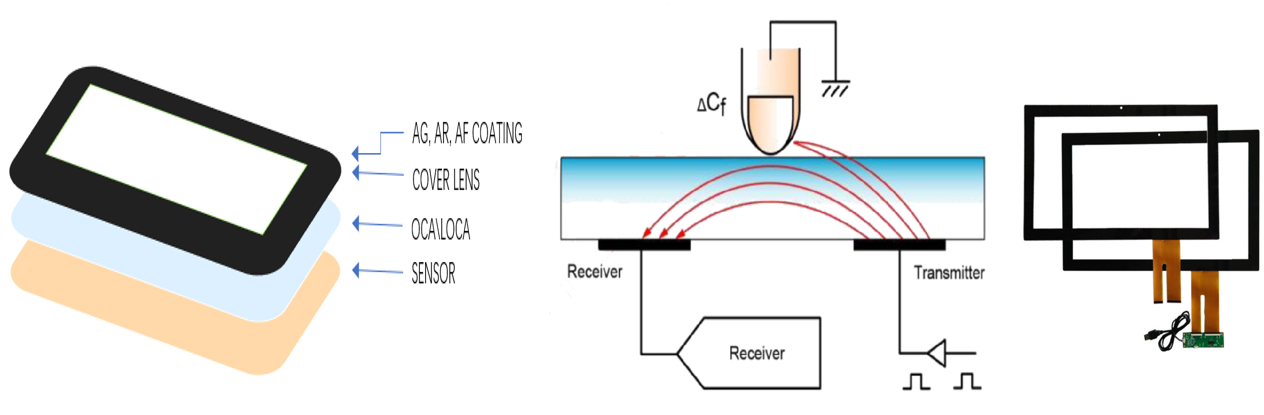
• PCAP maximum size 65”
• Multi-touch (Touch screen can be customized to your needs.)
• Optical bonding service/air bonding
• LCD interface: HDMI/RGB/MIPI/LVDS/EDP, etc.
• PCAP interface: IIC/USB interface
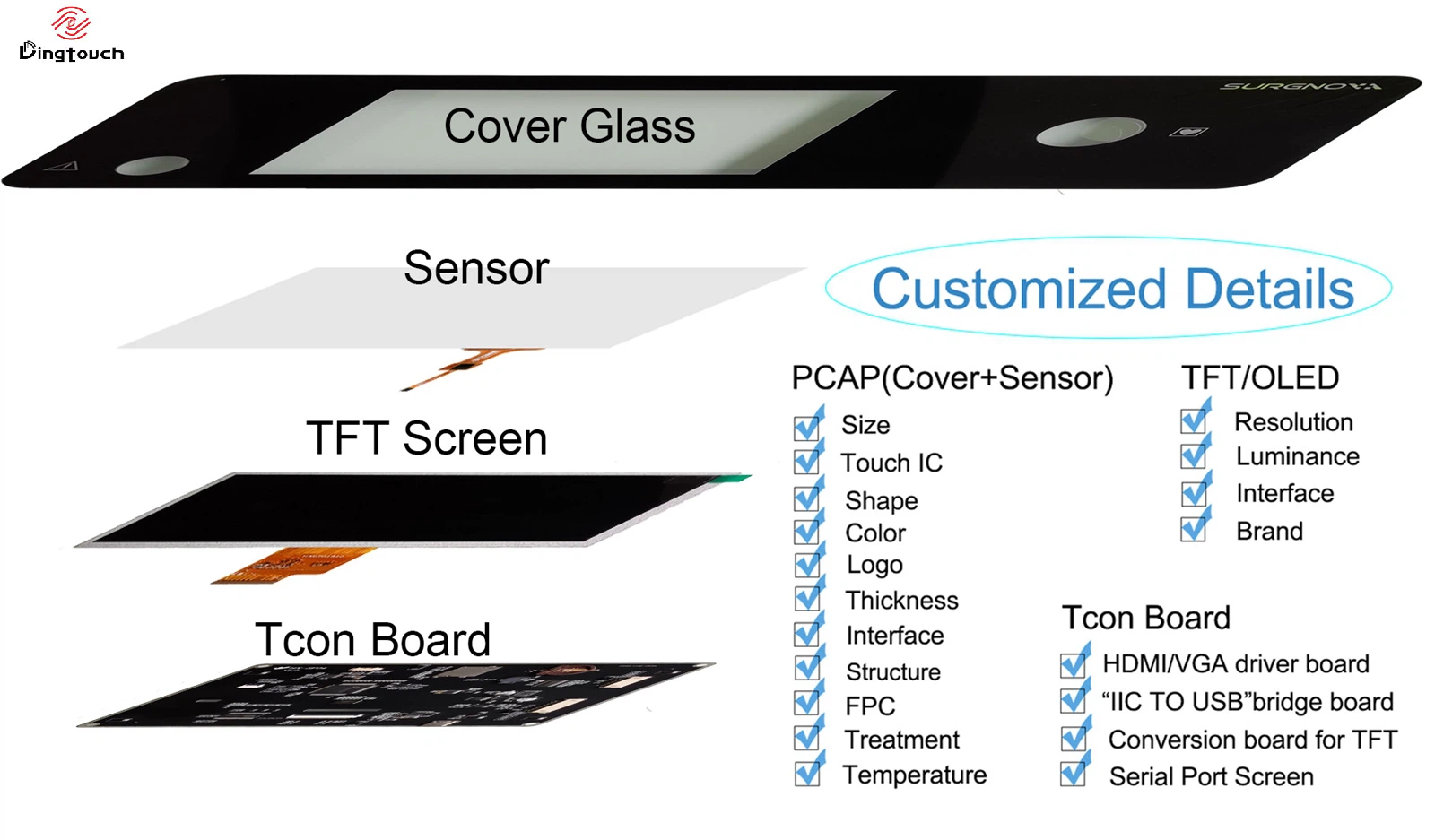
• CTP can customize the cover glass surface treatment process AG (anti-glare), AR (anti-reflection), AF (anti-fingerprint), waterproof, and glove touch
• Supports 0.55 mm-12 mm coverslip touch.
• Support operating temperature: -40℃-90℃.
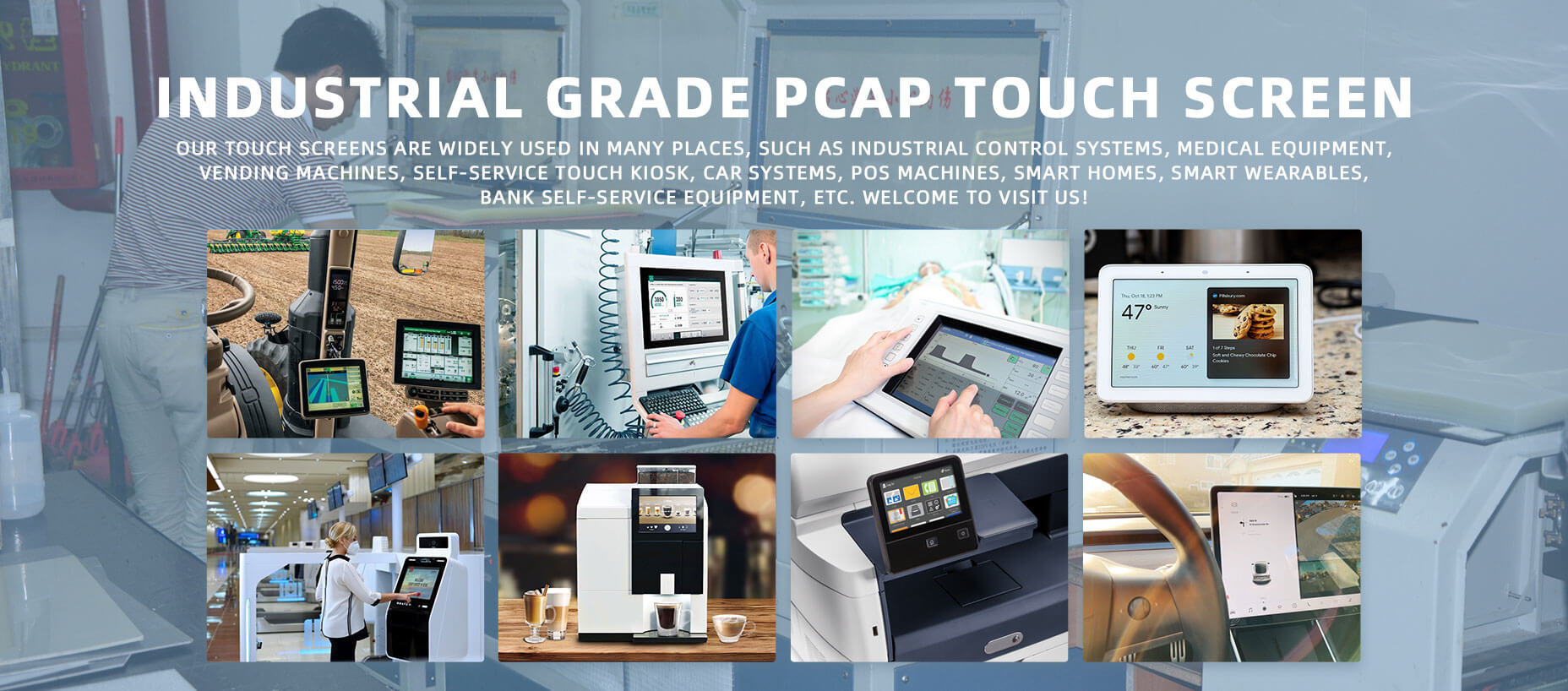
Dingtouch Industrial capacitive touch screen Manufacturer
In conclusion, Dingtouch as a professional touch screen manufacturer with more than 10 years touch screen experience.We have many capacitive touch screen. Such as5 inch touch screen,7 inch touch screen,10.1inch touch screen,15 inch touch screen,15.6 inch touch screen,17 inch touch screen,18.5 inch touch screen,19 inch touch screen,21.5 inch touch screen,32 inch touch screen, However, we also welcome to customize your own touch screen . Contact our team today to learn what capacitive touch screen are best for our retail business needs.
Contact us NOW! sales@szdingtouch.com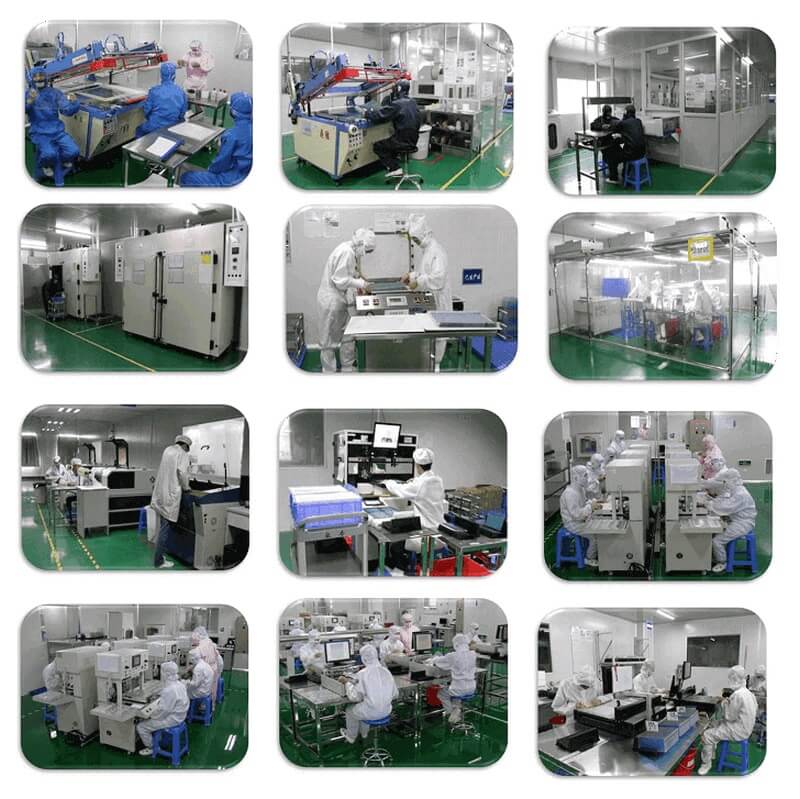
CATEGORIES
CONTACT US
Contact: Dingtouch
Phone: +8615815536116
Tel: +8615815536116
Email: sales@szdingtouch.com
Add: Building A, Bailu Plaza, No. 48, Gonghe Industrial Road, Gongle Community, Xixiang Street, Baoan District, Shenzhen,China. 518126
 Dingtouch