News
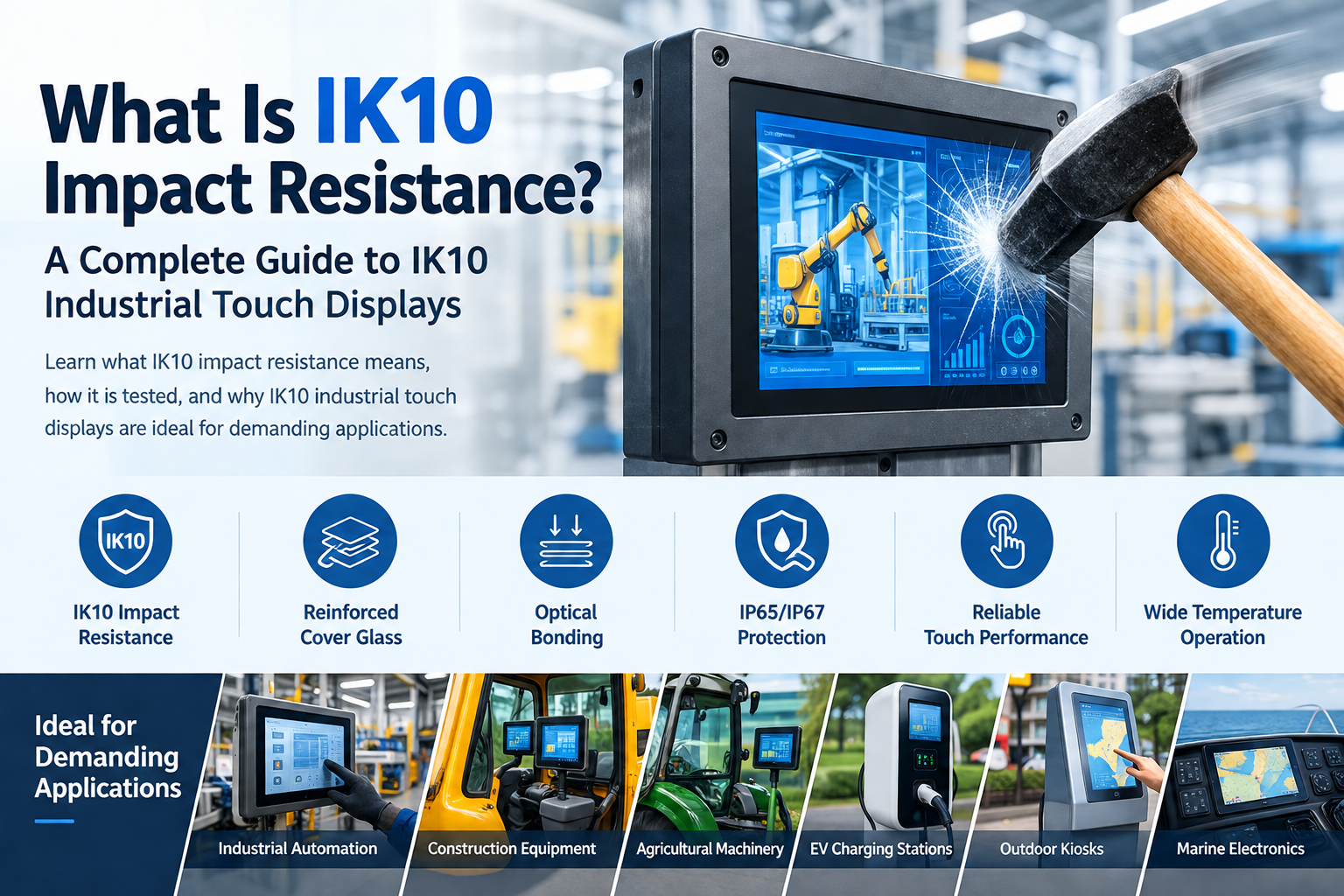
What Is IK10 Impact Resistance? A Complete Guide to IK10 Industrial Touch Displays
 What Is IK10 Impact Resistance? A Complete Guide to IK10 Industrial Touch Displays
Industrial touch displays are often installed in environments where accidental impacts, vibration, heavy equipment, and continuous operation are part of everyday use.
From factory automation equipment and manufacturing HMI to agricultural machinery, EV charging stations, outdoor kiosks, and transportation systems, displays may be exposed to tools, mechanical impacts, vibration, and other physical hazards.
For these applications, display quality is not only about resolution and brightness. Mechanical durability is equally important.
This is where IK10 impact resistance becomes particularly valuable.
An IK10-rated industrial touch display is designed and tested to withstand a high level of mechanical impact. When combined with reinforced cover glass, optical bonding, a strong mechanical structure, and reliable touch technology, IK10 protection can help improve the durability and long-term reliability of an industrial display.
In this article, we explain what IK10 means, how IK10 impact resistance is tested, what technologies help achieve IK10 performance, and why IK10 matters when selecting an industrial touch display.
What Is the IK Impact Protection Rating?
The IK rating is an international classification defined by IEC 62262. It indicates how well an enclosure or equipment surface can withstand external mechanical impacts.
The IK scale ranges from IK00 to IK10, with higher numbers representing higher impact resistance.
For industrial equipment manufacturers, the IK rating provides a standardized way to evaluate and compare mechanical impact protection.
This is especially important for equipment installed in:
- Factories and production lines
- Outdoor environments
- Construction sites
- Agricultural machinery
- Transportation systems
- Public self-service terminals
- EV charging infrastructure
Unlike display specifications such as resolution, brightness, or viewing angle, the IK rating focuses specifically on mechanical impact resistance.
What Does IK10 Mean?
IK10 is the highest level in the IEC 62262 IK impact protection scale.
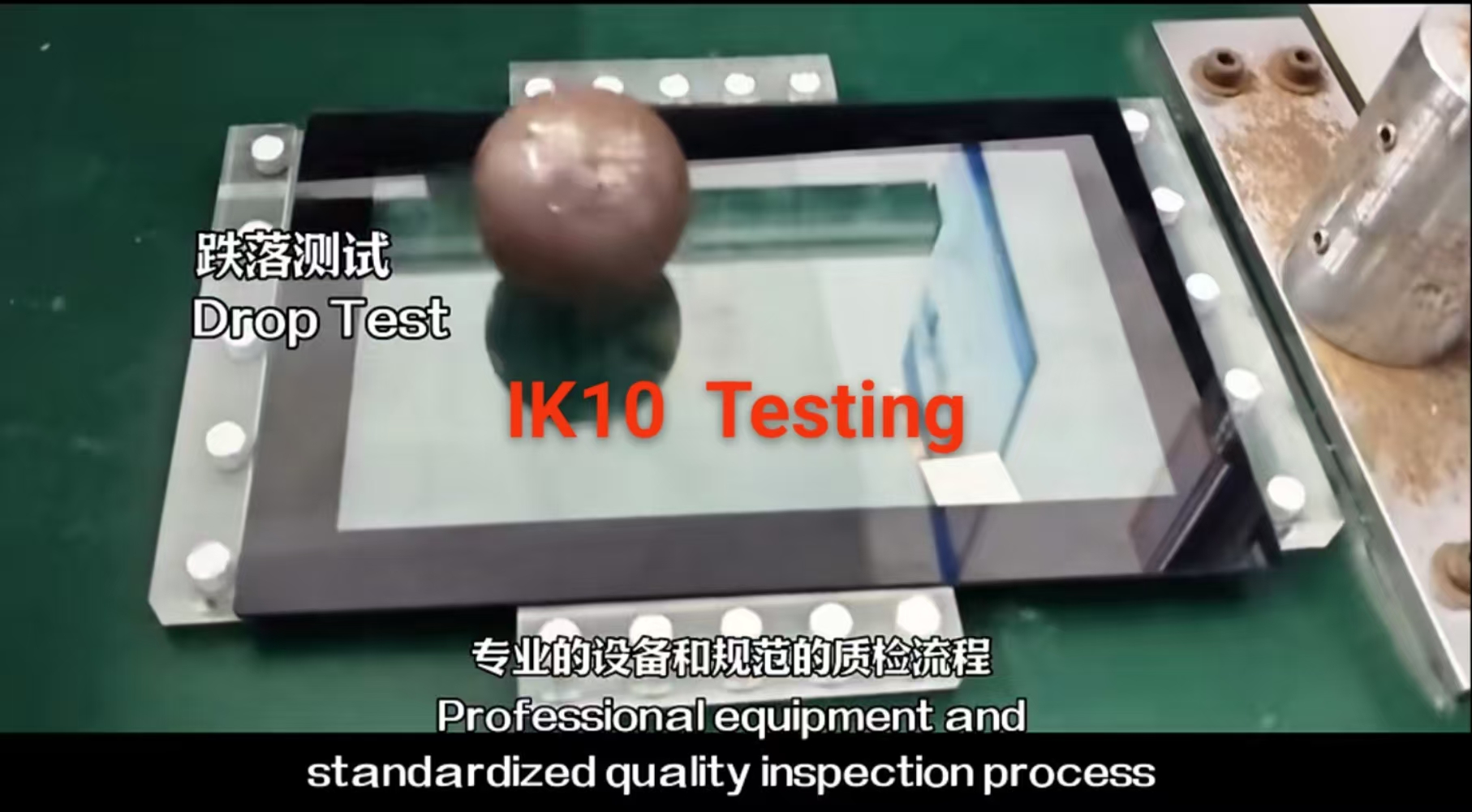
An IK10 test corresponds to an impact energy of 20 joules. The standard test uses a specified impact apparatus to deliver the required mechanical energy to the enclosure or protected surface.
A commonly described IK10 test configuration uses a 5 kg impact mass dropped from approximately 400 mm, producing 20 J of impact energy.
The purpose of the test is to determine whether the equipment can withstand the specified impact without unacceptable damage to the protected enclosure or surface.
However, an important point for equipment designers is that IK10 is a standardized impact-resistance classification, not a guarantee that a display cannot be damaged under every real-world impact condition.
The actual durability of an industrial touch display also depends on its glass material, thickness, bonding method, frame structure, mounting design, and overall mechanical construction.
Why Is IK10 Important for Industrial Touch Displays?
Industrial displays are frequently operated by people working around machinery, tools, vehicles, and other equipment.
A conventional consumer display may not be designed for these conditions.
An IK10-rated touch display provides an additional level of mechanical protection that can be valuable in demanding applications.
1. Protection Against Accidental Impact
Industrial environments contain many potential sources of impact.
For example:
- A tool may fall onto the display.
- An operator may accidentally hit the screen.
- Equipment may generate continuous vibration.
- A mobile machine may experience mechanical shock.
- Objects may strike an outdoor terminal.
A properly engineered IK10 touch display can help reduce the risk of damage to critical components such as:
- Cover glass
- Touch sensor
- LCD module
- Display assembly
- Internal mechanical structure
Reducing physical damage can also help minimize unexpected equipment downtime and maintenance requirements.
2. Improved Industrial Equipment Reliability
Replacing a damaged display is not always a simple process.
For industrial machinery, the display may be integrated into the equipment enclosure, control system, or HMI. Replacing it may require:
- Machine shutdown
- Technician labor
- Disassembly
- Transportation
- Recalibration
- On-site service
For equipment deployed in remote locations, these costs can become even higher.
Selecting an appropriately designed IK10 industrial touch display can help improve the overall robustness of the equipment and reduce the risk associated with accidental mechanical damage.
3. Enhanced Operator Safety
Damaged glass can create additional safety concerns, particularly in environments where operators interact with the display frequently.
For applications requiring enhanced safety, laminated glass structures can be used to help retain glass fragments if the glass is damaged.
Depending on the application, manufacturers may combine laminated safety glass with chemically strengthened glass and other protective structures.
This can provide an additional layer of protection for operators while helping maintain the integrity of the display assembly.
4. Better Protection for Long-Term Industrial Applications
Industrial equipment is often expected to operate reliably for many years.
The display therefore needs to withstand not only daily touch interactions but also the mechanical conditions surrounding the equipment.
An appropriately engineered rugged display can help protect the display assembly against accidental impact and mechanical stress.
However, it is important to distinguish IK10 impact protection from overall product lifetime. IK10 defines performance under a standardized impact test; long-term reliability also depends on factors such as temperature, humidity, vibration, UV exposure, electrical design, and touch-screen durability.
For this reason, IK10 should be considered as one part of a complete rugged display design.
What Technologies Help Achieve IK10 Protection?
Achieving IK10 performance is not simply a matter of installing thicker glass.
The complete display structure must be engineered to manage impact forces effectively.
Depending on the application, several technologies can be combined.
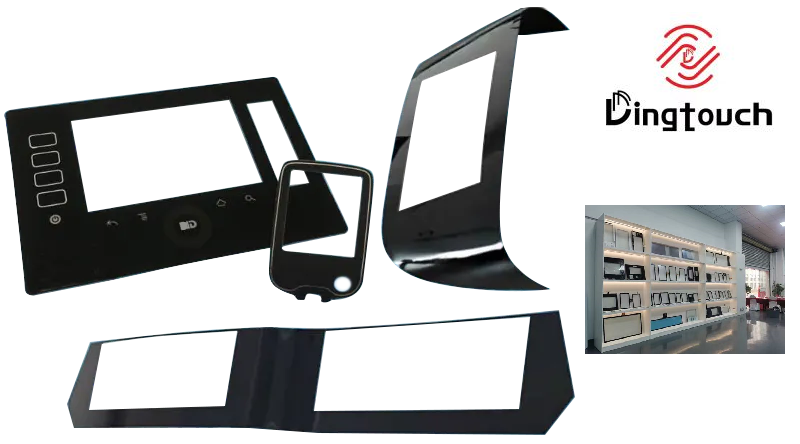
1. Reinforced Cover Glass
The cover glass is the first protective layer of a touch display.
Depending on the application, manufacturers may use:
- Chemically strengthened glass
- Thickened cover glass
- Laminated glass
- High-strength glass
- Custom-shaped protective glass
The appropriate glass thickness and material should be selected according to the required impact performance, display size, mounting structure, and application environment.
2. Laminated Safety Glass
Laminated glass consists of multiple layers bonded together with an intermediate layer.
If the glass is damaged, the interlayer helps hold the fragments together rather than allowing them to scatter freely.
This makes laminated structures particularly useful for applications where mechanical protection and operator safety are important.
3. Optical Bonding
Optical bonding is another important technology for rugged touch displays.
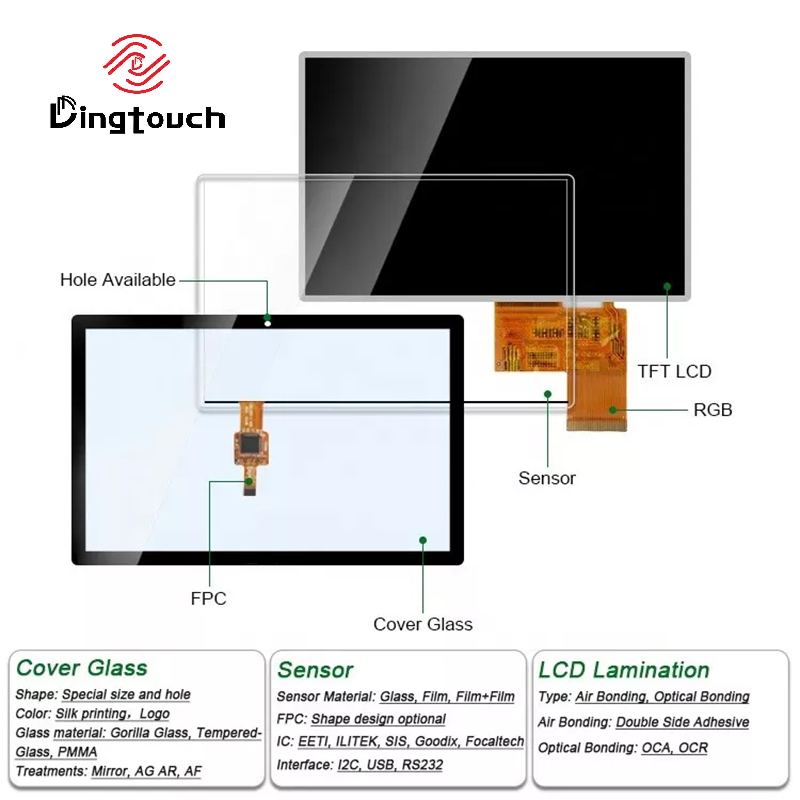
In an optical bonding process, the cover glass, touch sensor, and LCD are bonded together using materials such as OCA or OCR.
Optical bonding can provide several benefits:
- Reduced internal air gaps
- Improved structural integration
- Better resistance to environmental conditions
- Improved sunlight readability
- Reduced internal reflections
- Better optical performance
For rugged industrial displays, optical bonding can be combined with reinforced glass and a strong mechanical frame to create a more integrated display structure.
4. High-Strength Adhesive Systems
The bonding materials used inside a touch display also affect mechanical durability.
High-quality optical adhesives and structural adhesives help maintain reliable bonding between the different layers of the display assembly.
The adhesive system should be selected according to:
- Operating temperature
- Humidity
- UV exposure
- Glass structure
- Display size
- Mechanical stress
- Required lifetime
5. Reinforced Mechanical Frame
Glass alone does not determine the impact resistance of an industrial display.
The surrounding frame and mounting structure are equally important.
A reinforced metal frame can help distribute mechanical forces and protect the display module from excessive deformation.
For custom industrial applications, engineers may optimize:
- Frame thickness
- Mounting points
- Glass support structure
- Internal brackets
- Screw positions
- Edge protection
- Display module fixation
This is why mechanical design should be considered together with the glass and touch-screen structure when developing an IK10 display.
IK10 vs. Standard Touch Displays: What Is the Difference?
A standard touch display may prioritize cost, thinness, and consumer-oriented appearance.
An industrial IK10 touch display typically places greater emphasis on mechanical protection and environmental reliability.
| Feature | Standard Touch Display | IK10 Industrial Touch Display |
|---|---|---|
| Impact protection | Basic | High mechanical impact protection |
| Cover glass | Standard options | Reinforced/custom options |
| Glass structure | Often thinner | Can use laminated or strengthened structures |
| Optical bonding | Optional | Common for rugged applications |
| Mechanical frame | Standard | Reinforced/custom design |
| Outdoor use | Application dependent | Can be designed for demanding environments |
| Glove touch | Application dependent | Available for industrial applications |
| Waterproofing | Application dependent | IP65/IP67 options available |
| High brightness | Application dependent | Up to 2000 nits depending on configuration |
| Wide temperature | Application dependent | Custom wide-temperature options |
The key point is that IK10 should not be viewed as a standalone specification.
For a truly rugged industrial display, mechanical impact protection should work together with environmental protection, optical performance, touch reliability, and thermal design.
IK10 vs. IP65/IP67: What Is the Difference?
A common question when selecting rugged touch displays is whether IK10 and IP65/IP67 are the same type of protection.
They are not.
IK rating measures resistance to mechanical impact.
IP rating classifies protection against solid particles and water ingress.
For example:
- IK10 → mechanical impact protection
- IP65 → dust protection plus protection against water jets
- IP67 → dust protection plus temporary immersion protection under the specified test conditions
For outdoor or industrial applications, a display may require both IK10 and an appropriate IP rating.
This combination can provide protection against both physical impact and environmental exposure.
Typical Applications for IK10 Industrial Touch Displays
IK10 touch displays are suitable for applications where accidental impact and mechanical durability are important.
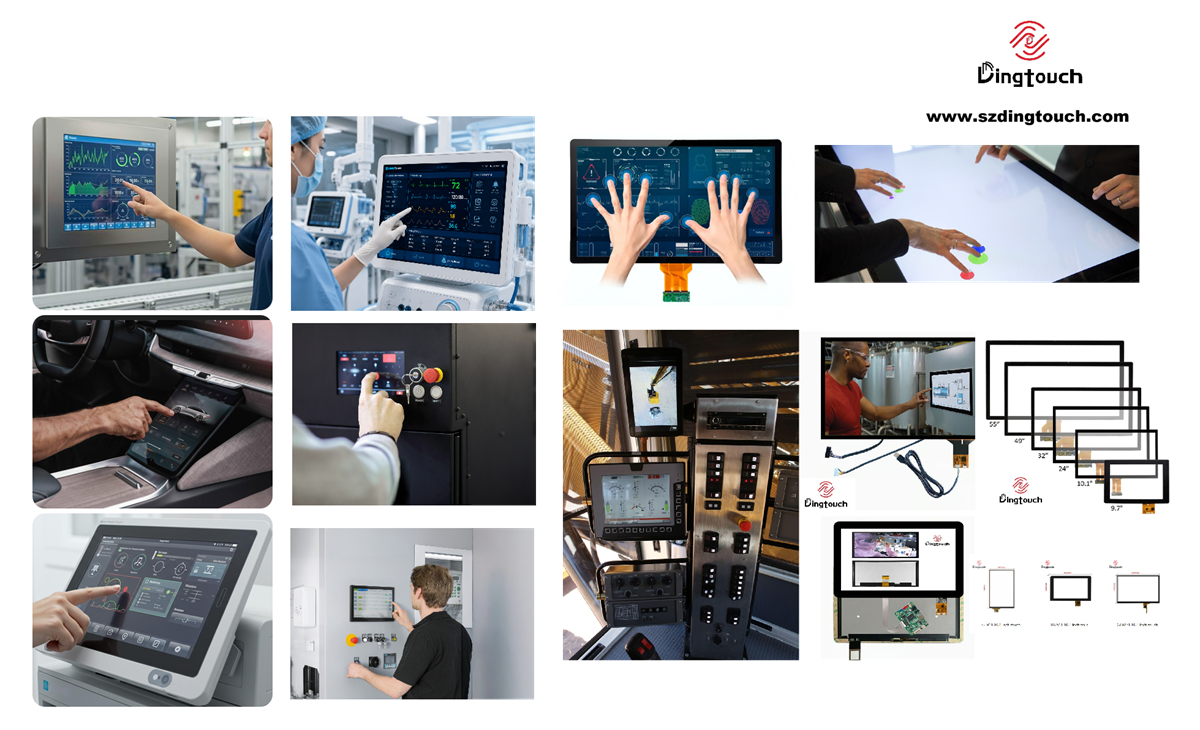
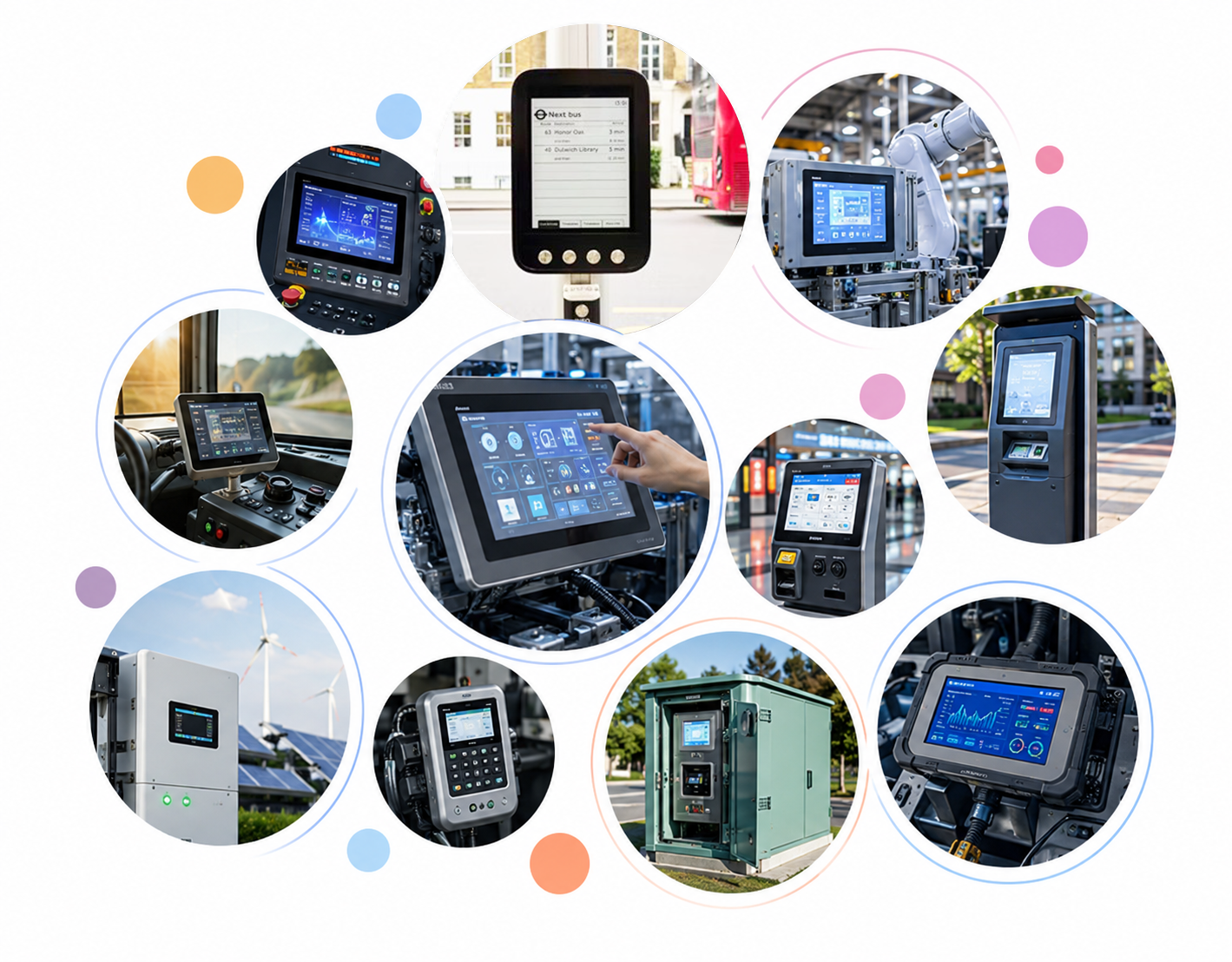
Typical applications include:
Industrial Automation
HMIs installed on production machinery may be exposed to tools, vibration, and frequent operator interaction.
Agricultural Machinery
Displays used in tractors and agricultural equipment may encounter vibration, dust, temperature changes, and accidental impact.
Construction Equipment
Construction machinery requires rugged displays capable of operating in physically demanding environments.
EV Charging Stations
Public charging stations are frequently exposed to outdoor conditions and repeated user interaction, making mechanical durability particularly important.
Outdoor Self-Service Kiosks
Kiosks installed in public areas may be exposed to accidental impact, vandalism, weather, and intensive daily use.
Transportation Systems
Displays used in transportation and smart mobility equipment may require enhanced resistance to vibration and mechanical shock.
Marine Electronics
Marine equipment can face vibration, humidity, temperature fluctuations, and demanding operating conditions.
Medical Equipment
Certain medical and healthcare devices can benefit from durable, easy-to-clean touch interfaces designed for frequent operation.
How to Choose the Right IK10 Touch Display
IK10 should be only one factor in the selection process.
Before choosing an industrial touch display, engineers should evaluate several parameters:
1. Required Impact Protection
Determine whether the application requires IK08, IK09, IK10, or another mechanical protection level.
2. Cover Glass Structure
Consider glass material, thickness, chemical strengthening, lamination, and edge protection.
3. Optical Bonding
For outdoor and rugged applications, optical bonding can improve both optical performance and structural integration.
4. Touch Performance
Check whether the display needs:
- 10-point multi-touch
- Glove touch
- Wet touch
- Stylus support
- High touch sensitivity
5. Environmental Protection
Consider whether the equipment requires:
- IP65
- IP67
- Wide operating temperature
- Anti-glare coating
- Anti-reflective coating
- Anti-fingerprint coating
- EMI shielding
6. Display Performance
Depending on the application, the LCD may require:
- High brightness
- IPS viewing angles
- High contrast
- Wide temperature operation
- Customized resolution
- Specific interface such as LVDS, eDP, MIPI, HDMI, or RGB
A complete industrial display solution should balance impact resistance, environmental reliability, optical performance, touch performance, and mechanical integration.
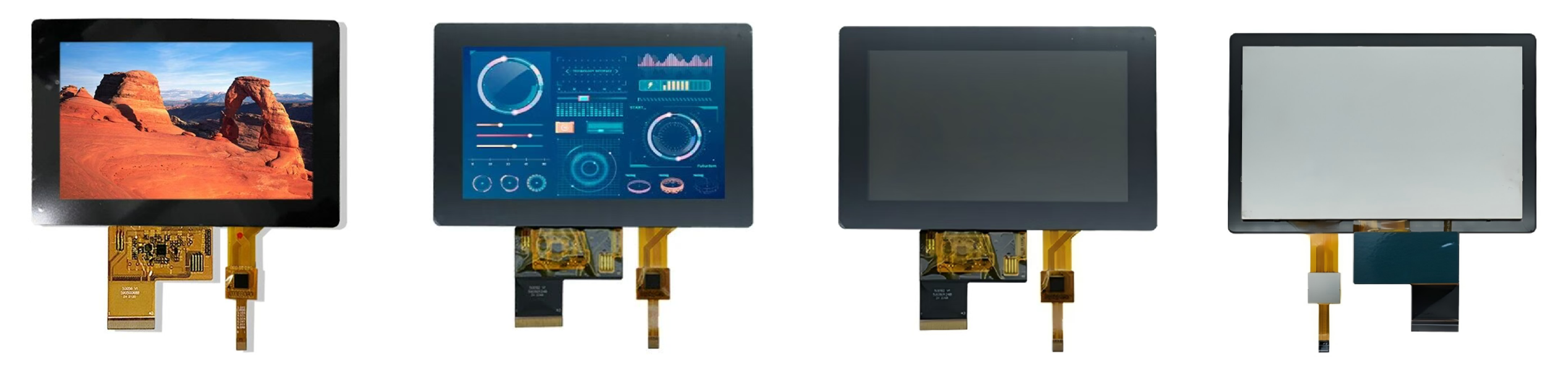
DINGTouch Custom IK10 Industrial Touch Display Solutions
DINGTouch develops and manufactures customized industrial touch display solutions for demanding applications.
Our rugged display solutions can be customized with:
- IK10 laminated safety glass
- Optical bonding using OCA/OCR
- High-brightness LCDs up to 2000 nits
- AG, AR, and AF surface treatments
- Glove and wet touch support
- EMI shielding solutions
- Wide-temperature LCD and touch solutions
- IP65/IP67 protection options
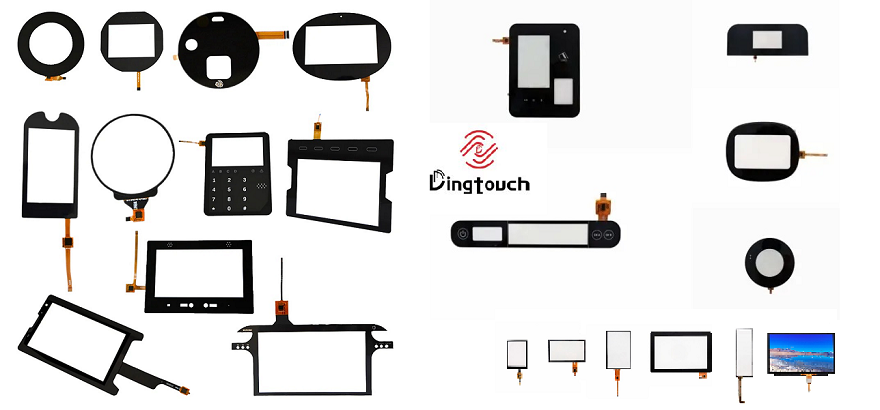
- Custom cover glass
- Custom touch sensors
- Customized mechanical structures
- LVDS, eDP, MIPI, HDMI, USB, and other interfaces
From initial engineering evaluation and structural design to prototype development and mass production, DINGTouch works with OEM, ODM, and system integrators to develop touch display solutions around their specific mechanical and environmental requirements.
Conclusion: Why Does IK10 Matter for Industrial Touch Displays?
For industrial equipment operating in demanding environments, display durability can be just as important as resolution, brightness, and touch performance.
IK10 impact resistance provides a standardized level of mechanical impact protection and can help reduce the risk of damage caused by accidental impacts.
However, a truly rugged industrial touch display requires more than an IK10 rating alone.
The best results come from combining:
IK10 impact protection + reinforced cover glass + optical bonding + robust mechanical design + reliable touch technology + appropriate IP and temperature protection.
When these technologies are engineered together, manufacturers can develop industrial touch displays that are better suited to harsh environments, frequent operation, and long-term equipment deployment.
If you are developing an industrial machine, outdoor terminal, EV charger, agricultural vehicle, HMI, or other rugged equipment, DINGTouch can help design a customized IK10 industrial touch display around your mechanical, optical, touch, and environmental requirements.
CATEGORIES
CONTACT US
Contact: Dingtouch
Phone: +8615815536116
Tel: +8615815536116
Email: sales@szdingtouch.com
Add: Building A, Bailu Plaza, No. 48, Gonghe Industrial Road, Gongle Community, Xixiang Street, Baoan District, Shenzhen,China. 518126
 Dingtouch