News
Industrial LCD vs. Consumer TFT LCD: How to Choose the Right Display for Your Application
 Industrial LCD vs. Consumer TFT LCD: How to Choose the Right Display for Your Application
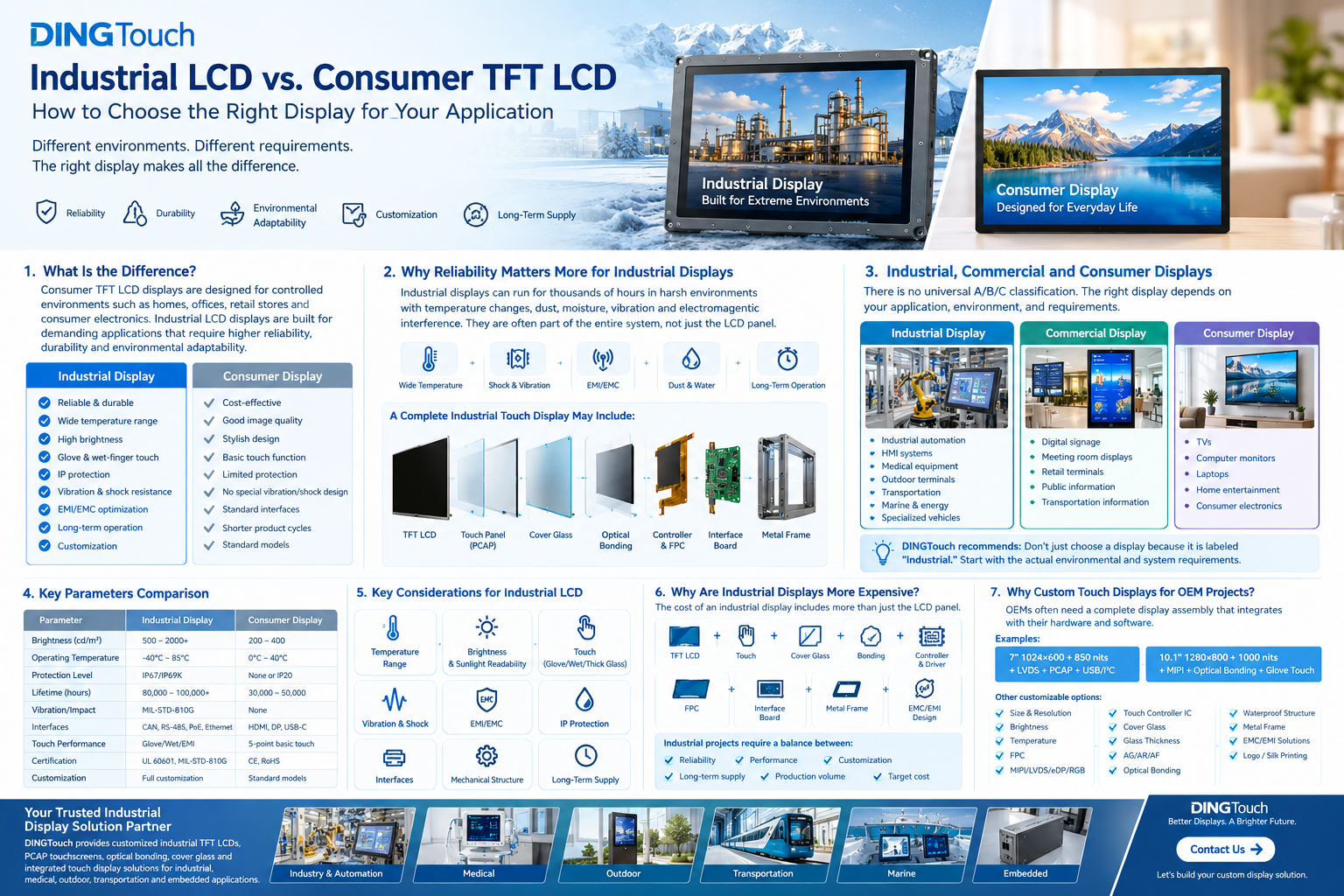
Industrial LCD displays and consumer TFT LCD displays are designed for very different operating environments and product requirements.
While consumer displays typically focus on cost, appearance, image quality, and user experience, industrial LCD displays place greater emphasis on reliability, durability, environmental adaptability, long-term operation, and customization.
For OEM and ODM equipment manufacturers, choosing the right industrial display is not simply a matter of selecting an “industrial-grade” LCD. The display should be evaluated according to the actual operating environment, temperature range, brightness requirements, touch conditions, interfaces, mechanical structure, EMC requirements, and expected product lifetime.
1. What Is the Difference Between an Industrial LCD and a Consumer TFT LCD?
Consumer TFT LCD displays are primarily designed for relatively controlled environments such as homes, offices, retail stores, laptops, monitors, televisions, and other consumer electronics.
Industrial LCD displays are designed for equipment that may operate for long periods under more demanding conditions.
Typical industrial applications include:
- Industrial automation equipment
- Factory HMI systems
- Medical equipment
- Outdoor terminals
- Transportation equipment
- Marine equipment
- Energy and power systems
- Communication equipment
- Embedded industrial computers
- Military and specialized equipment
Depending on the application, an industrial display may need to support:
- Wide operating temperature
- High brightness
- Glove touch
- Wet-finger touch
- Thick cover glass
- Anti-glare and anti-reflection treatment
- Optical bonding
- Vibration and shock resistance
- EMI/EMC optimization
- Dust and water protection
- Long-term continuous operation
This is why industrial display selection should be based on the actual application rather than simply comparing product labels.
2. Why Do Industrial LCD Displays Focus More on Reliability?
An industrial display may operate for many hours every day and can be installed in environments where temperature, vibration, dust, moisture, electromagnetic interference, and sunlight are significantly different from a typical indoor environment.
For example, a display installed in a factory HMI may be exposed to machinery vibration and electrical interference.
A display installed in an outdoor control cabinet may need to withstand sunlight, temperature changes, rain, dust, and condensation.
A display used in a marine application may face vibration, humidity, salt spray, and complex electromagnetic conditions.
Therefore, industrial display design often considers the entire module rather than the TFT LCD panel alone.
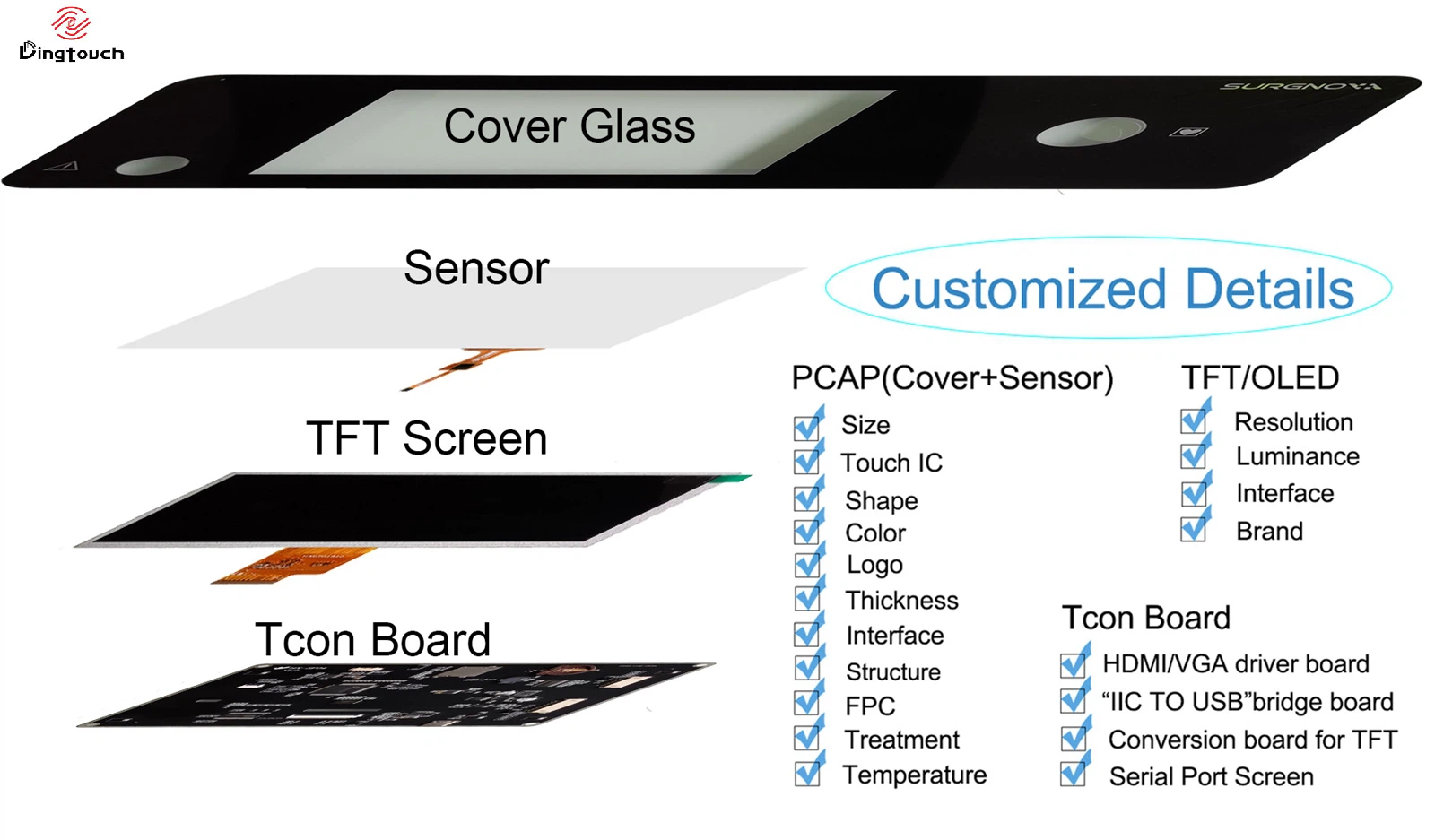
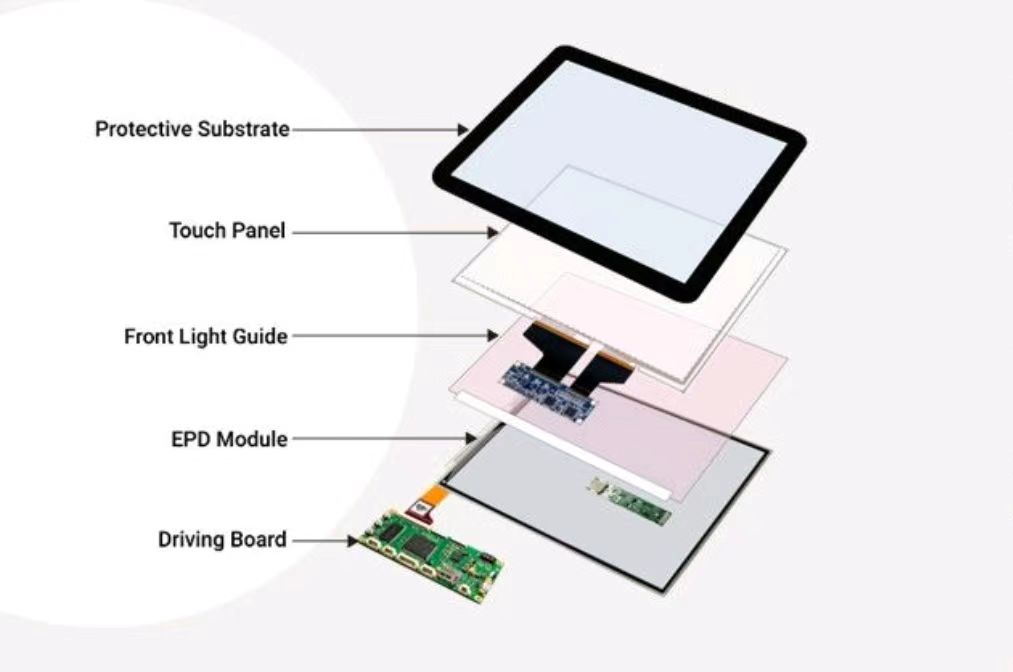
A complete industrial touch display may include:
TFT LCD + PCAP Touch + Cover Glass + Touch Controller + FPC + Optical Bonding + Interface Board + Mechanical Structure

3. Industrial, Commercial, and Consumer Displays: How Should They Be Classified?
There is no single universal “A/B/C” grading system that can be used to classify every LCD display as industrial, commercial, or consumer.
Instead, the appropriate display should be evaluated according to its specifications, environmental requirements, reliability targets, and application standards.
Industrial Display
Industrial displays are designed for applications where environmental adaptability, reliability, long-term operation, or customization are important.
Typical applications include:
- Factory automation
- Industrial HMI
- Medical equipment
- Outdoor terminals
- Transportation
- Energy systems
- Marine equipment
- Specialized vehicles
Commercial Display
Commercial displays are commonly used in business and public environments where long operating hours and system management may be important.
Typical applications include:
- Digital signage
- Meeting room displays
- Retail interactive terminals
- Public information systems
- Transportation information displays
Consumer Display
Consumer displays are primarily designed to balance cost, appearance, image quality, power consumption, and everyday user experience.
Typical applications include:
- Televisions
- Computer monitors
- Laptops
- Home entertainment systems
- Consumer electronics
DINGTouch recommendation: For an OEM project, do not select a display simply because it is labeled “industrial.” Start with the actual environmental and system requirements.
4. What Parameters Should You Check When Selecting an Industrial LCD?
The following parameters are particularly important when comparing industrial and consumer displays.
| Parameter | Industrial Display | Consumer Display |
|---|---|---|
| Operating Temperature | Wide-temperature options available | Usually designed for controlled indoor environments |
| Brightness | Often 500–2000+ cd/m² depending on application | Typically optimized for indoor viewing |
| Touch | Glove, wet-finger, thick-glass and EMI optimization available | Standard finger touch |
| Protection | IP65/IP67 designs can be available | Usually limited environmental protection |
| Vibration/Shock | Can be engineered for demanding applications | Usually not a primary design requirement |
| Interfaces | MIPI, LVDS, eDP, RGB, HDMI, USB, I²C, RS232/RS485, etc. | HDMI, DisplayPort, USB-C, etc. |
| Optical Design | AG, AR, AF and optical bonding options | Mainly focused on visual appearance |
| Mechanical Structure | Custom frames, cover glass and special shapes | Mostly standardized |
| Lifecycle | Long-term supply and stability are often important | Primarily optimized for consumer product cycles |
| Customization | LCD, touch, FPC, IC, glass and interface can be customized | Mostly standard models |
5. Operating Temperature: A Key Difference Between Industrial and Consumer TFT LCD
Operating temperature is one of the most important parameters for industrial display applications.
For example:
- Standard indoor equipment: approximately 0°C to +50°C
- Industrial automation equipment: approximately -20°C to +70°C
- Outdoor equipment: may require -30°C to +80°C
- Specialized applications: wider temperature specifications may be developed according to project requirements
However, it is important to understand that the temperature specification of the LCD, touch panel, touch IC, backlight, FPC, adhesive materials, and other components may not be identical.
Therefore, an industrial touch display should be evaluated as a complete module rather than simply looking at the temperature rating of the LCD panel.
6. High-Brightness Industrial LCDs for Outdoor Applications
A standard indoor LCD may provide sufficient visibility at around 300–500 cd/m².
However, direct sunlight and high ambient light can significantly reduce display readability.
Typical problems include:
- Reduced contrast
- Washed-out images
- Poor visibility of dark areas
- Reflections on the cover glass
- Difficulty reading touch controls
For outdoor applications, a high-brightness LCD can be combined with optical technologies such as:
High-Brightness LCD + Anti-Glare + Anti-Reflection + Optical Bonding
Depending on the application, DINGTouch can provide custom display solutions with brightness levels such as 500, 800, 1000, 1500, 2000 cd/m² or higher, subject to the selected LCD platform and project requirements.
7. Why Is Industrial touchscreen Design More Complicated?
An industrial touchscreen needs to do more than simply detect a finger.
It may need to maintain stable operation when users are wearing gloves, when the surface is wet, when the cover glass is thick, or when the equipment is exposed to electromagnetic interference.
Glove Touch
Glove touch is useful for:
- Factory equipment
- Outdoor terminals
- Medical equipment
- Maintenance systems
- Transportation equipment
Wet-Finger Touch
Water and moisture can affect projected capacitive touchscreens.
Touch sensor design, controller parameters, firmware algorithms, and system grounding may all need to be optimized for the application.
Thick Cover Glass
Industrial equipment may use thicker cover glass for mechanical protection.
Depending on the project, cover glass can be customized with different thicknesses and shapes. The touch sensor and controller need to be designed accordingly.
EMI/EMC Environment
Industrial equipment may contain:
- Motors
- Inverters
- Relays
- Power supplies
- Wireless modules
- High-current circuits
These components can introduce electromagnetic interference.
Therefore, industrial touch solutions may require optimization of the touch sensor, FPC, controller IC, grounding, shielding, mechanical structure, and firmware.
DINGTouch can work with touch controller solutions from suppliers such as Goodix, ILITEK, EETI, and Microchip, depending on the project requirements.
8. Why Is Optical Bonding Important for Industrial Displays?
Conventional air-gap displays can produce reflections between the LCD and cover glass, especially under strong ambient light.
Optical bonding reduces the air gap between the display and cover glass and can improve:
- Outdoor readability
- Contrast
- Touch experience
- Dust resistance
- Structural stability
- Optical performance
For industrial, medical, transportation, and outdoor equipment, Optical Bonding + High-Brightness LCD + Cover Glass can form an integrated display solution.
9. What Reliability and Protection Standards Should Be Considered?
Different applications require different standards and testing methods.
There is no single standard that defines every industrial LCD as “industrial grade.”
Depending on the final equipment and market, relevant standards may include:
IEC 60529
Used to define IP protection ratings against solids and water.
For example, industrial equipment may require designs such as IP65 or IP67 depending on the enclosure and application.
IEC 62262
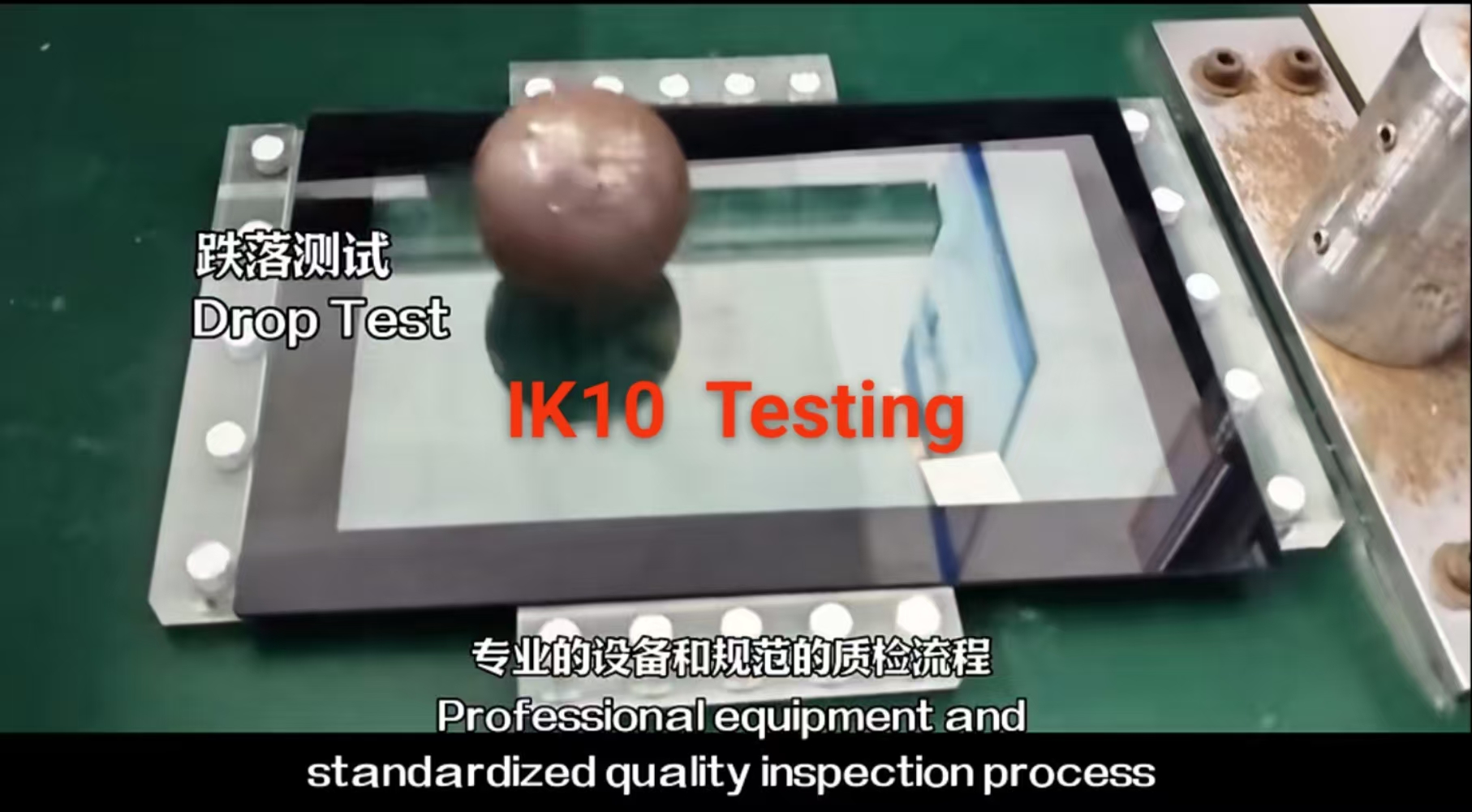
Defines IK ratings for mechanical impact protection.
MIL-STD-810
Provides environmental engineering and laboratory test methods for equipment intended for demanding environments.
IEC 60068
A series of environmental testing standards covering conditions such as temperature, humidity, vibration, shock, and other environmental stresses.
IEC 60945
Relevant to marine navigation and radio communication equipment and includes environmental and EMC-related requirements.
ATEX / IECEx
Relevant to equipment intended for specific explosive atmospheres.
IEC 60601 Series
Relevant to medical electrical equipment and systems.
CE / RoHS / REACH
Common compliance requirements for products entering European markets, depending on the product category and applicable regulations.
Important: Certification requirements should be determined according to the final equipment, application environment, destination market, and applicable regulations. An LCD module should not be described as compliant with a particular system-level standard unless the actual requirements and testing have been evaluated.
10. Why Are Industrial Displays More Expensive?
The cost of an industrial touch display is not determined by the LCD panel alone.
A customized industrial display may include:
**TFT LCD
- PCAP Touch
- Cover Glass
- Optical Bonding
- Touch Controller
- Display Driver
- FPC
- Interface Board
- Metal Frame
- EMC/EMI Design**
Additional engineering and testing may also be required.
Industrial display projects therefore often require a balance between:
- Reliability
- Performance
- Customization
- Long-term supply
- Production volume
- Engineering requirements
- Target cost
Consumer displays generally rely more heavily on standardized components and large-scale production to reduce cost.
11. Why Are Custom Industrial Touch Displays Important for OEM Projects?
For an industrial equipment manufacturer, the requirement is often not simply “an industrial LCD.”
The actual requirement may be a complete display assembly that can directly integrate with the customer's hardware and software platform.
For example:
7" 1024×600 + 850 nits + LVDS + PCAP + USB/I²C
or:
10.1" 1280×800 + 1000 nits + MIPI + Optical Bonding + Glove Touch
Other parameters can also be customized, including:
- Display size
- Resolution
- Brightness
- Operating temperature
- FPC
- MIPI/LVDS/eDP/RGB interface
- Touch controller IC
- Cover glass
- Glass thickness
- AG/AR/AF surface treatment
- Optical bonding
- Waterproof structure
- Metal frame
- EMC/EMI solutions
- Logo and silk printing
This customization capability is one of the key differences between industrial OEM/ODM display solutions and standard consumer displays.
12. DINGTouch: Custom Industrial TFT LCD and Touch Display Solutions
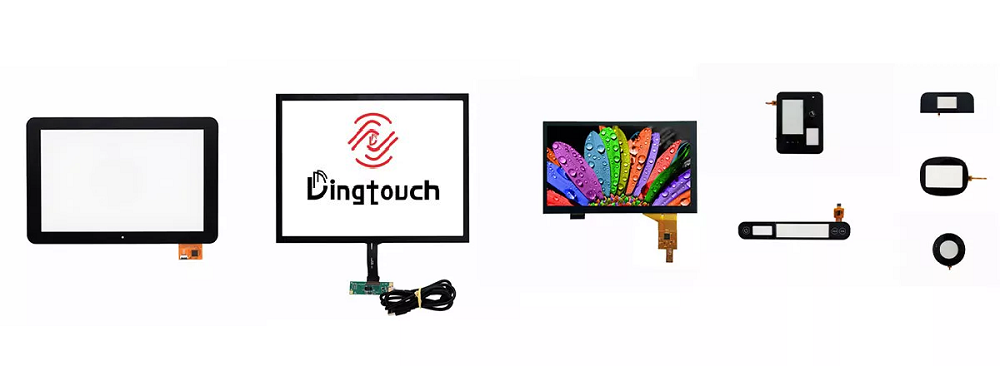
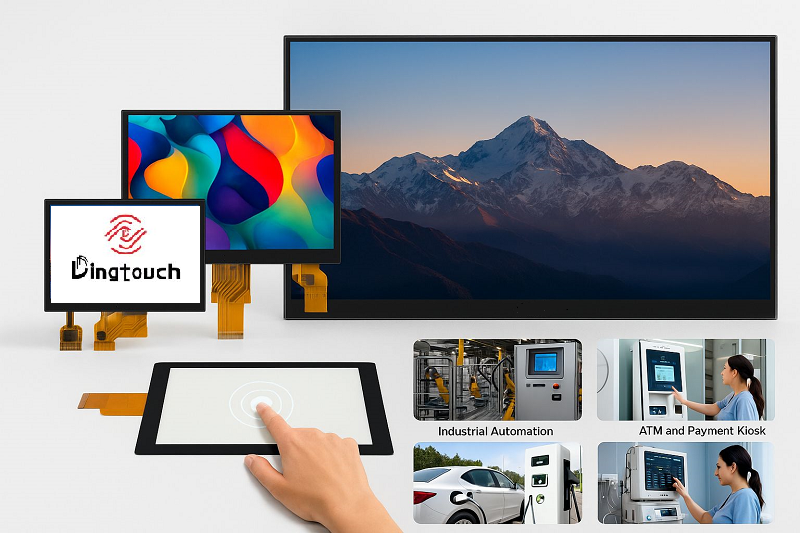
DINGTouch focuses on customized touch display solutions for industrial, medical, outdoor, transportation, and embedded applications.
We can integrate:
TFT LCD + PCAP Touch + Cover Glass + Optical Bonding
into customized display assemblies based on the customer's requirements.
Our engineering evaluation can consider:
Size → Resolution → Brightness → Temperature → Interface → Touch → Mechanical Structure → Protection → Optical Performance → EMC
DINGTouch supports a wide range of interfaces, including:
- MIPI
- LVDS
- RGB
- eDP
- HDMI
- USB
- I²C
- SPI
- UART
- RS232
- RS485
For OEM/ODM projects requiring long-term supply, DINGTouch can work with customers to evaluate the LCD, touch panel, interface, mechanical structure, and environmental requirements as one complete solution.
13. How to Choose the Right Industrial LCD Display?
Before selecting an industrial TFT LCD or touch display, consider the following questions.
1. Where will the display be installed?
Indoor, outdoor, control cabinet, vehicle, cockpit, factory floor, marine equipment, or another environment?
2. What is the actual temperature range?
Determine both the minimum and maximum operating temperatures.
3. Is sunlight readability required?
If yes, evaluate brightness, contrast, AG, AR, and optical bonding together.
4. Is touchscreen operation required?
Consider whether the user needs:
- Glove touch
- Wet-finger operation
- Thick cover glass
- Stylus operation
- Multi-touch
5. Is the equipment exposed to vibration, shock, moisture, or EMI?
These factors may influence the LCD structure, touch sensor, controller, FPC, grounding, and mechanical design.
6. Which display interface does the main controller support?
For example:
- MIPI DSI
- LVDS
- RGB
- eDP
- HDMI
7. Does the project require long-term supply?
For industrial OEM projects, component lifecycle and long-term availability can be as important as the initial price.
8. Does the project require a customized display assembly?
If the standard display cannot meet the mechanical or electrical requirements, a customized LCD + touch + cover glass + bonding solution may be more appropriate.
Conclusion: Industrial LCD Selection Should Start With the Application
The difference between an industrial LCD and a consumer TFT LCD is not simply a matter of price or the word “industrial.”
The key differences are related to:
Reliability + Environmental Adaptability + Customization + Long-Term Supply
Consumer displays generally place greater emphasis on:
Cost + Appearance + Image Quality + User Experience
For industrial equipment OEM, the right approach is to select the display according to the actual application environment and system requirements.
Key factors include:
- Operating temperature
- Brightness
- Sunlight readability
- Touch requirements
- Glove and wet-finger operation
- Vibration and shock
- EMI/EMC
- IP protection
- Interface
- Mechanical dimensions
- Optical bonding
- Cover glass
- Product lifecycle
- Long-term supply
Instead of simply choosing the highest specification, the goal is to develop a display solution that provides the right combination of performance, reliability, cost, and customization for the equipment.
DINGTouch provides customized industrial TFT LCD, PCAP touchscreens, optical bonding, cover glass, and integrated touch display solutions for industrial, medical, outdoor, transportation, and embedded applications.
Looking for a custom industrial LCD or touch display for your next OEM project? Contact DINGTouch to discuss your display requirements.




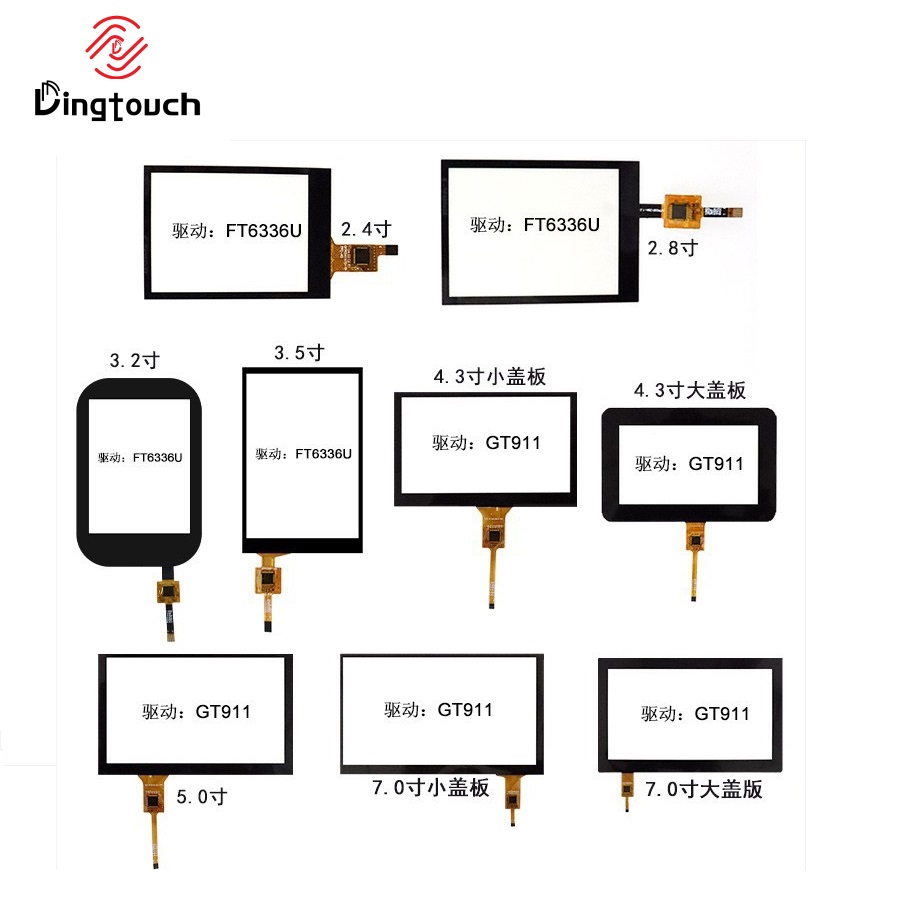
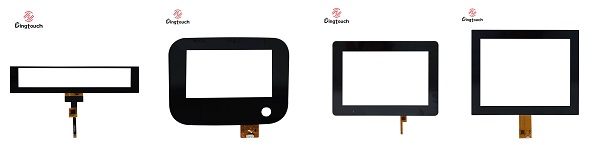
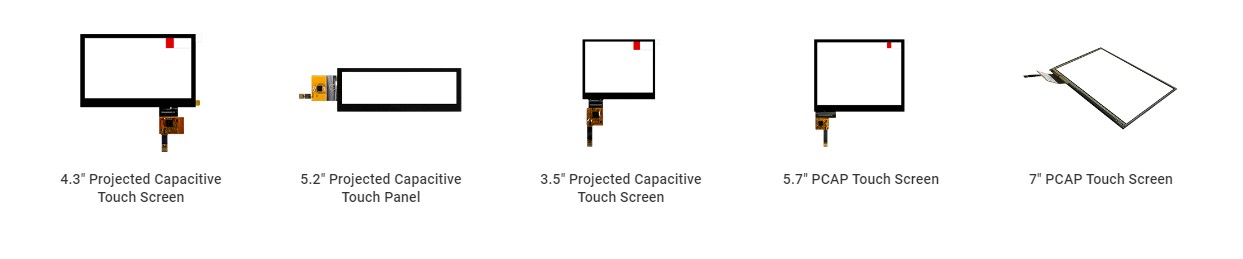
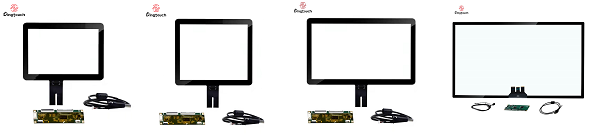
Ready to Build Your Outdoor Display Solution?
Get in touch with us at sales@szdingtouch.com. Our expert engineers will help you design a cost-effective, tailored solution to meet your project’s exact specifications.
DINGTouch:Committed to continuous innovation and improvement of product quality to meet customers' high requirements and expectations.
DINGTouch is a manufacturer that provides high quality touch screen panels. Focus on the design, manufacturing and sales of touch screen panels, and are committed to providing customized solutions that satisfy customers.
DINGTouch: In the process of customizing touch screen panels, we focus on close cooperation and communication with customers. Understanding customers' needs and providing customized solutions will meet customers' individual needs. The company's products are favored by customers for their high quality and reliability, and provide them with the best touchscreen panel solutions.
DINGTouch:Committed to continuous innovation and improvement of product quality to meet customers' high requirements and expectations.
DINGTouch is a manufacturer that provides high quality touch screen panels. Focus on the design, manufacturing and sales of touch screen panels, and are committed to providing customized solutions that satisfy customers.
DINGTouch: In the process of customizing touch screen panels, we focus on close cooperation and communication with customers. Understanding customers' needs and providing customized solutions will meet customers' individual needs. The company's products are favored by customers for their high quality and reliability, and provide them with the best touchscreen panel solutions.
At DINGTOUCH, we are the world's leading touchscreen manufacturer, helping businesses around the world take advantage of this exciting technology. For more information, please visit the home page now.

DINGTouch is a company specializing in the R&D and production of touch screen technology, headquartered in Shenzhen, China. As a professional touch screen supplier, DINGTouch is committed to providing high-quality, stable and reliable touch screen products to meet the diverse needs of customers. We continue to carry out technological innovation and product optimization to ensure that its touch screen products have good sensitivity, accuracy and durability.
In addition to the products themselves, we also focus on cooperation and communication with customers, and are committed to providing customized solutions and excellent after-sales services. Through continuous efforts to improve product quality and customer satisfaction, we have established a good reputation in the touchscreen industry and won widespread market recognition.
In addition to the products themselves, we also focus on cooperation and communication with customers, and are committed to providing customized solutions and excellent after-sales services. Through continuous efforts to improve product quality and customer satisfaction, we have established a good reputation in the touchscreen industry and won widespread market recognition.
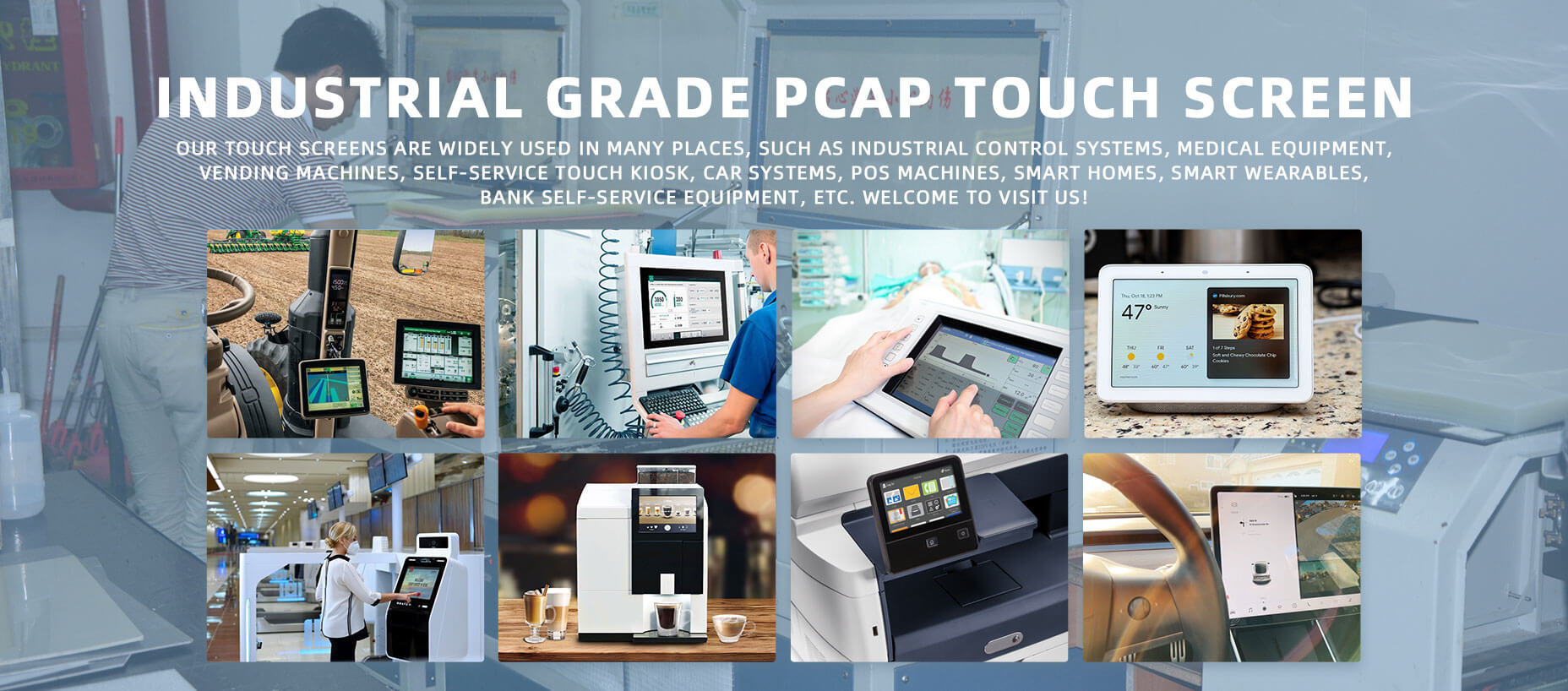
What DINGTOUCH can do:
• PCAP maximum size 65”
• Multi-touch (Touch screen can be customized to your needs.)
• Optical bonding service/air bonding
• LCD interface: HDMI/RGB/MIPI/LVDS/EDP, etc.
• PCAP interface: IIC/USB interface
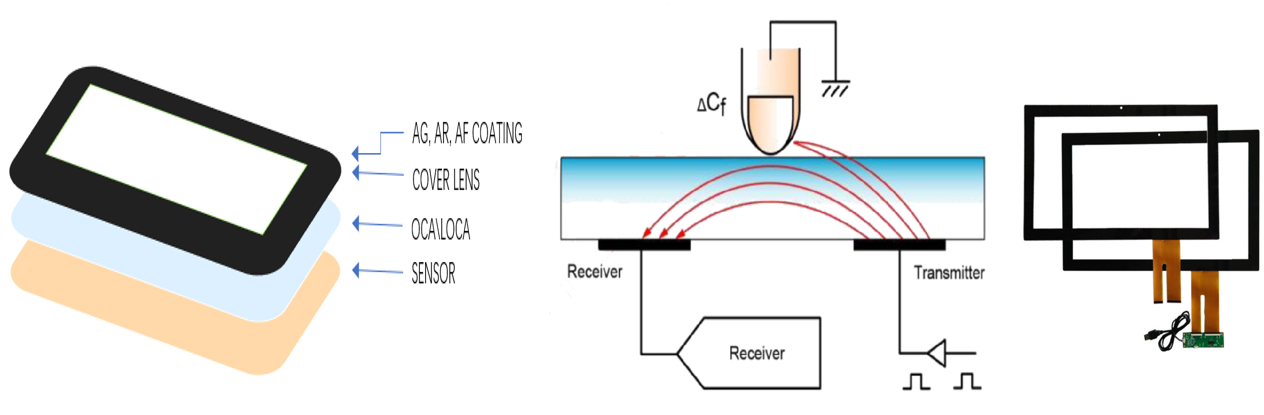
• CTP can customize the cover glass surface treatment process AG (anti-glare), AR (anti-reflection), AF (anti-fingerprint), waterproof, and glove touch
• Supports 0.55 mm-12 mm coverslip touch.
• Support operating temperature: -40℃-90℃.
Dingtouch Industrial capacitive touch screen Manufacturer
In conclusion, Dingtouch as a professional touch screen manufacturer with more than 10 years touch screen experience.We have many capacitive touch screen . Such as 5 inch touch screen,7 inch touch screen,10.1inch touch screen,15 inch touch screen,15.6 inch touch screen,17 inch touch screen,18.5 inch touch screen,19 inch touch screen,21.5 inch touch screen,
CATEGORIES
CONTACT US
Contact: Dingtouch
Phone: +8615815536116
Tel: +8615815536116
Email: sales@szdingtouch.com
Add: Building A, Bailu Plaza, No. 48, Gonghe Industrial Road, Gongle Community, Xixiang Street, Baoan District, Shenzhen,China. 518126
 Dingtouch