News
CNC Step Grinding for Custom Touch Screen Cover Glass: Improving Structural Design and Assembly Precision
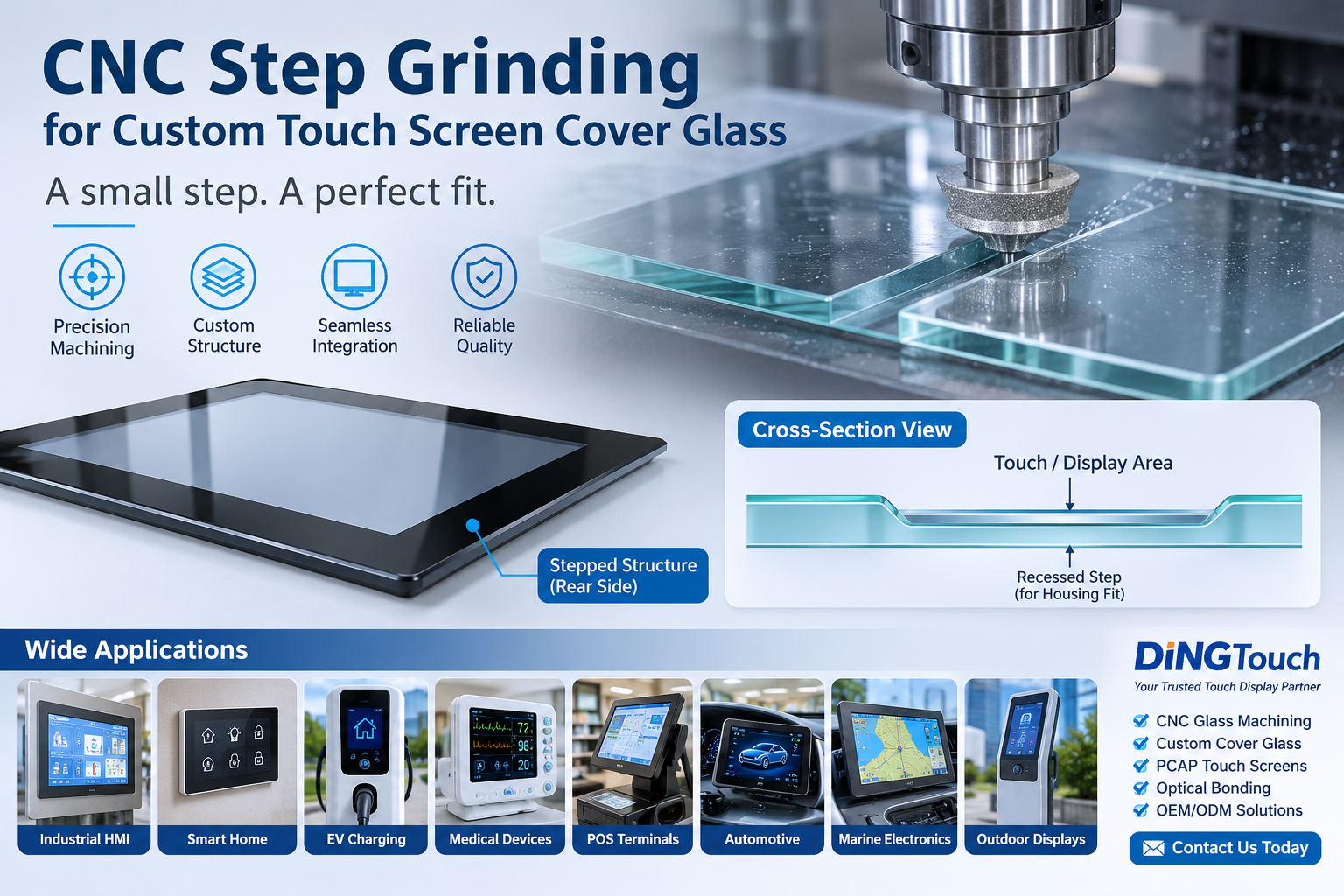
Precision CNC Glass Machining for Industrial Touch Display Applications
As Steve Jobs once said, "Design is not just what it looks like and feels like. Design is how it works."
This philosophy is particularly relevant to custom cover glass design.
In industrial touch display products, cover glass does more than protect the LCD and touch sensor. It also plays an important role in the product's mechanical structure, dimensional accuracy, assembly process, and overall reliability.
For standard touch screen products, a flat glass panel is usually sufficient.
However, for equipment with compact internal structures, limited installation space, or special enclosure designs, conventional flat cover glass may not fully satisfy the mechanical requirements.
For example:
-
The cover glass needs to fit a stepped or recessed housing structure.
-
The LCD module and touch sensor require specific installation clearances.
-
Certain areas of the glass need to be locally recessed to accommodate internal components.
-
The glass must match specific bonding, positioning, or sealing structures.
-
The product requires a clean, flat front appearance while maintaining a more complex rear-side structure.
This is where CNC Step Grinding becomes valuable in custom touch screen cover glass manufacturing.
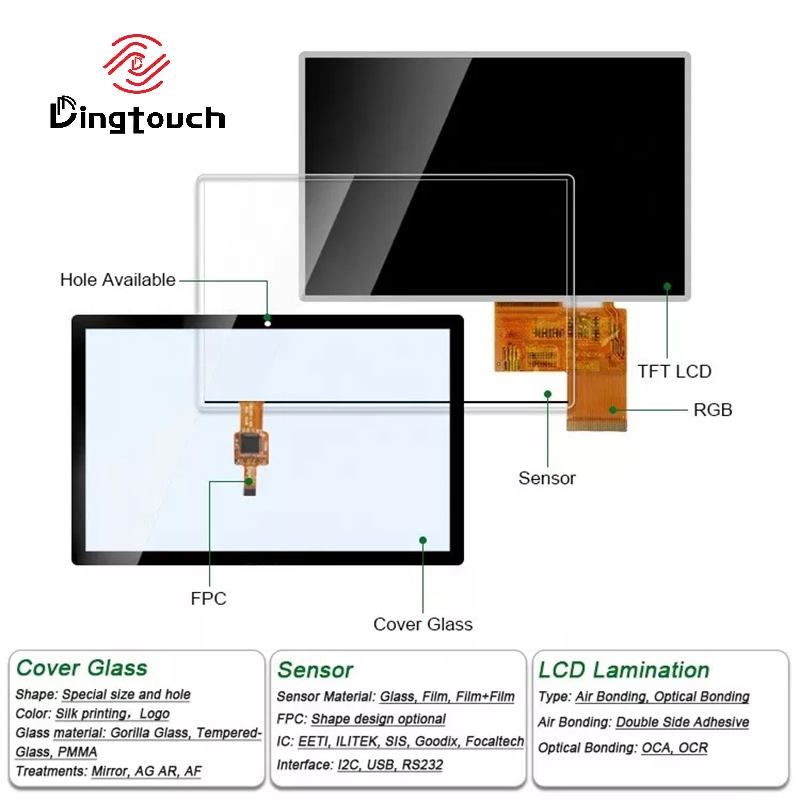
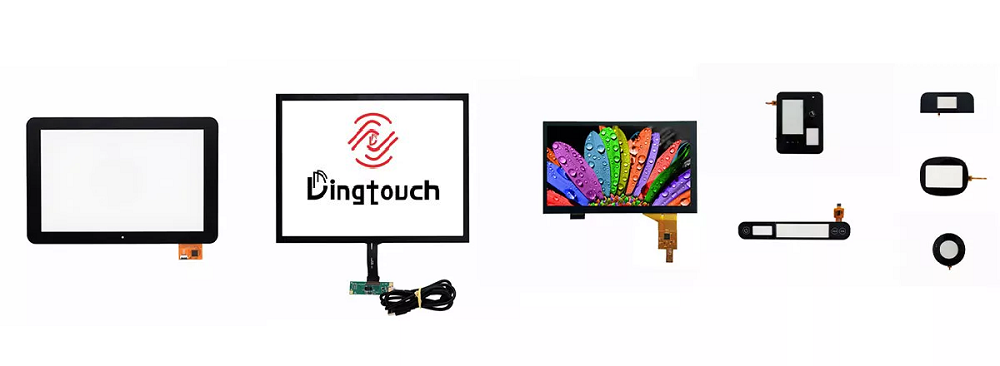
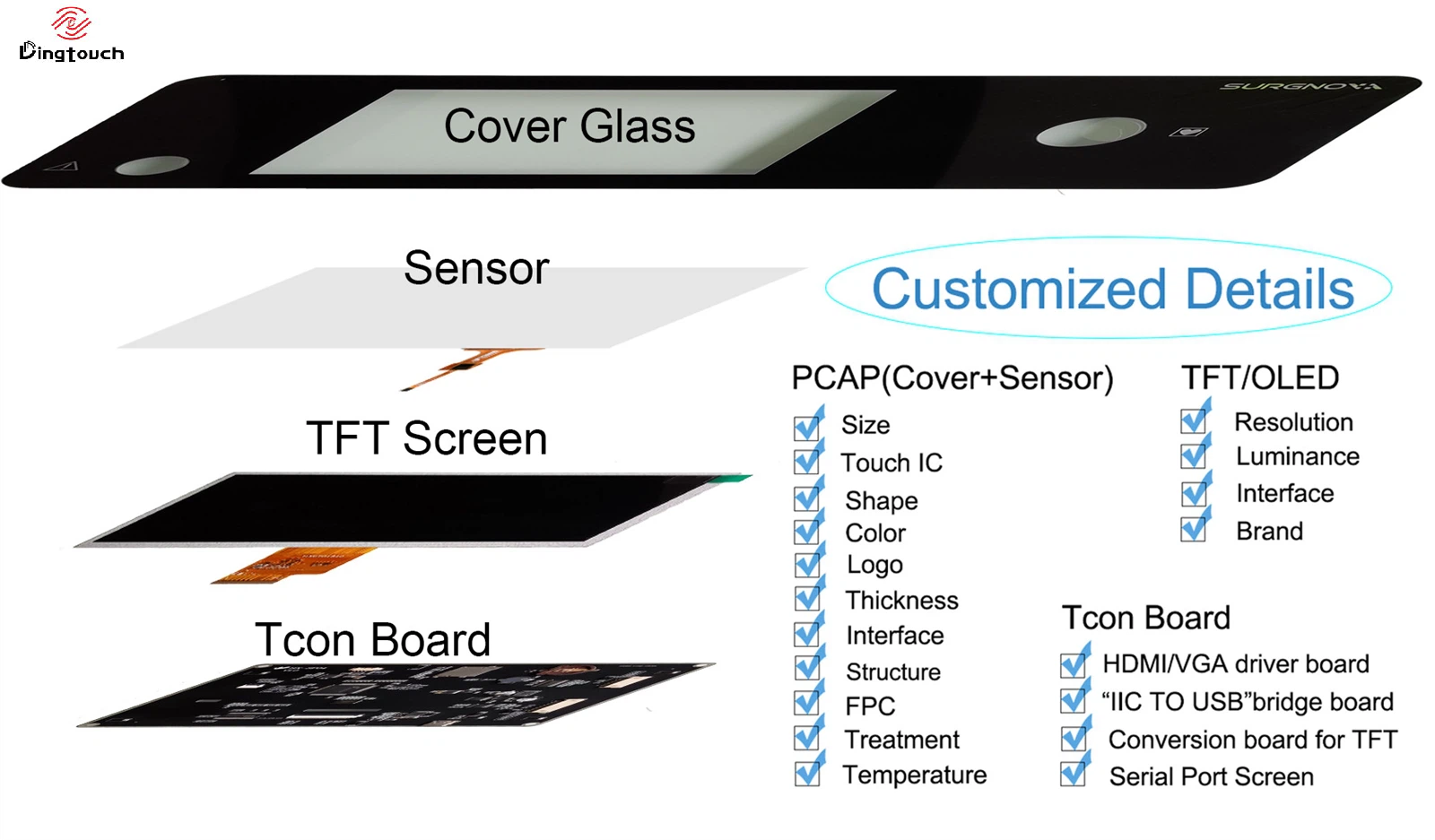
DINGTouch specializes in industrial PCAP touch screens, custom cover glass, and integrated touch display modules. Through precision CNC glass machining, screen printing, surface treatments, chemical strengthening, and optical bonding, we help OEM/ODM customers develop cover glass solutions that match their product structures and engineering requirements.
In this article, we explore the working principles, structural advantages, applications, and manufacturing capabilities of CNC step grinding for custom touch screen cover glass.
1. What Is CNC Step Grinding for Cover Glass?
CNC step grinding is a precision glass machining process that uses computer-controlled equipment to create localized steps, recessed areas, or height differences in specific regions of a glass panel.
Unlike conventional flat cover glass, stepped cover glass features different surface levels or thickness profiles in designated areas.
Depending on the product design, common structures include:
-
Single-side recessed structures
-
Peripheral stepped structures
-
Raised central areas
-
Localized recessed grooves
-
Multi-level height structures
-
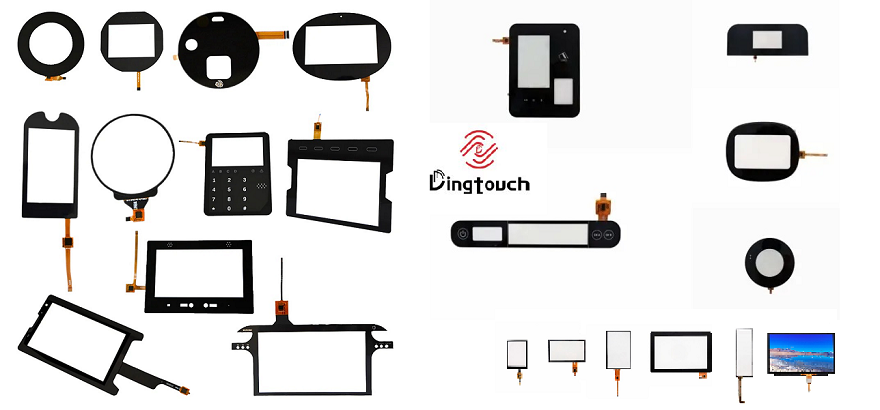
Custom stepped and irregular glass profiles
These structures are manufactured according to engineering drawings, including glass thickness, step depth, machining area, edge profile, and dimensional tolerances.
For example, a custom touch display may require the central glass area to remain flat for the touch and display interface, while the surrounding area needs to be recessed to match the equipment housing or internal support structure.
With appropriate CNC step grinding, manufacturers can achieve more flexible internal structural integration without changing the overall front appearance.
An important engineering consideration: CNC step grinding is not simply a process of making glass thinner. Machining depth, remaining glass thickness, transition geometry, edge stress, and subsequent strengthening processes must all be evaluated to maintain mechanical integrity and long-term reliability.
2. Why Does Custom Touch Screen Design Require Stepped Cover Glass?
In industrial touch display products, the cover glass, touch sensor, LCD module, PCB, housing, and bonding materials must work together as an integrated structural system.
When all components use conventional flat structures, the overall product thickness may increase, or valuable internal space may be wasted.
CNC step grinding provides greater design flexibility for these special mechanical requirements.
2.1 Meeting Special Housing and Enclosure Requirements
Some industrial devices do not have completely flat front panels.
For example, the housing may include recessed mounting areas, positioning steps, or special edge-support structures.
By machining corresponding stepped areas on the cover glass, the glass can achieve a more suitable mechanical fit with the enclosure.
2.2 Optimizing Internal Installation Space
For compact industrial HMIs, smart control terminals, and portable devices, internal space is often limited.
Stepped cover glass can provide localized clearance according to the mechanical design, helping engineers optimize the relative positions of the glass, display module, and housing.
2.3 Improving Assembly Positioning Accuracy
By precisely controlling step locations, depths, and dimensions, manufacturers can create additional positioning and mounting features for specific mechanical structures.
This helps improve assembly consistency and reduce the risk of interference caused by dimensional mismatches.
2.4 Achieving a Cleaner and More Compact Product Appearance
For premium industrial equipment and smart terminals, a clean, flat, and consistent front appearance is often important.
Stepped cover glass allows more complex mechanical structures to be accommodated behind the glass while maintaining a streamlined front design.
2.5 Supporting Special Bonding and Sealing Designs
In some custom projects, cover glass must work with OCA, LOCA, structural adhesives, or sealing materials.
Localized steps and recessed structures can provide additional space for specific bonding and positioning requirements.
However, a stepped structure does not automatically improve waterproof performance. The IP protection level still depends on the complete sealing design, enclosure construction, and product-level verification.
3. What Engineering Problems Can CNC Step Grinding Solve?
Standard flat glass panels are not always suitable for specialized industrial equipment.
When cover glass must integrate with complex display modules, touch sensors, and enclosure structures, additional mechanical considerations become necessary.
CNC step grinding can help address the following requirements:
| Engineering Requirement | Benefits of CNC Step Grinding |
|---|---|
| LCD module installation | Provides localized structural clearance |
| PCAP touch sensor integration | Supports customized glass profiles and layouts |
| Recessed enclosure mounting | Creates localized height differences |
| Special bonding areas | Supports customized bonding and positioning designs |
| Compact product design | Provides more flexibility for structural optimization |
| Irregular product structures | Supports customized contours and localized machining |
| Assembly tolerance control | Enables precise dimensional and positional machining |
For OEM projects, the key is not simply creating a step in the glass. The machined structure must accurately match the complete touch display module and equipment enclosure.
This requires coordination between glass processing, touch screen engineering, display module design, and final product assembly.
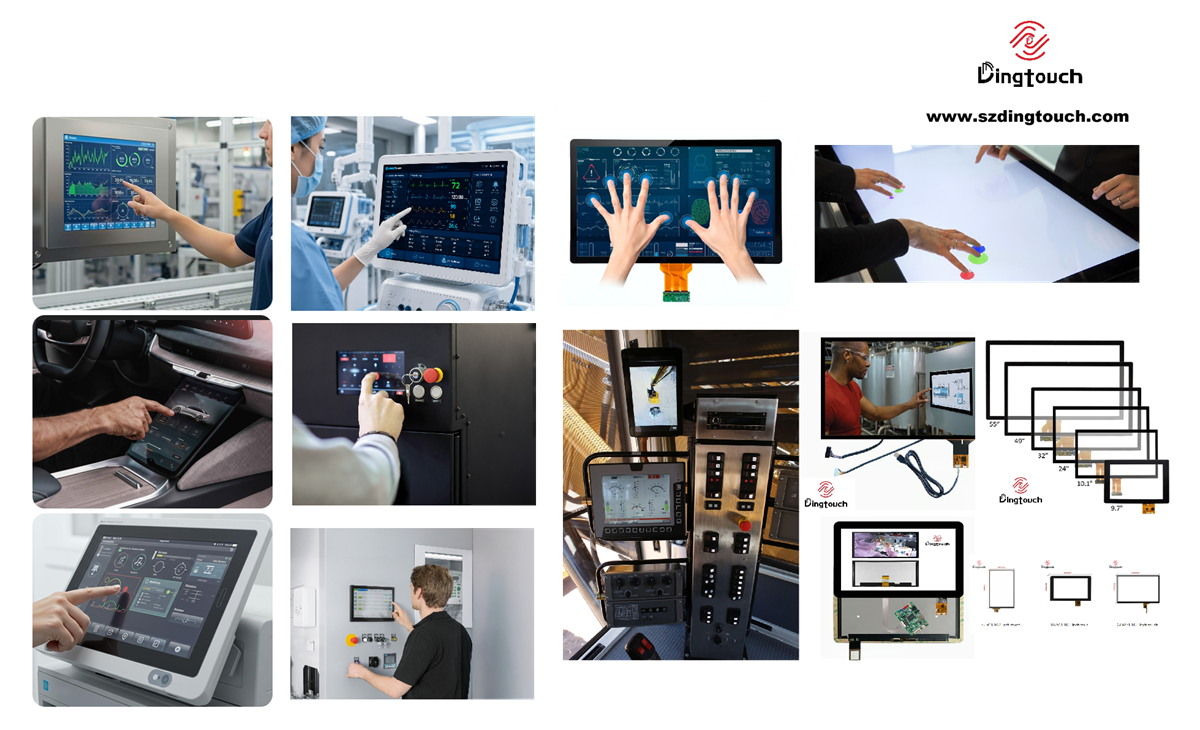
4. Typical Applications of CNC Step Grinding in Custom Cover Glass
CNC step grinding is suitable for custom touch screen projects that require specialized glass structures and precise mechanical integration.
4.1 Industrial Automation and HMI Equipment
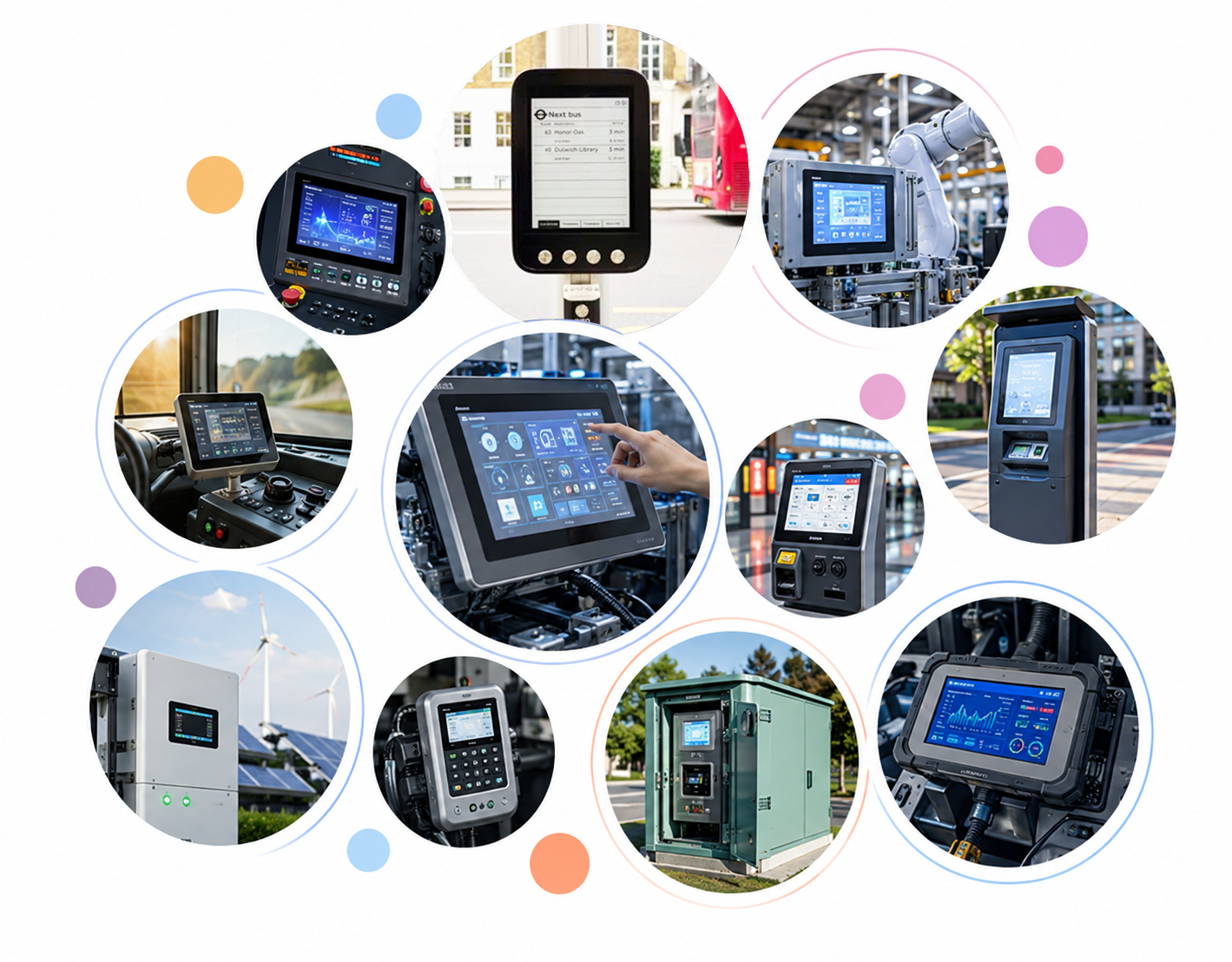
Industrial human-machine interfaces (HMIs), control panels, and automation equipment often need to integrate touch screens, LCD modules, and equipment housings within limited installation spaces.
Some devices use embedded or recessed mounting structures, where standard flat glass cannot fully satisfy the mechanical fitting requirements.
CNC step grinding can create localized steps or recessed areas according to the equipment design, helping the cover glass fit more accurately into the housing.
Typical applications include:
-
Industrial controllers and PLC operating panels
-
Automated production line control terminals
-
Industrial robot control interfaces
-
Equipment monitoring and data acquisition terminals
-
Customized industrial touch monitors
4.2 Smart Home and Home Appliance Control Panels
Smart home control panels emphasize clean appearance, compact construction, and responsive touch interaction.
For example, smart wall controllers, central control panels, smart door locks, and home appliance interfaces may require recessed cover glass structures.
CNC step grinding allows specific glass areas to be adjusted to accommodate internal components, enclosure mounting, and customized assembly requirements.
Typical applications include:
-
Smart home central control panels
-
Smart access control and video intercom systems
-
Oven, coffee machine, and washing machine control panels
-
Smart refrigerator interfaces
-
Smart lighting and temperature control terminals
4.3 Electric Vehicle Charging Stations
EV charging stations must combine outdoor usability, mechanical protection, touch operation, and long-term reliability.
Their display assemblies may integrate high-brightness LCDs, PCAP capacitive touch screens, strengthened cover glass, and waterproof sealing structures.
For charging equipment with special front housing contours or recessed display windows, stepped cover glass can help achieve more accurate dimensional integration with internal components.
Typical applications include:
-
AC charging stations
-
DC fast charging equipment
-
EV charging control terminals
-
Charging station operating panels
-
Outdoor energy management equipment
Outdoor protection ratings depend on the complete enclosure design, including gaskets, structural adhesives, housing construction, and product-level verification.
4.4 Medical Devices and Diagnostic Equipment
Medical equipment often has demanding requirements for dimensional accuracy, surface cleanliness, structural reliability, and long-term stability.
In some medical instruments, cover glass must integrate closely with the display module, touch sensor, and equipment housing.
CNC step grinding can provide customized mounting profiles and localized height differences according to the internal mechanical structure.
Typical applications include:
-
Patient monitors
-
Ultrasound diagnostic equipment
-
Laboratory testing instruments
-
Medical cart touch displays
-
Medical equipment control panels
Medical projects may also require additional evaluation of disinfectant compatibility, surface coatings, bonding materials, and system-level electromagnetic compatibility.
4.5 POS Terminals and Self-Service Equipment
POS terminals, vending machines, and smart lockers often integrate LCD displays, touch panels, and printed cover glass into compact product structures.
Stepped cover glass supports customized edge profiles and housing installation designs while maintaining a consistent and clean front appearance.
Typical applications include:
-
POS payment terminals
-
Self-service vending machines
-
Smart parcel lockers
-
Self-service ticket machines
-
Banking and financial service terminals
-
Information kiosks and self-service equipment
4.6 Automotive Electronics and In-Vehicle Display Systems
Automotive electronic equipment has demanding requirements for glass dimensions, appearance, mechanical structures, and environmental durability.
Some in-vehicle display systems use specialized recessed mounting designs, requiring the cover glass to match the display module, touch sensor, and internal support structure.
Precision CNC machining can create localized steps, grooves, and customized glass profiles according to product specifications.
Typical applications include:
-
Central automotive touch displays
-
In-vehicle infotainment systems
-
Digital instrument panels
-
Rear-seat entertainment displays
-
Automotive control and operating terminals
Automotive projects should also be evaluated for vibration, temperature cycling, mechanical shock, and material durability according to the intended application.
4.7 Marine Electronics and Outdoor Displays
Marine displays and outdoor industrial terminals may operate under demanding environmental conditions, including moisture, temperature fluctuations, sunlight exposure, and continuous vibration.
These products require not only reliable display and touch performance but also appropriate glass mounting structures and front-panel sealing designs.
CNC step grinding helps customized cover glass match specialized enclosure structures.
Typical applications include:
-
Marine navigation displays
-
Ship control panels
-
Outdoor industrial operating terminals
-
Intelligent traffic information displays
-
Outdoor self-service terminals
4.8 Handheld and Portable Industrial Devices
Handheld equipment often requires compact dimensions, reduced weight, mechanical durability, and efficient internal packaging.
Customized stepped glass can accommodate specific internal mounting structures while maintaining the required front display and touch areas.
Typical applications include:
-
Industrial PDA
-
Portable inspection equipment
-
Handheld data collection terminals
-
Portable medical devices
-
Portable measurement instruments
For these applications, particular attention should be paid to the remaining glass thickness after machining, edge strength, and actual drop-test requirements.


5. Real Product Example: 7-Inch Stepped Matte PCAP Touch TT LCD Display
A practical example of customized cover glass integration is DINGTouch 7-inch stepped matte PCAP touch TFT LCD display module.
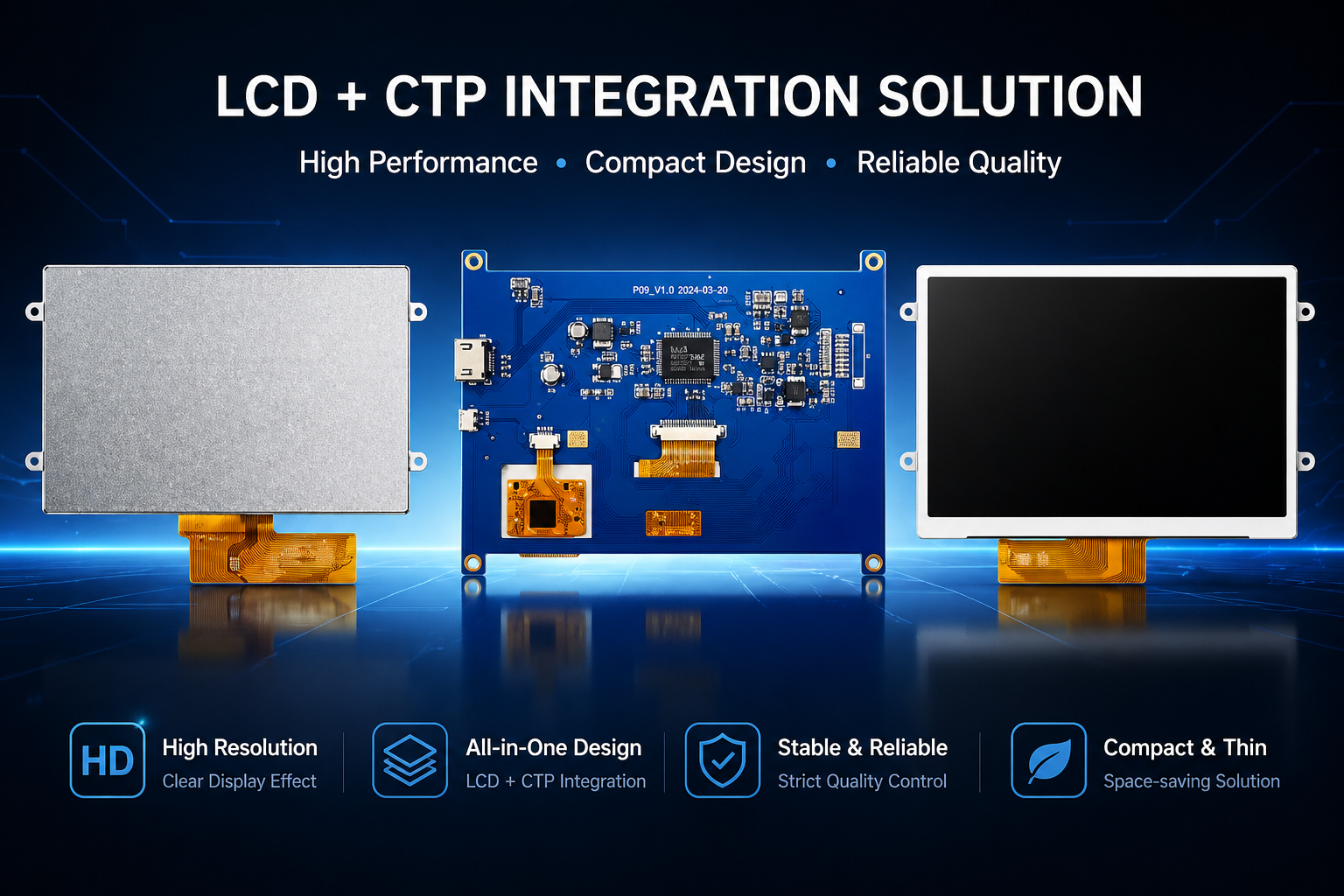
This solution combines the LCD, capacitive touch panel, OCA adhesive, and customized stepped matte cover glass into an integrated display assembly.
Main Product Specifications
| Item | Specification |
|---|---|
| Product Type | 7-inch touch TFT LCD module |
| LCD Technology | IPS TFT LCD |
| Resolution | 800 × 1280 |
| Touch Technology | PCAP capacitive touch |
| Cover Glass | Customized stepped matte glass |
| Bonding Process | OCA optical bonding |
| Glass Structure | CNC customized step machining |
| Application | Industrial control and smart terminals |
The key design feature is not only the display and touch functionality but also the structural compatibility between the cover glass and internal display module.
The customized stepped glass structure allows specific machining areas to be adjusted according to installation requirements, helping the cover glass better match the equipment housing and internal components.
The matte surface provides a specific visual appearance. The final surface treatment should be selected according to optical transmission, haze, and display clarity requirements.
Potential Applications
-
Smart locker control panels
-
Vending machine touch interfaces
-
Elevator operating panels
-
Fitness equipment consoles
-
Video intercom systems
-
Smart home appliance displays
-
Customized industrial HMI equipment
For customers requiring specialized cover glass structures, DINGTouch can evaluate the compatibility of glass machining, PCAP touch sensors, and LCD modules according to the product drawings.
6. Key Engineering Parameters for CNC Step Grinding
A stepped cover glass project requires more than providing the overall glass dimensions.
To ensure machining quality and reliable downstream assembly, several critical engineering parameters should be defined during the development stage.
6.1 Glass Material and Original Thickness
Common cover glass materials include soda-lime glass and aluminosilicate glass.
The original glass thickness should be selected according to product dimensions, mechanical strength, mounting method, and the final operating environment.
6.2 Step Depth and Remaining Glass Thickness
This is one of the most important parameters in stepped glass design.
The machining depth directly determines the remaining local glass thickness and may affect mechanical strength, edge stress, and impact resistance.
Therefore, the following parameters should be clearly defined:
-
Original glass thickness
-
Step machining depth
-
Minimum remaining thickness
-
Machining area dimensions
-
Step transition geometry
6.3 Machining Dimensions and Tolerances
The step position, width, depth, and relative location must be controlled according to actual assembly requirements.
For precision touch display projects, critical dimensions and allowable tolerances should be clearly specified in engineering drawings rather than relying only on conceptual illustrations.
6.4 Edge Finishing and Surface Quality
Machined stepped areas require careful inspection for grinding marks, microcracks, edge chipping, and localized stress concentration.
Depending on the final structure and application, additional edge grinding, polishing, and surface treatment may be required.
6.5 Chemical Strengthening and Process Sequence
If the product requires chemical strengthening, the manufacturing sequence between glass machining and strengthening must be defined during the design stage.
The interaction between localized thinning, step grinding, and strengthening processes requires evaluation by glass manufacturing engineers.
It should not be assumed that every stepped glass structure can follow the same strengthening process.
6.6 Compatibility with OCA, LOCA, and Display Modules
If the cover glass is integrated with a PCAP touch sensor and LCD through optical bonding, additional considerations include:
-
OCA or LOCA thickness
-
Bonding areas between the glass and touch sensor
-
Display active area positioning
-
Adhesive overflow control
-
Relationship between stepped areas and bonding zones
-
Overall assembled module thickness
Considering glass machining and subsequent bonding processes together helps improve the overall assembly quality of customized display modules.
 7. DINGTouch CNC Glass Machining and Custom Cover Glass Manufacturing Capabilities
DINGTouch is a manufacturer specializing in industrial capacitive touch screens, LCD display modules, and customized touch display solutions.
We support more than standard touch screen products. Our capabilities cover customized cover glass design, PCAP touch sensor development, LCD module integration, and optical bonding.
For different industrial applications, we evaluate suitable glass processing and manufacturing solutions according to customer engineering drawings and technical requirements.
Our Custom Cover Glass Processing Capabilities
CNC Precision Glass Machining
-
CNC step grinding
-
Localized recessed and sunken structures
-
Customized irregular glass cutting
-
Precision drilling and slot machining
-
Edge grinding and polishing
Cover Glass Surface Treatments
-
Chemical strengthening
-
AG anti-glare treatment
-
AR anti-reflection treatment
-
AF anti-fingerprint treatment
-
Customized glass thicknesses and dimensions
Screen Printing and Graphic Customization
-
Black border printing
-
Multi-color screen printing
-
Customized logos and icons
-
Transparent and semi-transparent display windows
-
Ceramic ink printing
-
UV-resistant ink printing
Touch Display Module Integration
-
Customized PCAP capacitive touch screens
-
G+G and other touch panel structures
-
LCD and touch screen integration
-
OCA and LOCA optical bonding
-
Customized FPC and touch controllers
-
Industrial touch display OEM/ODM solutions
From individual cover glass machining to complete touch display module development, we provide engineering support according to project requirements.
8. What Information Should Customers Provide for Custom Stepped Cover Glass?
To improve project evaluation efficiency, we recommend providing the following information during the quotation or design review stage:
-
Engineering Drawings: Overall glass dimensions, machining areas, and mounting structures.
-
Glass Material: Such as soda-lime glass or aluminosilicate glass.
-
Glass Thickness: Original thickness and minimum remaining thickness after machining.
-
Step Parameters: Step depth, width, position, and dimensional tolerances.
-
Surface Requirements: Clear, matte, AG, AR, or AF finishes.
-
Printing Requirements: Black borders, logos, icons, and display windows.
-
Strengthening Requirements: Chemical strengthening and related mechanical performance specifications.
-
Operating Environment: Industrial, medical, automotive, outdoor, or other applications.
-
Assembly Method: Mechanical relationships with the housing, PCAP touch sensor, and LCD.
If complete engineering drawings are not yet available, customers can also provide structural sketches, reference samples, or preliminary dimensions.
The DINGTouch engineering team can review the available information, assess machining feasibility, and recommend practical structural improvements.
9. Why Choose DINGTouch for Custom Touch Screen Cover Glass?
For OEM and ODM customers, cover glass is not simply an independent component.
It must be properly integrated with the touch sensor, display module, bonding materials, and final product structure.
With 15 years of experience in industrial touch display customization, DINGTouch specializes in the R&D, manufacturing, and sales of industrial capacitive touch screens and display modules.
Our project support includes:
-
Customized touch display solutions from 2.8 to 65 inches
-
CNC customized cover glass machining
-
In-house PCAP touch screen and LCD module development and integration
-
OCA/LOCA optical bonding
-
Special glass thicknesses, shapes, and surface treatments
-
Industrial touch performance and environmental adaptation
-
OEM/ODM engineering evaluation and sample development
Our goal is not simply to manufacture a glass panel according to a drawing. We aim to help customers achieve reliable structural integration between cover glass, touch sensors, and display modules.
10. Conclusion: Small Steps, Greater Flexibility in Product Design
CNC step grinding may not be the most visually impressive glass manufacturing process, but it is a highly practical technology for customized touch screen cover glass design.
Through localized recessing, stepped structures, and precision contour machining, manufacturers can make cover glass better accommodate specialized housings, internal installation spaces, and display module structures.
For industrial HMI, smart home systems, medical equipment, automotive electronics, EV charging stations, and outdoor display terminals, stepped cover glass provides greater flexibility in product structural design.
DINGTouch provides custom cover glass, CNC glass machining, PCAP touch screens, and complete touch display module solutions for global OEM/ODM customers.
If your project requires specialized stepped, recessed, or irregularly shaped cover glass, we welcome you to share your engineering drawings with us.
Our engineering team can help evaluate glass thickness, step depth, machining tolerances, surface treatments, and display module integration requirements.
Developing a Customized Touch Display Product?
Contact DINGTouch to discuss your CNC stepped glass machining requirements and receive practical engineering evaluation and customized manufacturing recommendations.
Website: www.szdingtouch.com
Email: sales@szdingtouch.com
Shenzhen Dingtouch Electronics Technology Co.Ltd.
Industrial Touch Display & Custom Cover Glass Solutions Manufacturer.
DINGTouch:Committed to continuous innovation and improvement of product quality to meet customers' high requirements and expectations.
DINGTouch is a manufacturer that provides high quality touch screen panels. Focus on the design, manufacturing and sales of touch screen panels, and are committed to providing customized solutions that satisfy customers.
DINGTouch: In the process of customizing touch screen panels, we focus on close cooperation and communication with customers. Understanding customers' needs and providing customized solutions will meet customers' individual needs. The company's products are favored by customers for their high quality and reliability, and provide them with the best touchscreen panel solutions.
At DINGTOUCH, we are the world's leading touchscreen manufacturer, helping businesses around the world take advantage of this exciting technology. For more information, please visit the home page now.

DINGTouch is a company specializing in the R&D and production of touch screen technology, headquartered in Shenzhen, China. As a professional touch screen supplier, DINGTouch is committed to providing high-quality, stable and reliable touch screen products to meet the diverse needs of customers. We continue to carry out technological innovation and product optimization to ensure that its touch screen products have good sensitivity, accuracy and durability.
In addition to the products themselves, we also focus on cooperation and communication with customers, and are committed to providing customized solutions and excellent after-sales services. Through continuous efforts to improve product quality and customer satisfaction, we have established a good reputation in the touchscreen industry and won widespread market recognition.
In addition to the products themselves, we also focus on cooperation and communication with customers, and are committed to providing customized solutions and excellent after-sales services. Through continuous efforts to improve product quality and customer satisfaction, we have established a good reputation in the touchscreen industry and won widespread market recognition.
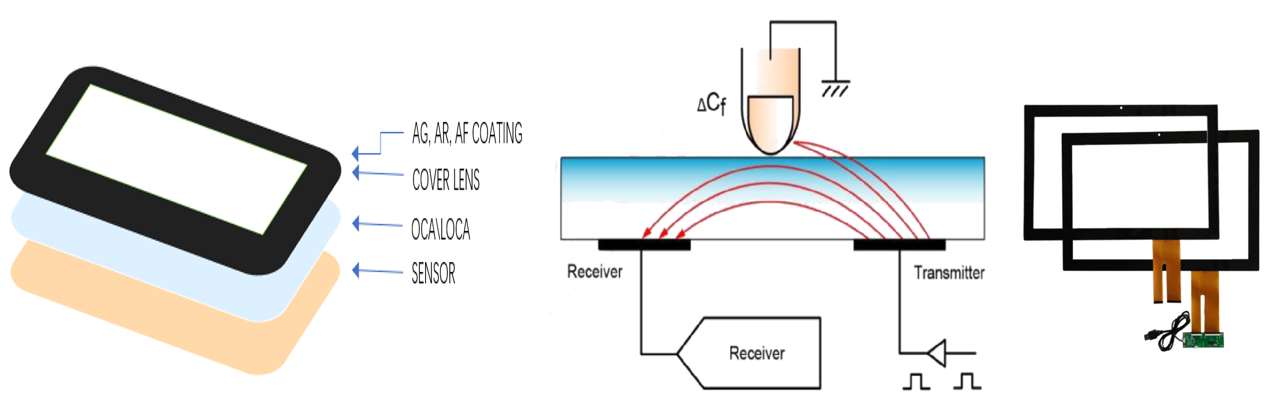
What DINGTOUCH can do:
• PCAP maximum size 65”
• Multi-touch (Touch screen can be customized to your needs.)
• Optical bonding service/air bonding
• LCD interface: HDMI/RGB/MIPI/LVDS/EDP, etc.
• PCAP interface: IIC/USB interface
• CTP can customize the cover glass surface treatment process AG (anti-glare), AR (anti-reflection), AF (anti-fingerprint), waterproof, and glove touch
• Supports 0.55 mm-12 mm coverslip touch.
• Support operating temperature: -40℃-90℃.
CATEGORIES
CONTACT US
Contact: Dingtouch
Phone: +8615815536116
Tel: +8615815536116
Email: sales@szdingtouch.com
Add: Building A, Bailu Plaza, No. 48, Gonghe Industrial Road, Gongle Community, Xixiang Street, Baoan District, Shenzhen,China. 518126
 Dingtouch