News
Air Bonding vs. Optical Bonding: How to Choose the Right Solution for Industrial Touch Screen
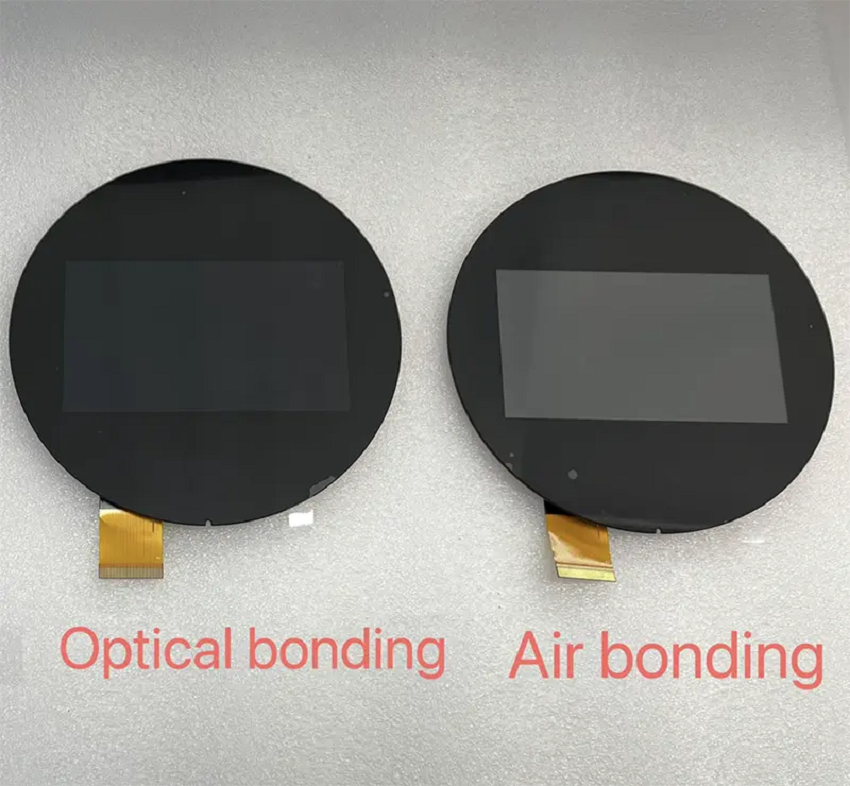
Air Bonding vs. Optical Bonding: How to Choose the Right Solution for Industrial Touch Screen
Table of Contents
-
What Is Air Bonding?
- Structure of Air Bonding
- Advantages and Limitations
-
What Is Optical Bonding?
- How OCA/OCR Optical Bonding Works
- Why Optical Bonding Is Better for Industrial Applications
-
Air Bonding vs. Optical Bonding: Key Differences
- Sunlight Readability
- Contrast and Reflection
- Vibration Resistance
- Anti-Fog Performance
- Touch Experience
- Long-Term Reliability
- When Is Air Bonding the Right Choice?
- When Is Optical Bonding Worth the Investment?
- How DINGTouch Helps You Select the Best Bonding Solution
- Conclusion
- Frequently Asked Questions
Air Bonding vs. Optical Bonding: How to Choose the Right Solution for Industrial Touch Screen
For industrial touch displays, the bonding method used between the LCD panel, touch panel, and cover glass is much more than a manufacturing process. It directly affects display quality, optical performance, durability, and long-term reliability.
Many engineers encounter the same question during product development:
Why does an LCD look perfectly clear in the office but become difficult to read once installed in outdoor equipment?
In many cases, the answer is not the LCD panel itself—it is the bonding technology.
Air Bonding and Optical Bonding are the two most widely used assembly methods in the industrial display industry. The right choice depends entirely on the operating environment.
What Is Air Bonding?
Air Bonding is the most common and cost-effective display assembly method.
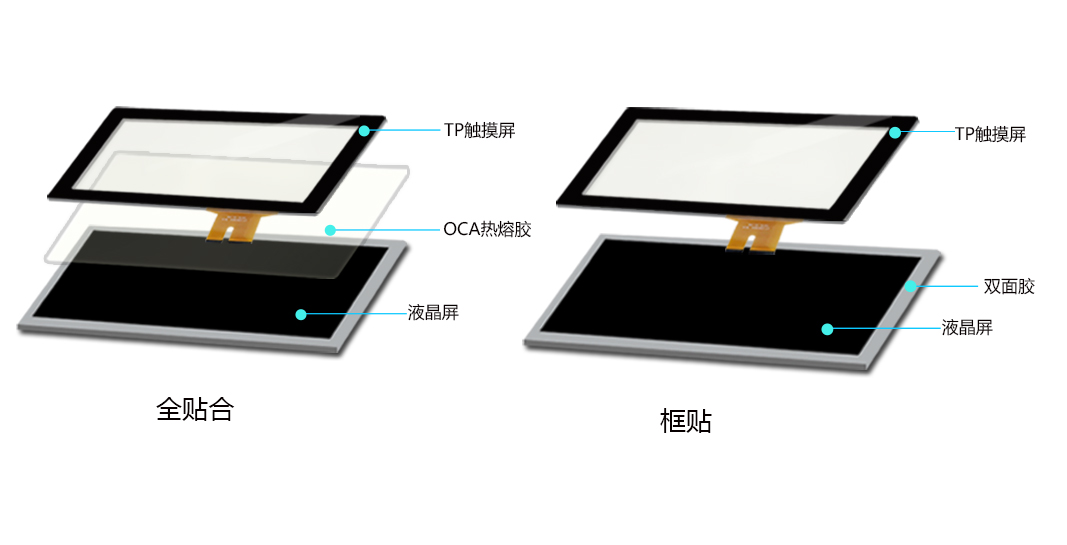
In this structure, an air gap remains between the LCD panel and the touch panel or cover glass. The components are typically secured using double-sided adhesive tape or frame adhesive around the edges.
Air Bonding offers several advantages:
- Lower manufacturing cost
- Easier LCD replacement and repair
- Mature production process
- Suitable for standard mass-production products
For this reason, Air Bonding remains widely used in consumer electronics and many industrial applications.
Typical applications include:
- Indoor HMI systems
- PLC control panels
- Equipment operation terminals
- Laboratory instruments
- Office automation equipment
Since these devices generally operate in clean indoor environments with stable lighting and temperature, Air Bonding usually provides sufficient performance.
The Biggest Limitation of Air Bonding
The air gap is also the primary drawback.
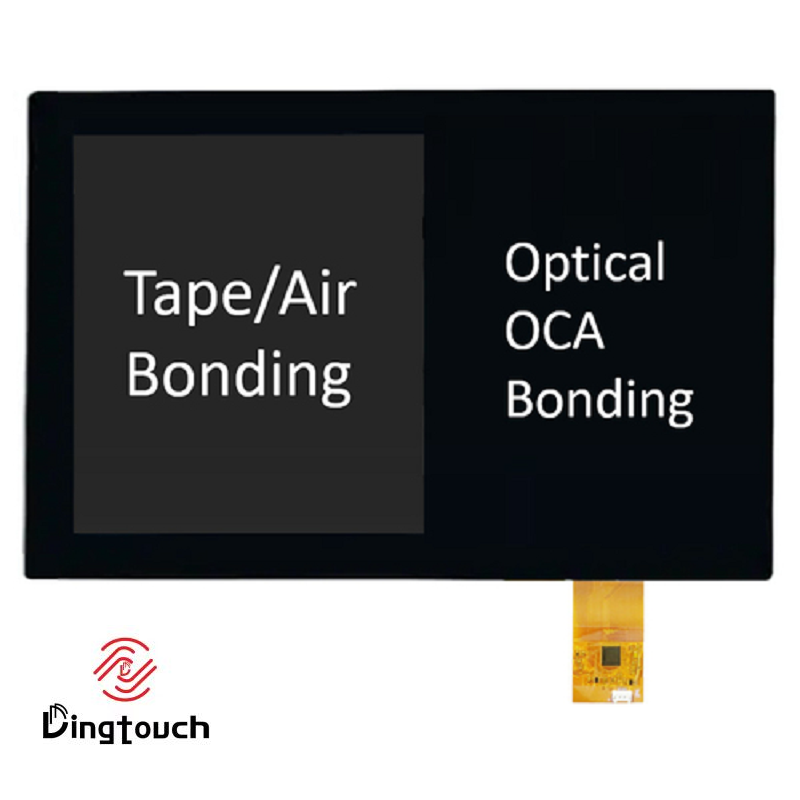
Every interface between air and glass creates light reflection. As a result, additional optical interfaces increase internal reflections, reducing image clarity and contrast.
Common issues include:
- Lower contrast
- Washed-out black levels
- Poor sunlight readability
- Increased glare
- Reduced optical efficiency
The air gap may also introduce mechanical and environmental challenges, including:
- Internal condensation
- Fogging caused by temperature changes
- Dust accumulation
- Layer movement under long-term vibration
These issues often do not appear during laboratory testing but become noticeable after months of real-world operation.
What Is Optical Bonding?
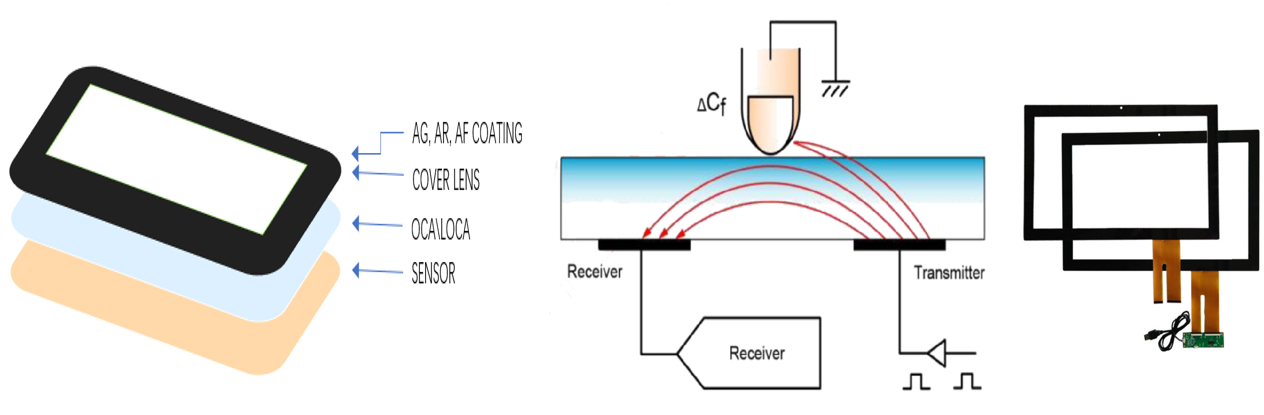
Optical Bonding eliminates the air gap by filling the space between the LCD panel and the touch panel or cover glass with a transparent optical adhesive such as OCA (Optically Clear Adhesive) or OCR (Optically Clear Resin).
Instead of leaving multiple reflective interfaces, Optical Bonding creates a single integrated optical structure.
Compared with Air Bonding, Optical Bonding provides:
- Higher light transmission
- Improved contrast
- Lower internal reflection
- Better sunlight readability
- More responsive touch experience
For industrial equipment, these improvements not only enhance display quality but also reduce operator errors and improve overall system reliability.
Why Industrial Equipment Increasingly Uses Optical Bonding
Modern industrial equipment often operates in demanding environments, including:
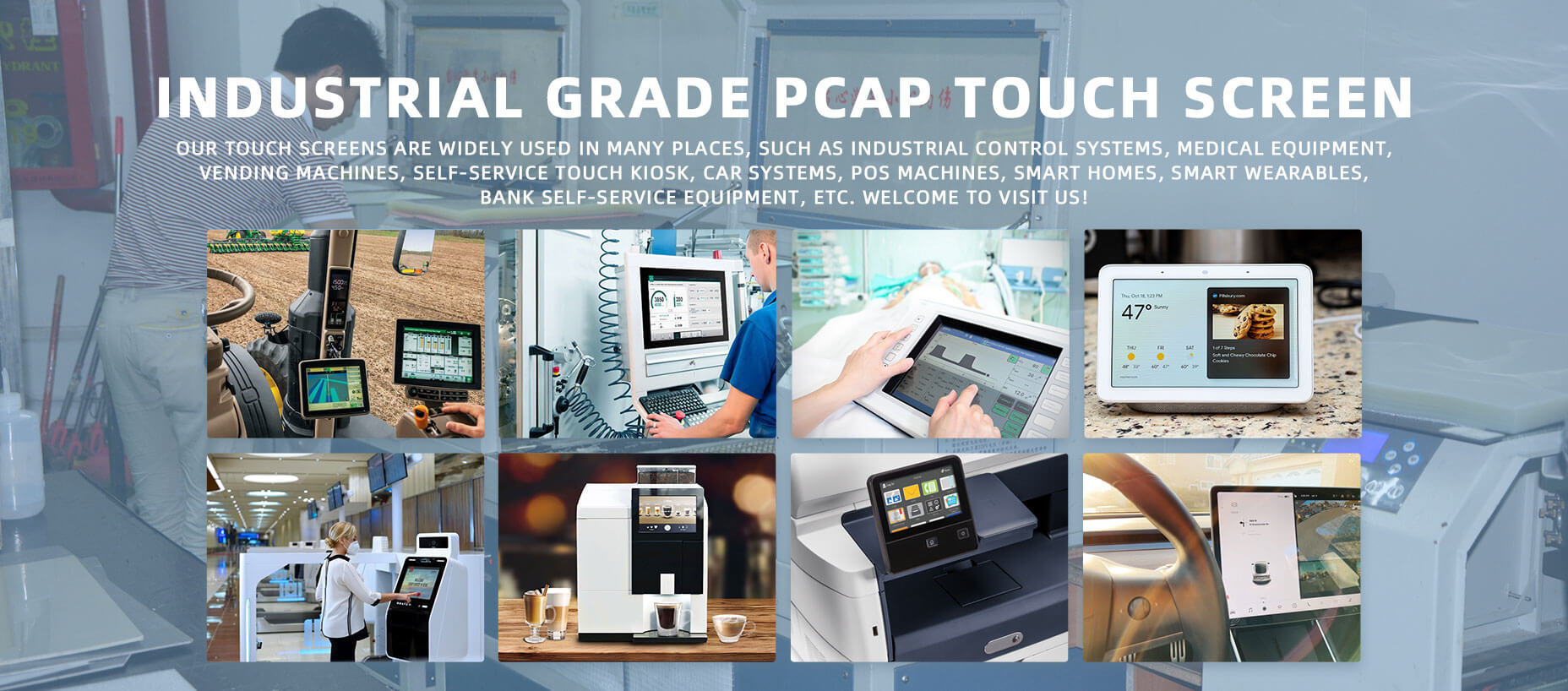
- Outdoor charging stations
- Construction machinery
- Agricultural equipment
- Medical devices
- Marine navigation systems
- Railway equipment
- Smart warehousing
- Industrial robotics
These applications typically face:
- Direct sunlight
- High humidity
- Temperature cycling
- Continuous vibration
- Strict reliability requirements
Optical Bonding significantly improves the display system's ability to withstand these environmental challenges.
Air Bonding vs. Optical Bonding: Key Differences
| Feature | Air Bonding | Optical Bonding |
|---|---|---|
| Sunlight Readability | Good | Excellent |
| Internal Reflection | Higher | Much Lower |
| Contrast | Standard | Higher |
| Anti-Fog Performance | Moderate | Excellent |
| Vibration Resistance | Moderate | Excellent |
| Dust Resistance | Moderate | Better |
| Touch Experience | Standard | More Direct |
| Repairability | Easier | More Difficult |
| Manufacturing Cost | Lower | Higher |
Sunlight Readability Depends on More Than Brightness
Many engineers assume that increasing LCD brightness is enough to improve outdoor visibility.
In reality, even a 1000-nit display can appear washed out if excessive internal reflections remain.
Reducing reflection is often more effective than simply increasing backlight brightness.
This is why many industrial sunlight-readable displays combine:
- Optical Bonding
- AG (Anti-Glare) Glass
- AR (Anti-Reflection) Coating
- AF (Anti-Fingerprint) Coating
Together, these technologies deliver significantly better outdoor viewing performance.
Optical Bonding Also Improves Reliability
Because all display layers are laminated into a single structure, Optical Bonding provides:
- Better impact resistance
- Improved vibration resistance
- Reduced risk of fogging
- Enhanced sealing performance
- Greater long-term reliability
For medical devices, industrial HMIs, and vehicle displays, Optical Bonding has become the preferred solution.
When Is Air Bonding the Right Choice?
Air Bonding is typically sufficient when the display operates:
- Indoors
- Away from direct sunlight
- In stable environmental conditions
- Under strict cost constraints
- Where easy repair and replacement are important
Typical applications include:
- PLC control cabinets
- Laboratory equipment
- Industrial control terminals
- Office equipment
- Test instruments
When Is Optical Bonding Worth the Investment?
Optical Bonding is highly recommended for applications such as:
- Outdoor equipment
- Medical devices
- Construction machinery
- Agricultural machinery
- Vehicle displays
- Marine equipment
- Self-service kiosks
- Industrial tablet PC
- EV charging stations
- High-brightness industrial HMI
In these environments, Optical Bonding delivers significantly better display performance and improved long-term durability.
How DINGTouch Helps You Choose the Right Bonding Solution
DINGTouch specializes in industrial TFT LCD displays and projected capacitive touch screen solutions, offering both Air Bonding and Optical Bonding based on your project requirements.
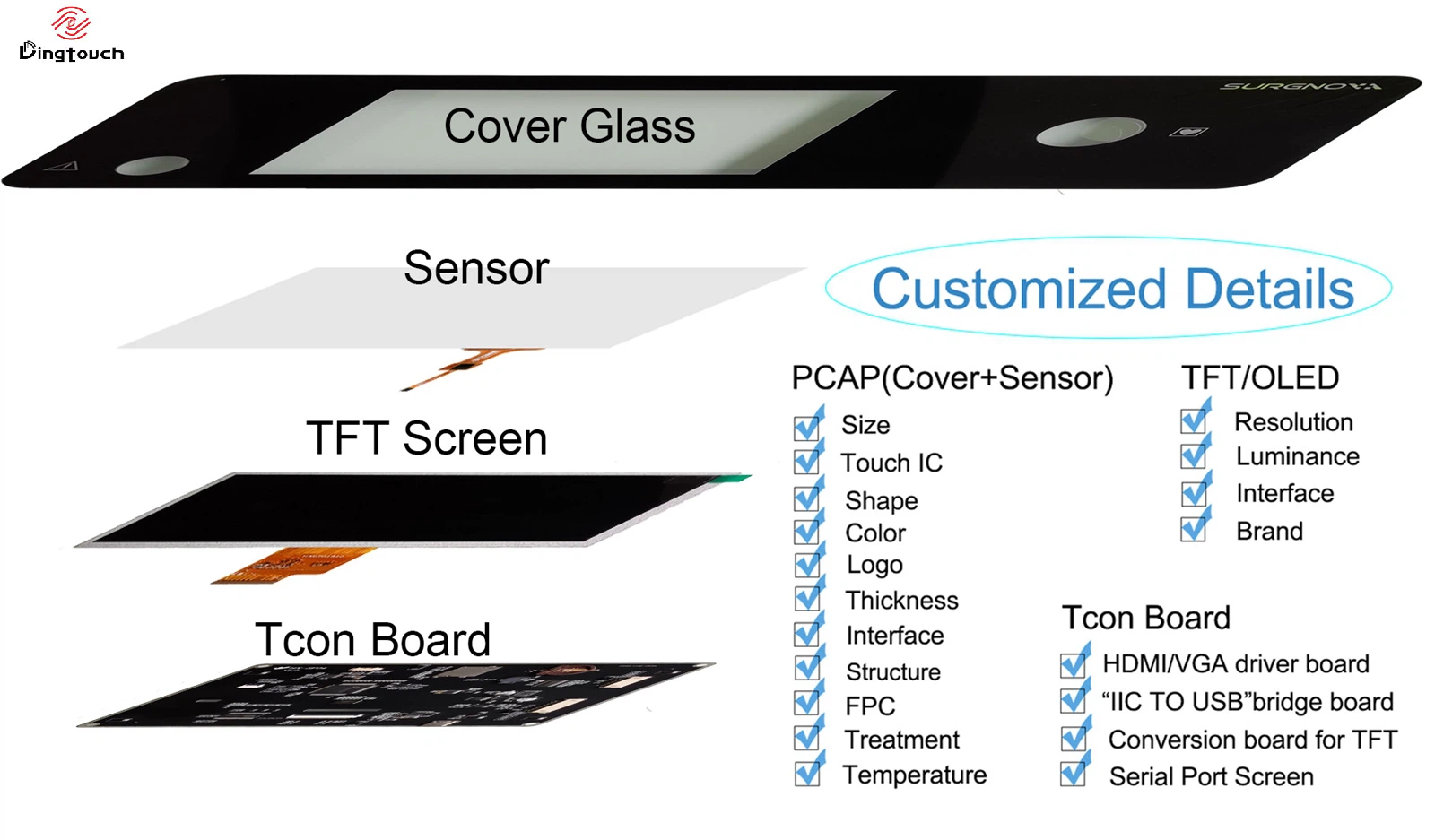
Our customization capabilities include:
- OCA Optical Bonding
- High-brightness LCD (up to 2000 nits)
- AG / AR / AF surface treatments
- Custom capacitive touch panels
- Custom cover glass design
- FPC modification
- HDMI, LVDS, MIPI, and eDP interface development
- EMC/ESD optimization
- Wide operating temperature designs (-30°C to +85°C)
Whether your application is industrial automation, medical equipment, outdoor terminals, transportation systems, or embedded devices, our engineering team can recommend the most suitable bonding structure for your operating environment.
Conclusion
Both Air Bonding and Optical Bonding have their place in industrial display design.
Air Bonding remains an excellent solution for indoor applications where low cost, easy maintenance, and standard optical performance are sufficient.
For applications requiring superior readability, reflection reduction, impact resistance, anti-fog performance, and long-term reliability, Optical Bonding is the better investment.
For industrial HMI, medical devices, vehicle displays, agricultural machinery, outdoor kiosks, and embedded systems, Optical Bonding provides a noticeable improvement that cannot be achieved simply by increasing display brightness.
With extensive experience in custom industrial display solutions, DINGTouch provides complete engineering support, including Optical Bonding, high-brightness IPS TFT LCD, projected capacitive touch screen, custom cover glass, interface development, and surface treatments to help OEM build reliable products for demanding environments.
Frequently Asked Questions
Q1. What is the difference between Air Bonding and Optical Bonding?
A: Air Bonding leaves an air gap between the LCD and the touch panel or cover glass, while Optical Bonding fills the gap with a transparent adhesive such as OCA or OCR. Optical Bonding reduces reflection, improves contrast, and enhances sunlight readability.
Q2. Is Optical Bonding worth it for industrial touch screen?
A: Yes. For outdoor HMI, medical devices, vehicle displays, agricultural machinery, and rugged industrial equipment, Optical Bonding significantly improves readability, durability, and long-term reliability.
Q3. Does Optical Bonding improve sunlight readability?
A: Absolutely. By eliminating internal reflections, Optical Bonding allows more light from the LCD to reach the user, making high-brightness displays much easier to read in outdoor environments. It is often combined with AG or AR cover glass for maximum performance.
Q4. When should I choose Air Bonding?
A: Air Bonding is ideal for indoor applications where displays are protected from direct sunlight, moisture, vibration, and frequent cleaning. It offers lower manufacturing costs and easier maintenance.
Q5. Can DINGTouch customize Optical Bonding touch displays?
A: Yes. DINGTouch offers fully customized Optical Bonding solutions, including OCA lamination, high-brightness LCD, AG/AR/AF coatings, custom capacitive touch panels, cover glass design, FPC modification, and HDMI, MIPI, LVDS, and eDP interface development for industrial, medical, and embedded applications.
Ready to Build Your Outdoor Display Solution?
Get in touch with us at sales@szdingtouch.com. Our expert engineers will help you design a cost-effective, tailored solution to meet your project’s exact specifications.
DINGTouch:Committed to continuous innovation and improvement of product quality to meet customers' high requirements and expectations.
DINGTouch is a manufacturer that provides high quality touch screen panels. Focus on the design, manufacturing and sales of touch screen panels, and are committed to providing customized solutions that satisfy customers.
DINGTouch: In the process of customizing touch screen panels, we focus on close cooperation and communication with customers. Understanding customers' needs and providing customized solutions will meet customers' individual needs. The company's products are favored by customers for their high quality and reliability, and provide them with the best touchscreen panel solutions.
DINGTouch is a company specializing in the R&D and production of touch screen technology, headquartered in Shenzhen, China. As a professional touch screen supplier, DINGTouch is committed to providing high-quality, stable and reliable touch screen products to meet the diverse needs of customers. We continue to carry out technological innovation and product optimization to ensure that its touch screen products have good sensitivity, accuracy and durability.
In addition to the products themselves, we also focus on cooperation and communication with customers, and are committed to providing customized solutions and excellent after-sales services. Through continuous efforts to improve product quality and customer satisfaction, we have established a good reputation in the touchscreen industry and won widespread market recognition.
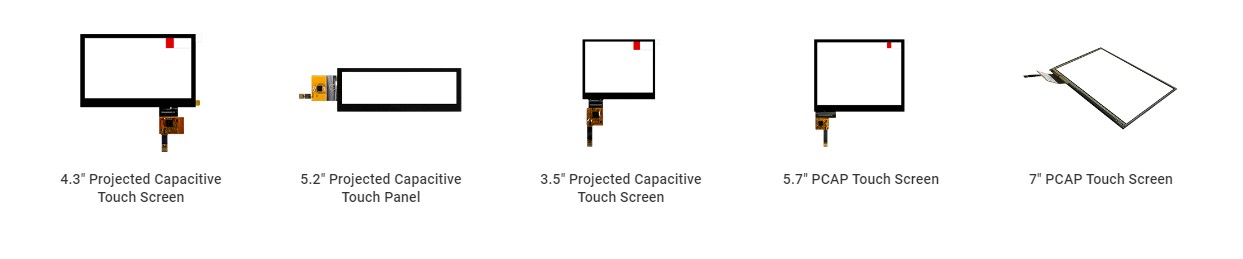
• PCAP maximum size 65”
• Multi-touch (Touch screen can be customized to your needs.)
• Optical bonding service/air bonding
• LCD interface: HDMI/RGB/MIPI/LVDS/EDP, etc.
• PCAP interface: IIC/USB interface
• CTP can customize the cover glass surface treatment process AG (anti-glare), AR (anti-reflection), AF (anti-fingerprint), waterproof, and glove touch
• Supports 0.55 mm-12 mm coverslip touch.
• Support operating temperature: -40℃-90℃.
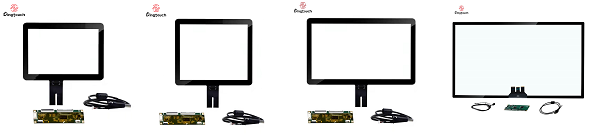
In conclusion, Dingtouch as a professional touch screen manufacturer with more than 10 years touch screen experience.We have many capacitive touch screen. Such as 5 inch touch screen,7 inch touch screen,10.1inch touch screen,15 inch touch screen,15.6 inch touch screen,17 inch touch screen,18.5 inch touch screen,19 inch touch screen,21.5 inch touch screen,32 inch touch screen, However, we also welcome to customize your own touch screen . Contact our team today to learn what capacitive touch screen are best for our retail business needs.
Contact us NOW! sales@szdingtouch.com
#Medicaltouchscreencalibration, #capacitivetouchcalibrationguide, #IEC60601touchscreen, #DINGTouchmedical display, #touchscreenaccuracy, #touchscreen driftfix, #medicalequipmenttouchsolutions, #IP65touchpanel, #IK10medicaltouchscreen, #glove touch medical monitor,#ILITEKTouchControllerICSelectionGuide ,#OCAtoOCR #GT911,#CustomizedWideTemperatureTouchScreenSolutions, #Waterproof Touchscreen
DINGTouch — Custom Touch Display Solutions Expert
Every touch, clear and precise, ready for any environment.




What DINGTOUCH can do:
Dingtouch Industrial capacitive touch screen Manufacturer
CATEGORIES
CONTACT US
Contact: Dingtouch
Phone: +8615815536116
Tel: +8615815536116
Email: sales@szdingtouch.com
Add: Building A, Bailu Plaza, No. 48, Gonghe Industrial Road, Gongle Community, Xixiang Street, Baoan District, Shenzhen,China. 518126
 Dingtouch