News
10-Inch Touchscreen Display: Why Is It an Ideal Size for Portable Devices?
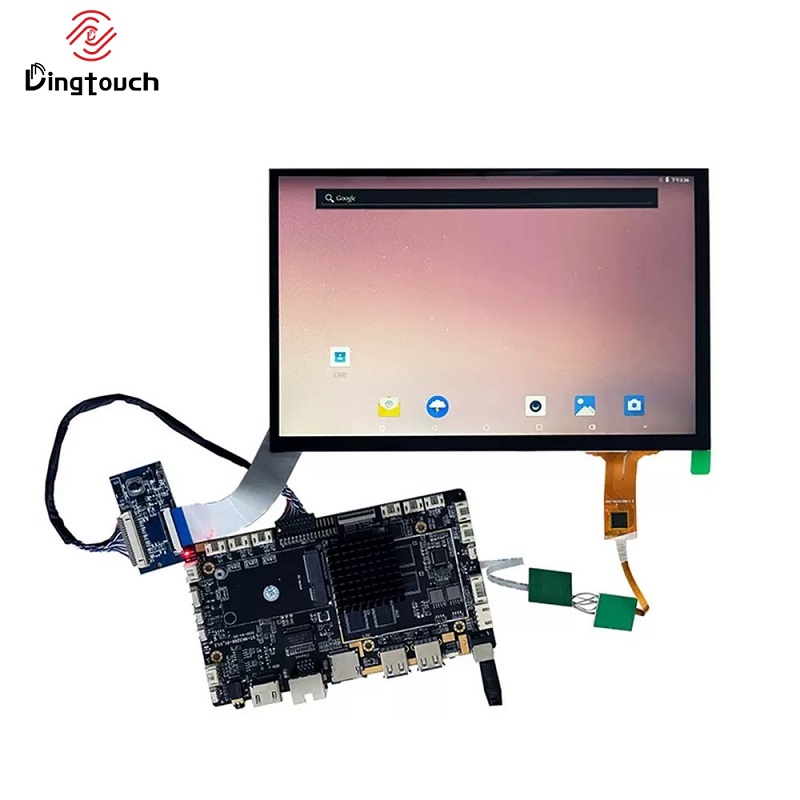
10-Inch touchscreen Display: Why Is It an Ideal Size for Portable Devices?
In today’s rapidly evolving digital world, portable devices are becoming thinner, smarter, and more efficient. Whether used in industrial handheld terminals, medical equipment, POS systems, educational tablets, or field-service devices, users expect products to combine portability, display performance, touch responsiveness, and reliability.
Among the many display sizes available, the 10-inch touchscreen display has become a popular choice for portable and embedded devices because it offers an excellent balance between screen size and portability.
Compared with smaller 6–8-inch displays, a 10-inch screen provides more viewing area and greater operating space. Compared with larger 11–15-inch displays, it maintains better portability and ergonomics.
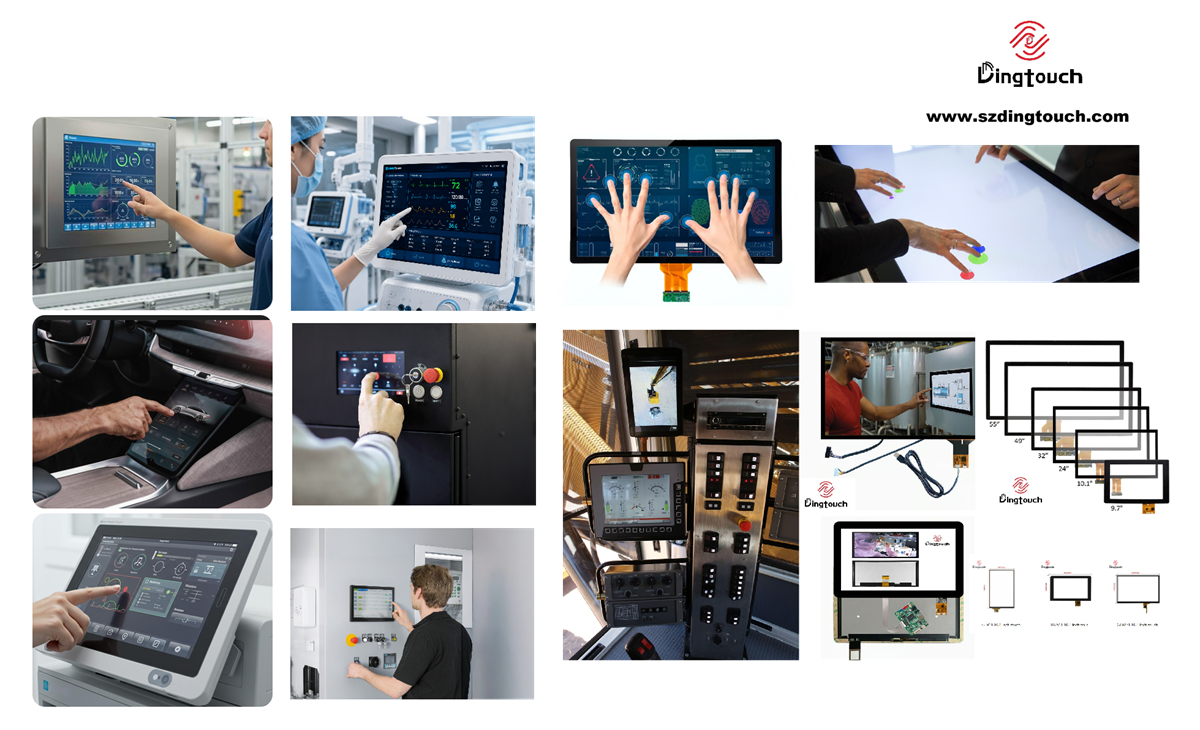
For devices that need to balance mobility and functionality, a 10-inch touchscreen is therefore a highly attractive solution.
This article explores why 10-inch touchscreen displays are widely used in consumer electronics, industrial equipment, medical devices, retail systems, education, and other applications, covering their engineering advantages, display and touch technologies, power efficiency, durability, and customization options.
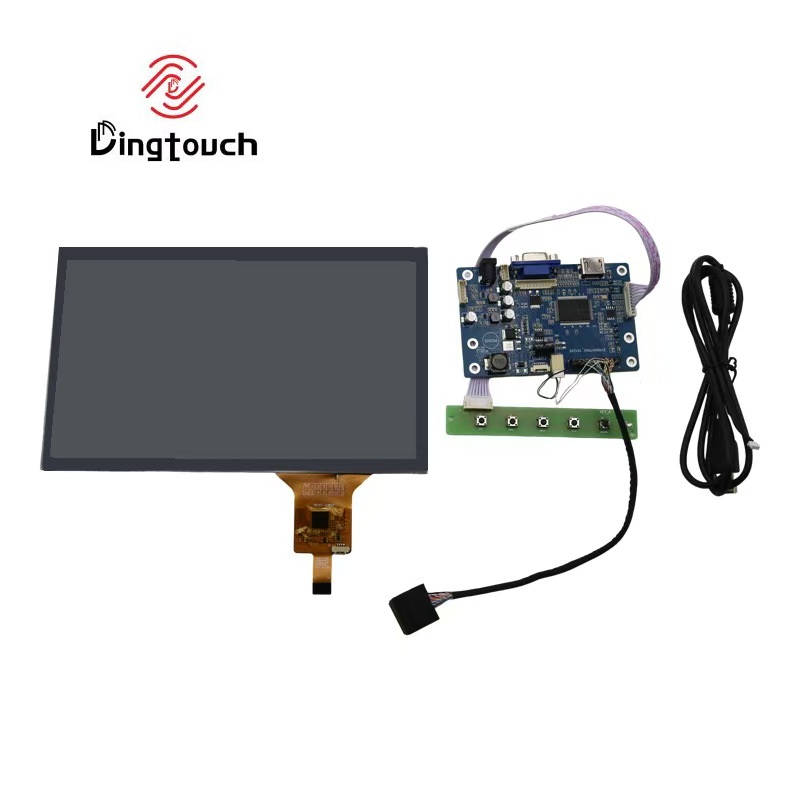
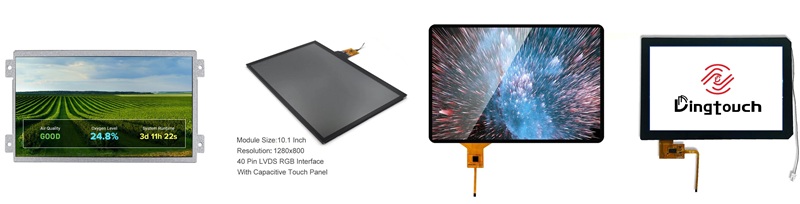
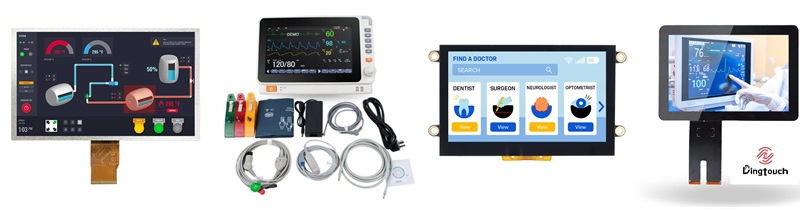 1. Why Is 10 Inches an Ideal Size for Portable Devices?
Display size is not simply a visual specification. It directly affects the overall product design, weight, power consumption, operating space, and user experience.
The 10-inch format offers a particularly good balance between display area and portability.
1.1 A Good Balance Between Portability and Viewing Area
Although 6–8-inch displays are compact, their limited viewing area can make it difficult to display complex dashboards, tables, industrial parameters, and detailed interfaces.
On the other hand, 11–15-inch displays provide more screen space but may increase the overall size and weight of the device.
A 10-inch display offers:
- A larger viewing area
- More comfortable text and icon display
- Easier touchscreen operation
- A comfortable one- or two-handed user experience
- Easy integration into backpacks, tool cases, and mobile workstations
- A reasonable balance between overall device size and weight
This makes 10-inch displays particularly suitable for medical inspection, field service, logistics, industrial control, and educational devices.
1.2 More Screen Space for Better Productivity
For professional equipment, the display is not only used for viewing information. It is also an important human-machine interface.
A 10-inch screen provides enough space for more complex user interfaces, such as:
- Industrial equipment parameters
- Data dashboards
- Medical information
- Equipment status
- Inventory information
- Maps and navigation
- PDF documents
- Video conferencing interfaces
Users can also take advantage of split-screen layouts, touch pens, and multi-touch gestures for more efficient interaction.
This allows a 10-inch device to function as a portable productivity terminal, rather than simply a viewing screen.
2. What Are the Engineering Advantages of a 10-Inch touchscreen Display?
From a product development and manufacturing perspective, choosing 10 inches is not simply a matter of screen size.
It also involves panel availability, touch integration, optical performance, power consumption, reliability, and long-term supply.
2.1 A Wide Range of LCD/TFT Panel Options
The 10-inch class has a mature LCD/TFT ecosystem, allowing manufacturers to select different display solutions according to project requirements.
Common configurations include:
- IPS LCD
- TFT LCD
- High-brightness LCD
- Different aspect ratios
- 1280 × 800 resolution
- 1920 × 1080 resolution
- 1920 × 1200 resolution
- Higher-resolution options for selected applications
For industrial and medical products with long production cycles, a mature panel supply chain can help manufacturers improve:
- Cost control
- Supply stability
- Product consistency
- Long-term production reliability
- Driver and system compatibility
This mature ecosystem is one reason why 10-inch displays are widely used in professional equipment.
3. 10-Inch Displays Support Multiple Touch Technologies
A 10-inch LCD can be integrated with different touchscreen technologies depending on the application.
Among them, PCAP (Projected Capacitive Touch) is one of the most widely used solutions for modern touchscreen devices.
3.1 PCAP Capacitive Touch
PCAP technology can support:
- 10-point or multi-touch operation
- Fast touch response
- Gesture recognition
- Stylus input
- Glove touch
- Waterproof touch
- EMI/EMC optimization
- Noise-resistant touch performance for industrial environments
Depending on the application, manufacturers can also select different cover glass materials and thicknesses, including tempered glass and impact-resistant glass.
3.2 Resistive Touch
Resistive touch technology remains useful for certain industrial, agricultural, and specialized applications.
Its advantages include:
- Glove operation
- Stylus or tool operation
- Cost-effective implementation
- Mature technology
- Good adaptability to demanding operating environments
Therefore, the right touchscreen technology should be selected according to the actual operating environment rather than simply choosing the latest technology.
4. How Does Optical Bonding Improve 10-Inch touchscreen Performance?
For industrial, medical, and outdoor equipment, a high-resolution LCD alone is often not enough.
When an air gap exists between the LCD, touchscreen sensor, and cover glass, reflections can become a significant problem, particularly under strong ambient light.
This is why optical bonding is an important upgrade for industrial 10-inch touchscreen displays.
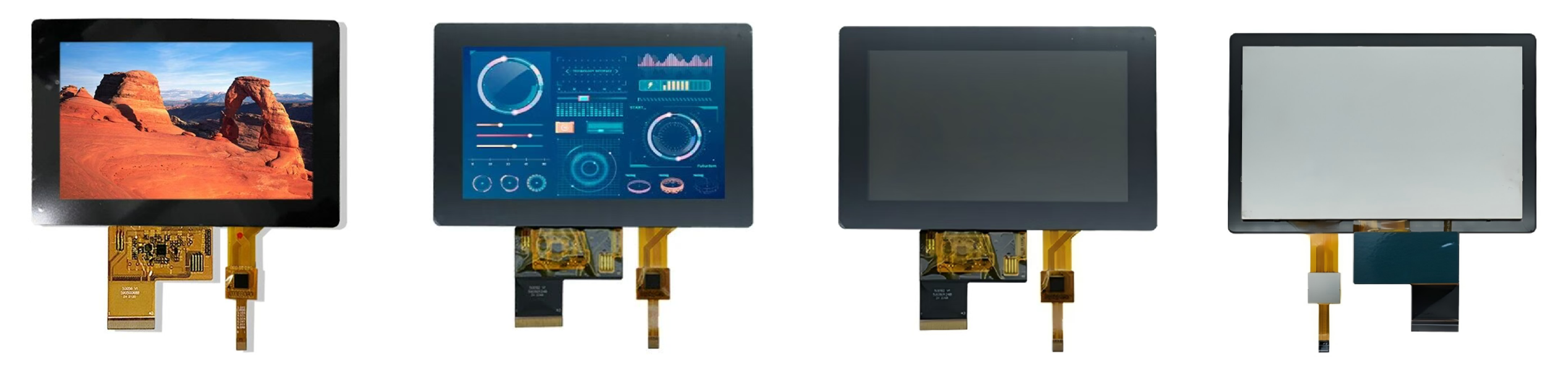
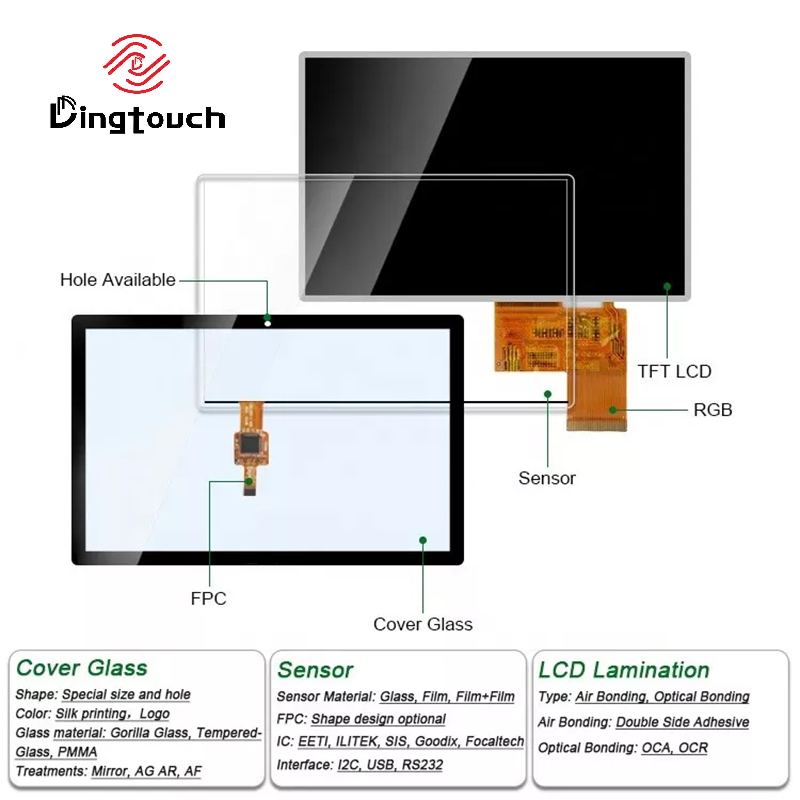
Using OCA, OCR, or other optical bonding technologies can reduce the internal air gap and improve:
- Sunlight readability
- Display contrast
- Touch experience
- Structural stability
- Impact resistance
- Resistance to dust entering the display structure
For outdoor and high-reliability equipment, optical bonding can also be combined with:
- AR (Anti-Reflective) coatings
- AG (Anti-Glare) coatings
- AF (Anti-Fingerprint) coatings
- High-brightness backlights
- Thick cover glass
- IP65/IP67 protection designs
Together, these technologies can create a more reliable industrial 10-inch touchscreen display solution.
5. Why Is a 10-Inch Display Suitable for Battery-Powered Devices?
For battery-powered equipment, the display is often one of the important contributors to overall power consumption.
A larger display does not necessarily mean poor battery life. By using efficient LED backlighting, optimized display driver IC, and appropriate brightness settings, manufacturers can achieve a better balance between viewing area and power consumption.
Compared with larger displays, a 10-inch display can provide a relatively large viewing area while maintaining reasonable power requirements.
This makes it particularly suitable for:
- Mobile medical devices
- Logistics terminals
- Industrial handheld devices
- Educational tablets
- Field-service terminals
- Battery-powered control equipment
For outdoor applications, high-brightness LCD rated at 800–1500 nits or higher can be combined with optical bonding and AR/AG technologies to improve readability in bright environments.
6. Where Are 10-Inch touchscreen Displays Used?
Because of their balance between screen area and overall device size, 10-inch displays are used across a wide range of industries.
6.1 Tablets and Educational Devices
The 10-inch format is a mature and popular size for tablet-based products.
Typical applications include:
- Online learning
- Digital textbooks
- Video playback
- Web browsing
- PDF reading
- Digital drawing
- Handwritten notes
- Interactive educational applications
Compared with smartphones, a 10-inch screen provides a much larger viewing and operating area. Compared with laptops, it can offer a more compact and portable form factor.
6.2 POS and Retail Self-Service Terminals
10-inch touchscreen displays are well suited to commercial equipment where installation space is limited.
Typical applications include:
- POS systems
- Self-ordering kiosks
- Self-checkout terminals
- Information kiosks
- Queue management systems
- Smart retail terminals
The larger touch area makes interaction easier without occupying excessive counter or installation space.
6.3 Medical Equipment
Medical equipment often requires a combination of clear visibility, accurate touch operation, easy cleaning, and reliable performance.
10-inch touchscreen displays can be used in:
- Patient monitoring equipment
- Mobile medical terminals
- Portable ultrasound systems
- Medical information terminals
- Medical carts
- Clinical data collection equipment
For medical applications, high-brightness LCD, chemical-resistant cover glass, PCAP touch, and optical bonding can be integrated according to project requirements.
6.4 Industrial Control and Field Service
Industrial environments often require displays with good visibility, reliable touch performance, and strong environmental resistance.
10-inch industrial touchscreen displays can be used for:
- HMI systems
- Industrial control terminals
- Portable inspection equipment
- Field-service terminals
- Warehouse and logistics equipment
- Industrial handheld terminals
- Smart instrumentation
Depending on the environment, these displays can be configured with:
- 800–1500 nits high brightness
- -20°C to +70°C operating temperature
- 3–6 mm cover glass
- IP65/IP67 protection
- EMI/ESD protection
- AG/AR/AF surface treatments
- Optical bonding
6.5 Transportation, Logistics, and Outdoor Equipment
Transportation and logistics equipment may need to operate continuously under vibration, temperature changes, and strong ambient light.
10-inch displays can be integrated into:
- Vehicle terminals
- Logistics scanners
- Navigation systems
- Warehouse management terminals
- Fleet management systems
- Outdoor information terminals
For long-term outdoor operation, manufacturers can combine high-brightness LCDs, AR/AG glass, wide-temperature designs, and water/dust-resistant structures.
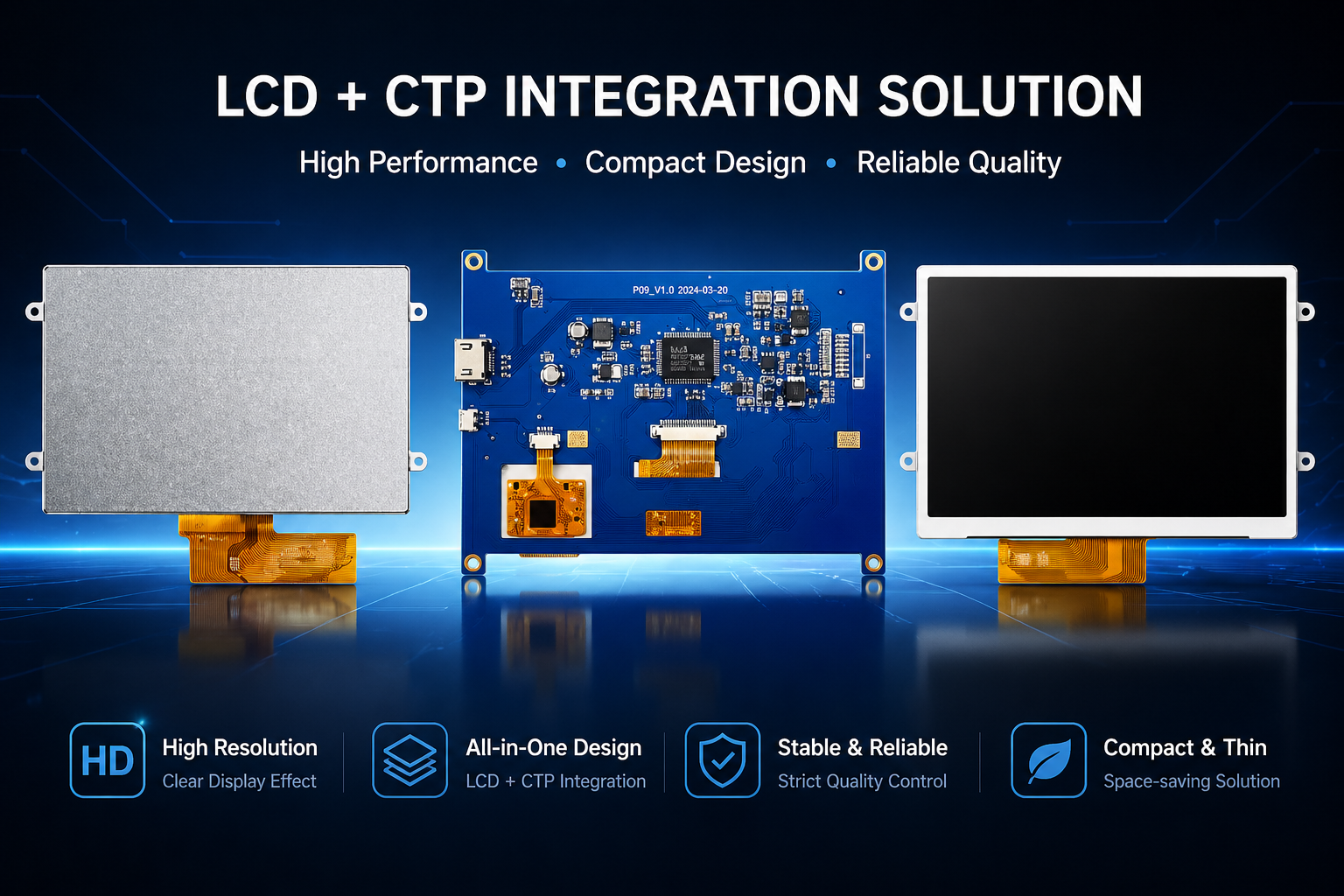
7. Key Technical Advantages of 10-Inch touchscreen Displays
Overall, 10-inch touchscreen displays offer several important advantages.
7.1 Excellent Size Balance
A 10-inch screen provides a practical balance between portability and viewing area.
7.2 Flexible Resolution Options
Common configurations include 1280 × 800, 1920 × 1080, and 1920 × 1200, with higher-resolution options available for specific projects.
7.3 Flexible Touch Solutions
The display can be integrated with PCAP, resistive touch, and different touchscreen controller IC solutions.
7.4 Industrial-Grade Protection
For demanding applications, the display can be enhanced with thick cover glass, optical bonding, waterproof structures, wide-temperature operation, and EMI/ESD protection.
7.5 Better Outdoor Readability
High-brightness LCDs, AR/AG coatings, and optical bonding can significantly improve readability in bright outdoor environments.
7.6 Wide Interface Compatibility
Depending on the system architecture, 10-inch display modules can support interfaces such as:
- LVDS
- eDP
- MIPI DSI
- HDMI
- USB
- RGB
This allows integration with different embedded platforms and control systems.
8. Can a 10-Inch touchscreen Display Be Customized?
Yes.
For industrial, medical, automotive, outdoor, and commercial equipment, a standard 10-inch display may not always meet every project requirement. A customized display solution can provide better integration and long-term reliability.
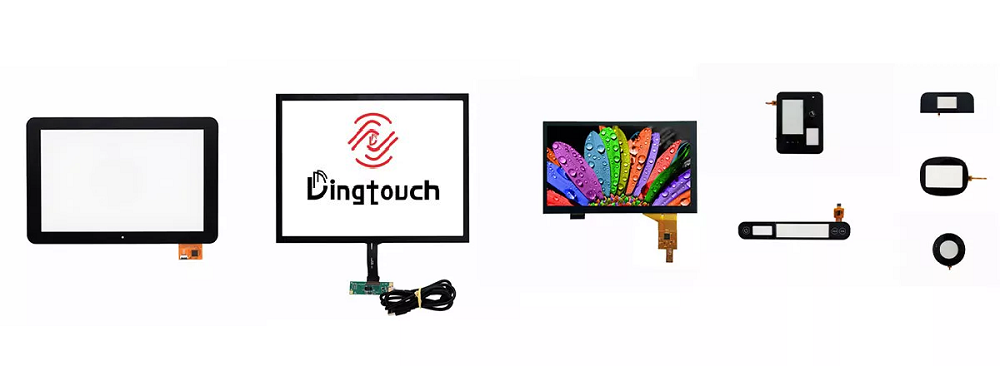
Depending on the project, a 10-inch touchscreen display can be customized in terms of:
- LCD dimensions and resolution
- Overall outline dimensions
- Touchscreen structure
- Cover glass thickness
- Glass material
- PCAP touch parameters
- Glove touch
- Waterproof touch
- Stylus support
- AG/AR/AF coatings
- Optical bonding
- High-brightness backlight
- Wide-temperature operation
- IP65/IP67 protection
- EMI/ESD design
- LVDS/eDP/MIPI/HDMI/USB interfaces
For industrial projects requiring long-term supply, the complete display module can also be designed according to product lifecycle, operating temperature, brightness, mechanical dimensions, installation requirements, and system interface.
9. How to Choose the Right 10-Inch Touchscreen Display?
When selecting a 10-inch display, manufacturers should consider more than resolution and price.
The following factors are particularly important.
1. Operating Environment
Indoor, outdoor, high-temperature, low-temperature, humid, and dusty environments require different display and touch solutions.
2. Brightness Requirements
Indoor equipment typically does not require extremely high brightness, while outdoor equipment may require 800 nits, 1000 nits, 1500 nits, or even higher.
3. Touch Requirements
If the device needs to support gloves, water, or demanding industrial environments, the touchscreen controller IC and touch algorithms should be carefully evaluated.
4. Mechanical Strength
Industrial and medical devices may require thicker cover glass, IP protection, and enhanced impact resistance.
5. Display Interface
Before selecting the display, confirm whether the mainboard supports LVDS, eDP, MIPI, HDMI, or another interface.
6. Long-Term Supply
For industrial equipment, panel lifecycle and supply stability can be more important than short-term component cost.
Conclusion: Why Is 10 Inches a Popular Size for Portable Devices?
The popularity of 10-inch touchscreen displays is not simply because they sit between small and large displays.
Their real advantage is the ability to balance multiple engineering requirements:
Portability + Viewing Area + Touch Experience + Power Efficiency + Reliability + Cost + Customization
From tablets, educational terminals, and POS systems to medical equipment, industrial HMIs, logistics terminals, and outdoor devices, 10-inch touchscreen displays provide sufficient screen space while maintaining good portability.
As technologies such as high-brightness LCD, PCAP touch, optical bonding, AR/AG/AF surface treatments, wide-temperature operation, and high-reliability designs continue to advance, the application range of 10-inch display modules is expected to continue expanding.
For equipment manufacturers, the key is not simply choosing a “10-inch screen,” but selecting a complete touchscreen display solution based on the operating environment, brightness, touch technology, mechanical strength, interface, temperature range, and product lifecycle.
FAQ: 10-Inch Touchscreen Display
1. Why are 10-inch displays suitable for portable devices?
A 10-inch display offers a good balance between viewing area, portability, touch operation, and power consumption, making it suitable for mobile, medical, industrial, and educational devices.
2. What are the common resolutions for 10-inch displays?
Common options include 1280 × 800, 1920 × 1080, and 1920 × 1200. Higher resolutions can also be customized according to project requirements.
3. Is a 10-inch touchscreen suitable for outdoor use?
Yes. For outdoor applications, an 800–1500 nit or higher-brightness LCD can be combined with optical bonding, AR/AG coatings, and durable cover glass to improve outdoor readability and reliability.
4. What touchscreen technologies are available for 10-inch displays?
Common solutions include PCAP capacitive touch and resistive touch. PCAP can also support multi-touch, glove touch, waterproof touch, and stylus input depending on the design.
5. Can a 10-inch touchscreen display be used for industrial equipment?
Yes. By integrating thick cover glass, optical bonding, IP65/IP67 protection, wide-temperature operation, EMI/ESD protection, and a high-brightness LCD, a 10-inch touchscreen can be configured for many industrial applications.
6. Can a 10-inch display be customized?
Yes. Manufacturers can customize the display size, resolution, brightness, touchscreen structure, cover glass, surface treatment, optical bonding, interface, and operating temperature according to project requirements.
7. What products use 10-inch touchscreen displays?
Common applications include:
- Industrial HMI
- Medical equipment
- POS terminals
- Educational tablets
- Logistics terminals
- Vehicle displays
- Field-service equipment
- Outdoor terminals
- Portable inspection equipment
CATEGORIES
CONTACT US
Contact: Dingtouch
Phone: +8615815536116
Tel: +8615815536116
Email: sales@szdingtouch.com
Add: Building A, Bailu Plaza, No. 48, Gonghe Industrial Road, Gongle Community, Xixiang Street, Baoan District, Shenzhen,China. 518126
 Dingtouch