News
FFC vs FPC: Understanding Two Flexible Interconnect Technologies – Which One Is Best for Your Device
 FFC vs FPC: Understanding Two Flexible Interconnect Technologies – Which One Is Best for Your Device?
As modern electronic devices continue to become thinner, smaller, and more highly integrated, internal connection solutions must evolve as well. Traditional wire harnesses are no longer ideal for compact layouts or repeated bending, which is why flexible interconnect technologies have become essential in consumer electronics, industrial equipment, medical devices, and smart terminals.
Among the most common options are FFC (Flat Flexible Cable) and FPC (Flexible Printed Circuit). At first glance, they look similar—both are thin, lightweight, and bendable. However, in real-world applications, they differ significantly in structure, durability, cost, installation, space efficiency, and customization capabilities.
So what exactly is the difference between FFC and FPC? Which one is the better choice for your project?
In this guide, we’ll compare them across 10 key factors to help you make the right decision.
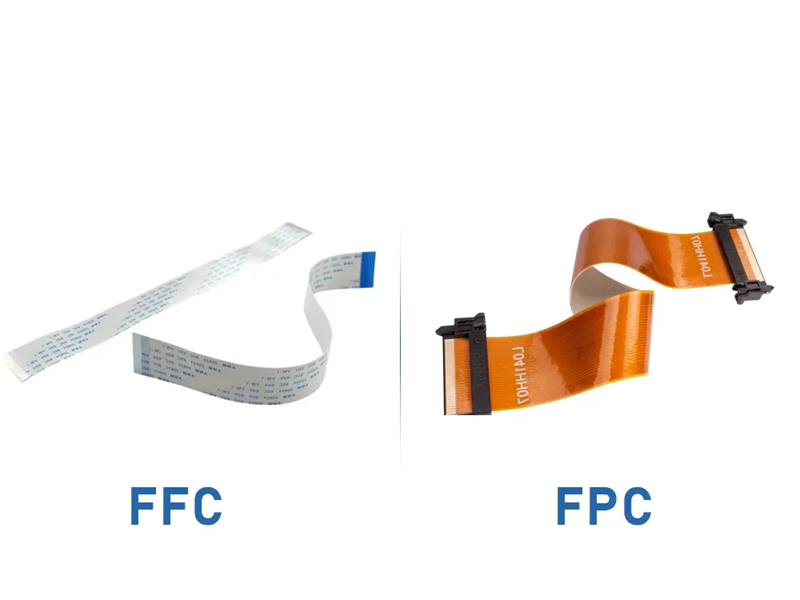 FFC vs FPC: 10 Key Differences Explained
1. Basic Structure
FFC: Parallel Wire Construction
FFC is made of multiple flat copper conductors arranged in parallel at fixed pitch spacing, then laminated between PET or PVC insulating films.
Key features include:
- Simple ribbon-style design
- Straight conductor layout
- Low manufacturing cost
- Ideal for point-to-point connections
FPC: Printed Circuit Structure
FPC is different. Instead of separate wires, copper traces are etched directly onto a flexible polyimide (PI) substrate. It functions like a PCB, but with flexibility.
Key benefits include:
- Complex circuit routing
- Multi-layer designs
- Component integration
- High-density interconnection capability
2. Thickness and Overall Size
FFC Has Fixed Thickness
Since FFC contains multiple conductors plus insulation layers, its thickness is usually more uniform and less customizable.
FPC Is Thinner and Lighter
FPC uses ultra-thin copper foil and PI materials, making it ideal for:
- Ultra-slim electronics
- Wearables
- Foldable devices
- Compact internal modules
3. Strength and Long-Term Durability
FFC Has Moderate Durability
FFC offers flexibility, but repeated bending may cause conductor fatigue or breakage over time. Insulation materials can also age in harsh environments.
Best for:
- Fixed-position installations
- Low-cycle bending applications
FPC Offers Better Reliability
Because copper traces are bonded firmly to the substrate, FPC withstands repeated movement much better.
Best for:
- Flip devices
- Sliding mechanisms
- Foldable products
- Dynamic motion systems
4. Manufacturing Process Complexity
FFC Production Is Simpler
Typical FFC production includes:
- Conductor alignment
- Heat lamination
- Insulation covering
- Terminal finishing
This results in fast production and lower cost.
FPC Manufacturing Is More Advanced
FPC manufacturing often includes:
- Copper clad laminate preparation
- Photolithography and etching
- Coverlay lamination
- Laser opening
- Surface plating
- Stiffener bonding
- SMT assembly (optional)
This requires higher engineering precision and more advanced equipment.
5. Flexibility in Real-World Use
FFC: Best for One-Direction Bending
FFC performs best in straight routing or single-bend installation scenarios, such as:
- Printers
- Home appliances
- Fixed industrial wiring
FPC: Multi-Directional Flexibility
FPC supports:
- S-shape bending
- Z-folding
- Multi-axis movement
- Tight corner routing
That is why smartphones rely heavily on FPC technology.

6. Design Freedom and Customization
FFC Is More Standardized
FFC typically uses standard pitches such as:
- 0.5mm
- 1.0mm
- 1.25mm
Length and pin count can vary, but routing patterns remain fixed.
FPC Is Highly Customizable
FPC can be engineered with:
- Custom outlines
- Holes and cutouts
- EMI shielding layers
- Multi-layer circuits
- LED or IC integration
- Special connector structures
This makes FPC ideal for advanced product development.
7. Space Efficiency in Compact Devices
FFC Has Moderate Space Efficiency
Because it requires straighter routing paths, FFC may be less efficient in ultra-small devices.
FPC Maximizes Internal Space
FPC can be folded, wrapped, or routed along structural surfaces, helping optimize internal layout.
Perfect for:
- Smartphones
- Tablets
- Portable medical devices
- Smart home panels
- Automotive electronics
8. Ease of Installation
FFC Is Easier to Install
FFC is commonly used with ZIF connectors, making insertion and replacement quick and easy.
FPC Requires More Precision
Due to its custom shapes and delicate circuitry, FPC assembly often requires better alignment and more controlled manufacturing processes.
9. Common Applications
Typical FFC Applications
- Printers
- Scanners
- DVD/CD players
- Microwave ovens
- Game consoles
- Industrial equipment
Typical FPC Applications
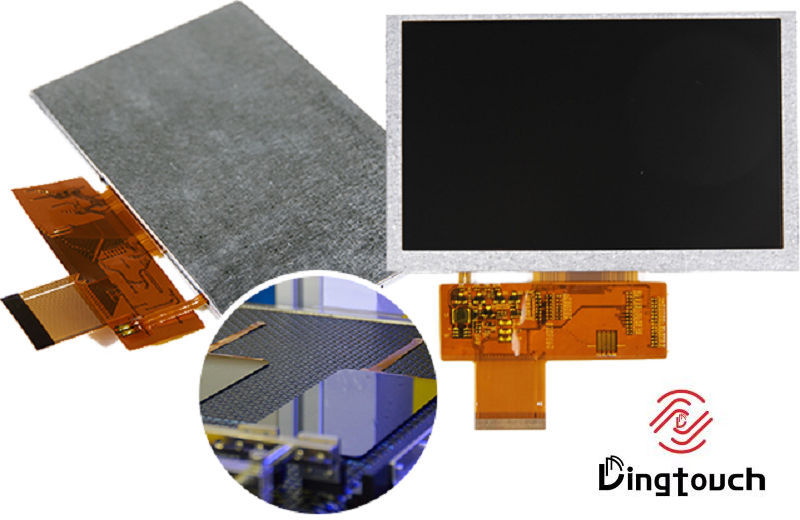
- Smartphone display modules
- TFT LCD displays
- IPS TFT LCD displays
- capacitive touch screen modules
- Smartwatches
- Wearables
- Medical monitoring devices
- Handheld industrial terminals
- Automotive systems
10. Cost and Budget Impact
FFC Is More Affordable
Because of its simple structure and efficient production process, FFC is ideal for cost-sensitive projects.
FPC Costs More—but Delivers More
Although more expensive, FPC provides:
- Slimmer designs
- Higher reliability
- Longer service life
- Premium product competitiveness
In many cases, it delivers better long-term value.
 FFC vs FPC: Which One Should You Choose?
FFC vs FPC: Which One Should You Choose?
Choose FFC If You Need:
✅ Lower cost
✅ Easy installation
✅ Fixed routing structure
✅ High-volume appliance or industrial production
Choose FPC If You Need:
✅ Premium industrial design
✅ Ultra-thin construction
✅ Frequent bending performance
✅ Tight internal space routing
✅ Higher reliability products
DINGTouch Expert Advice: Cable Design Should Match Display Design
In touch display product development, many companies focus only on screen specifications while overlooking internal cable architecture.
In reality, choosing between FFC and FPC directly affects:
- Display stability
- Touch response speed
- EMI resistance
- Product lifespan
- Assembly efficiency
As a professional display and touch solution provider, DINGTouch offers:
Custom Display Products
- TFT LCD Display
- IPS High-Brightness Displays
- HDMI Monitors
- USB Touch Displays
- Industrial Touch Monitors
- Capacitive Touch Screens
Complete Interconnect Support
- FFC cable design
- FPC circuit development
- Connector matching recommendations
- Mainboard interface compatibility
- Integrated display module solutions
This helps customers shorten development cycles and reduce sourcing and assembly risks.
Conclusion
There is no absolute winner between FFC and FPC—the right choice depends entirely on your application.
If you need low cost, easy assembly, and standard connections, FFC is an excellent option.
If you need thin structure, complex routing, premium design, and long-term reliability, FPC is the better investment.
In today’s competitive electronics market, internal interconnects are no longer just accessories—they are a critical part of product performance.
If you are developing touch displays, industrial devices, medical systems, or smart home products, welcome to contact DINGTouch for complete custom solutions covering displays, FFC, and FPC integration.



Ready to Build Your Outdoor Display Solution?
Get in touch with us at sales@szdingtouch.com. Our expert engineers will help you design a cost-effective, tailored solution to meet your project’s exact specifications.
DINGTouch:Committed to continuous innovation and improvement of product quality to meet customers' high requirements and expectations.
DINGTouch is a manufacturer that provides high quality touch screen panels. Focus on the design, manufacturing and sales of touch screen panels, and are committed to providing customized solutions that satisfy customers.
DINGTouch: In the process of customizing touch screen panels, we focus on close cooperation and communication with customers. Understanding customers' needs and providing customized solutions will meet customers' individual needs. The company's products are favored by customers for their high quality and reliability, and provide them with the best touchscreen panel solutions.
DINGTouch:Committed to continuous innovation and improvement of product quality to meet customers' high requirements and expectations.
DINGTouch is a manufacturer that provides high quality touch screen panels. Focus on the design, manufacturing and sales of touch screen panels, and are committed to providing customized solutions that satisfy customers.
DINGTouch: In the process of customizing touch screen panels, we focus on close cooperation and communication with customers. Understanding customers' needs and providing customized solutions will meet customers' individual needs. The company's products are favored by customers for their high quality and reliability, and provide them with the best touchscreen panel solutions.
At DINGTOUCH, we are the world's leading touchscreen manufacturer, helping businesses around the world take advantage of this exciting technology. For more information, please visit the home page now.

DINGTouch is a company specializing in the R&D and production of touch screen technology, headquartered in Shenzhen, China. As a professional touch screen supplier, DINGTouch is committed to providing high-quality, stable and reliable touch screen products to meet the diverse needs of customers. We continue to carry out technological innovation and product optimization to ensure that its touch screen products have good sensitivity, accuracy and durability.
In addition to the products themselves, we also focus on cooperation and communication with customers, and are committed to providing customized solutions and excellent after-sales services. Through continuous efforts to improve product quality and customer satisfaction, we have established a good reputation in the touchscreen industry and won widespread market recognition.
In addition to the products themselves, we also focus on cooperation and communication with customers, and are committed to providing customized solutions and excellent after-sales services. Through continuous efforts to improve product quality and customer satisfaction, we have established a good reputation in the touchscreen industry and won widespread market recognition.
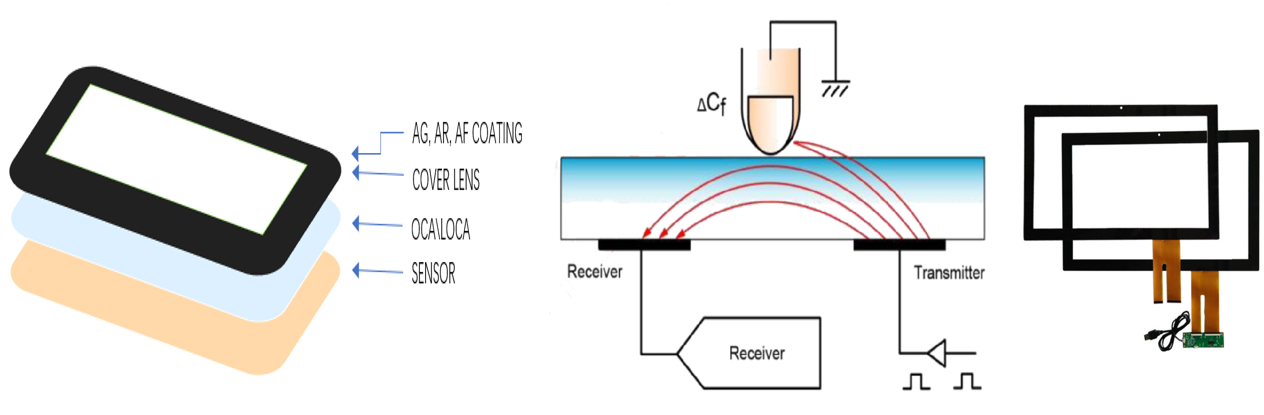
What DINGTOUCH can do:
• PCAP maximum size 65”
• Multi-touch (Touch screen can be customized to your needs.)
• Optical bonding service/air bonding
• LCD interface: HDMI/RGB/MIPI/LVDS/EDP, etc.
• PCAP interface: IIC/USB interface
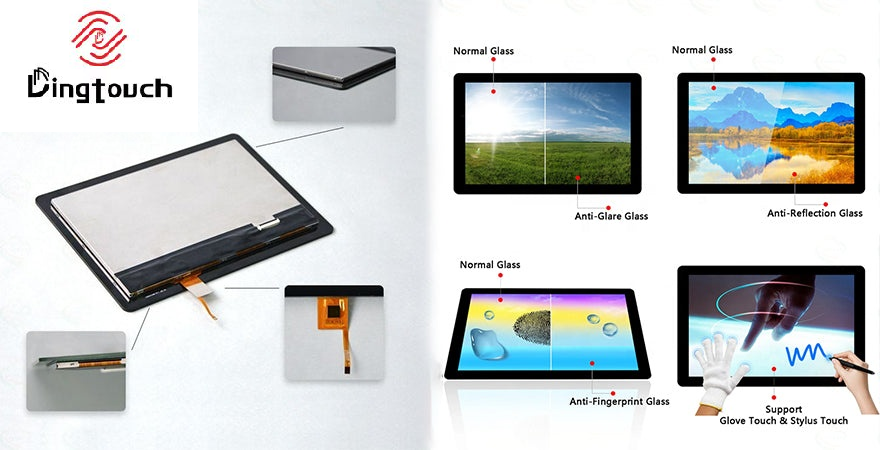
• CTP can customize the cover glass surface treatment process AG (anti-glare), AR (anti-reflection), AF (anti-fingerprint), waterproof, and glove touch
• Supports 0.55 mm-12 mm coverslip touch.
• Support operating temperature: -40℃-90℃.
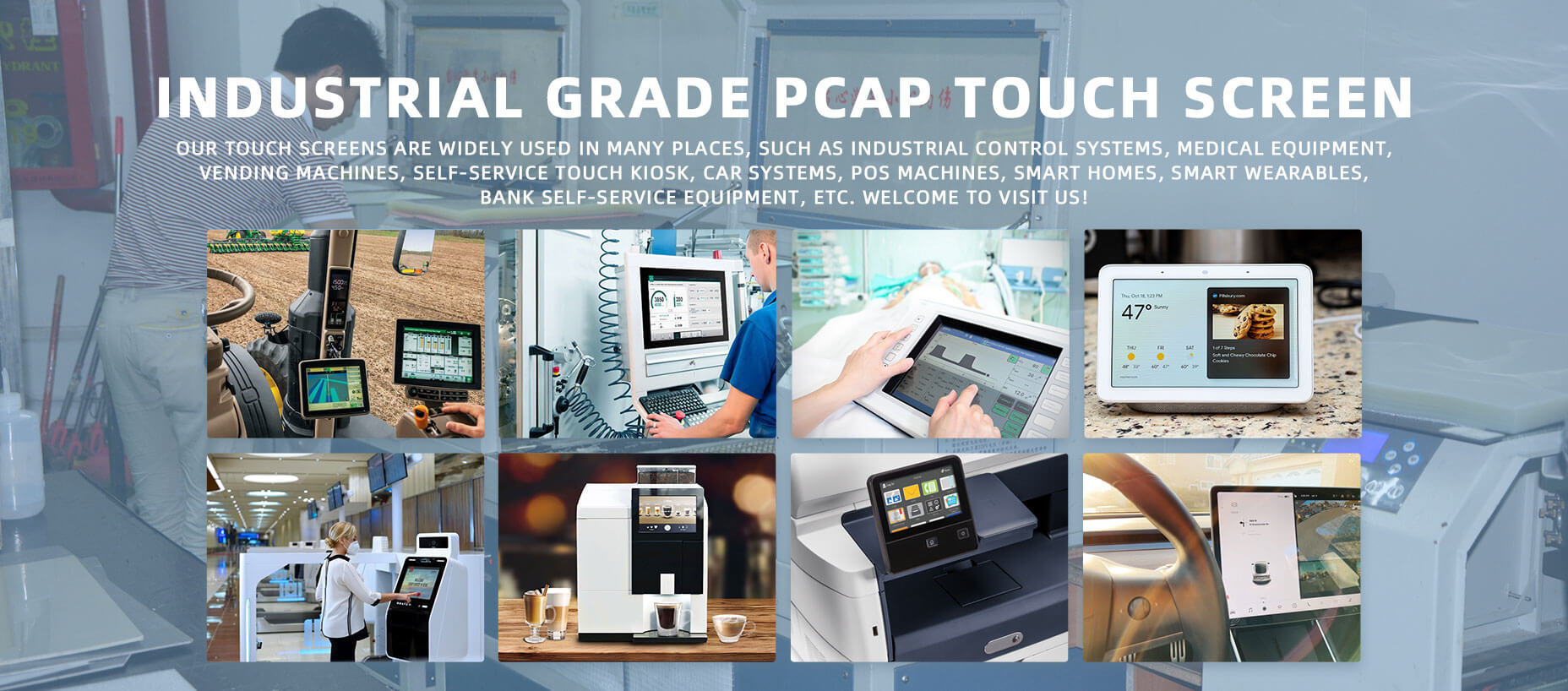
Dingtouch Industrial Capacitive Touch Screen Manufacturer
In conclusion, Dingtouch as a professional touch screen manufacturer with more than 10 years touch screen experience.We have many capacitive touch screen. Such as 5 inch touch screen,7 inch touch screen,10.1inch touch screen,15 inch touch screen,15.6 inch touch screen,17 inch touch screen,18.5 inch touch screen,19 inch touch screen,21.5 inch touch screen,32 inch touch screen, However, we also welcome to customize your own touch screen . Contact our team today to learn what capacitive touch screen are best for our retail business needs.
Contact us NOW! sales@szdingtouch.com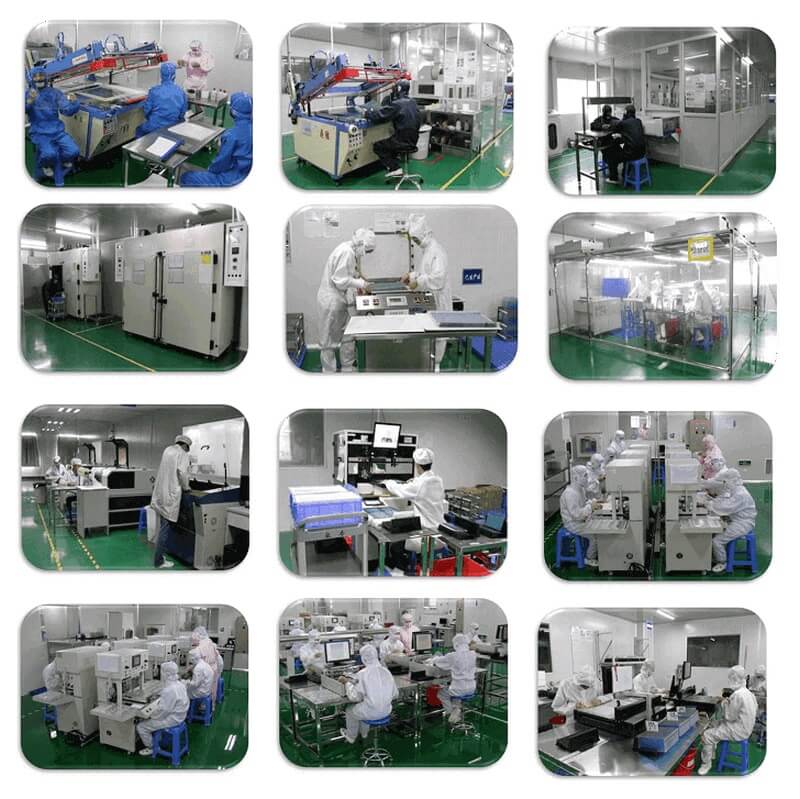
#Medicaltouchscreencalibration, #capacitivetouchcalibrationguide, #IEC60601touchscreen, #DINGTouchmedicaldisplay, #touchscreenaccuracy, #touchscreen driftfix, #medicalequipmenttouchsolutions, #IP65touchpanel, #IK10medicaltouchscreen, #glove touch medical monitor,#ILITEKTouchControllerICSelectionGuide ,#OCAtoOCR #GT911,#CustomizedWideTemperatureTouchScreenSolutions,#Waterproof Touchscreen,
#highbrightnessLCD, #sunlightreadabledisplay,#industrialLCDbacklight, #outdoor displaymodule, #customLCDsolution, #1000–2000nitsdisplay, #DINGTouchtouchscreen.
DINGTouch — Custom Touch Display Solutions Expert
Every touch, clear and precise, ready for any environment.
Every touch, clear and precise, ready for any environment.
CATEGORIES
CONTACT US
Contact: Dingtouch
Phone: +8615815536116
Tel: +8615815536116
Email: sales@szdingtouch.com
Add: Building A, Bailu Plaza, No. 48, Gonghe Industrial Road, Gongle Community, Xixiang Street, Baoan District, Shenzhen,China. 518126
 Dingtouch