News
Industrial Touch Display for Factory Automation | Rugged Industrial Monitors | DINGTouch
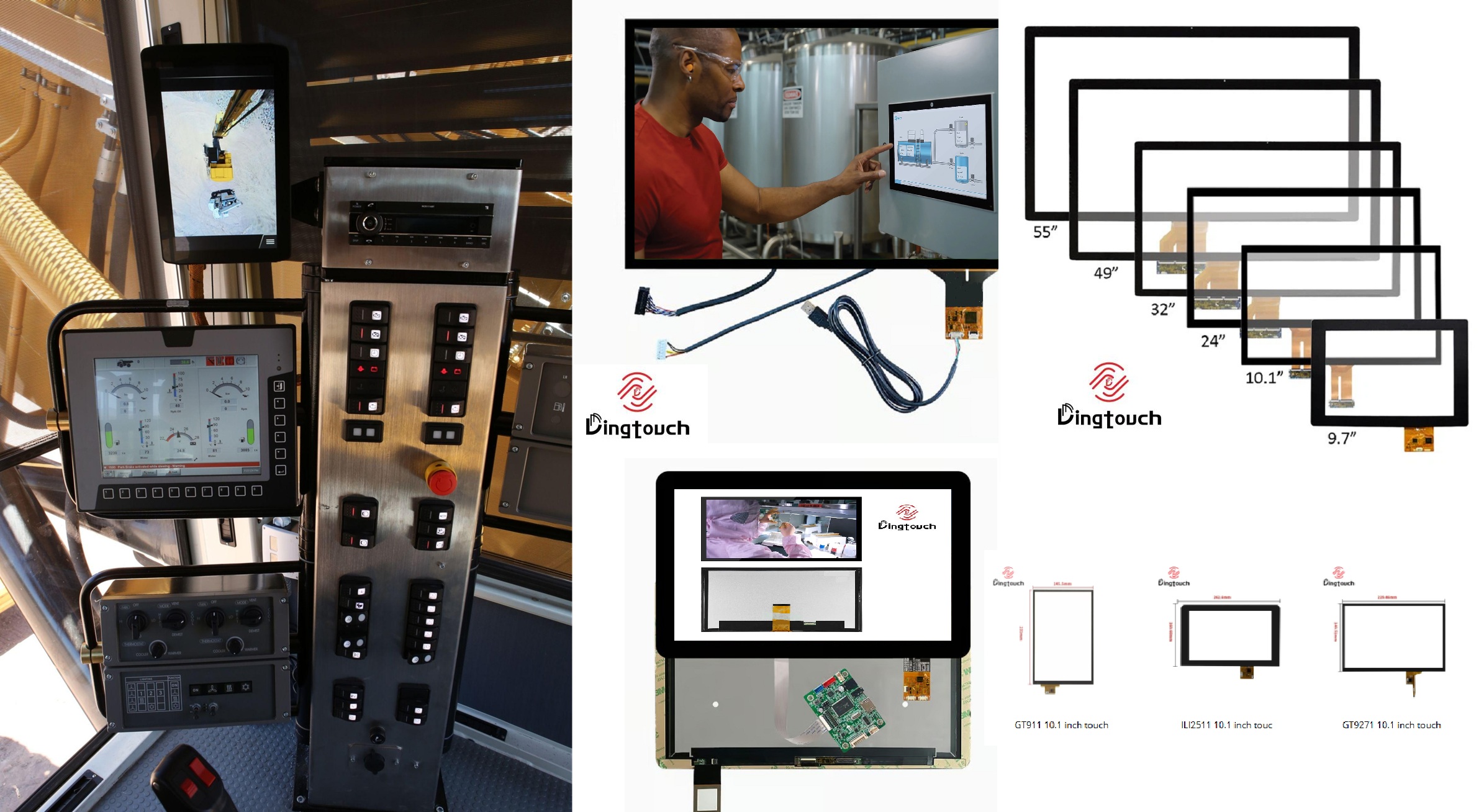
Why Industrial Display Are Different from Standard Monitors
Industrial display are not simply commercial monitors installed inside machines. They are purpose-built components designed to operate reliably in harsh environments where dust, vibration, moisture, temperature fluctuations, and continuous operation are part of daily production.
Unfortunately, one of the most expensive mistakes in industrial system design is treating an industrial display as a standard office monitor.
In manufacturing facilities, production lines, control rooms, and automation systems, displays serve as the primary interface between operators and machines. When a display fails, becomes unreadable, or stops responding, production efficiency, process control, and workplace safety can be directly affected.
For engineers and system integrators, the real question is not which monitor looks best on a specification sheet, but which display can continue operating reliably year after year after deployment.
Why Standard Commercial Display Fail in Industrial Applications
Commercial monitors are designed for offices, retail environments, and consumer electronics. Industrial environments expose weaknesses that standard displays were never engineered to withstand.
Common failure points include:
Structural Deformation
Plastic housings can warp over time under vibration, mechanical stress, and temperature changes.
Dust and Moisture Ingress
Insufficient sealing allows contaminants to enter internal electronics, leading to corrosion, short circuits, and display failures.
Electrical Instability
Factory environments often experience voltage fluctuations, electromagnetic interference (EMI), and power noise. Consumer-grade power circuits are rarely designed to tolerate these conditions.
Thermal Stress
Continuous operation generates heat. Without proper thermal management, display performance deteriorates and component lifespan is significantly shortened.
Product Obsolescence
Perhaps the most overlooked issue is the short lifecycle of consumer products. Engineers may be forced into costly redesigns and requalification processes when displays become unavailable after only a few years.
These challenges create a predictable failure pattern whenever non-industrial hardware is deployed in manufacturing environments.
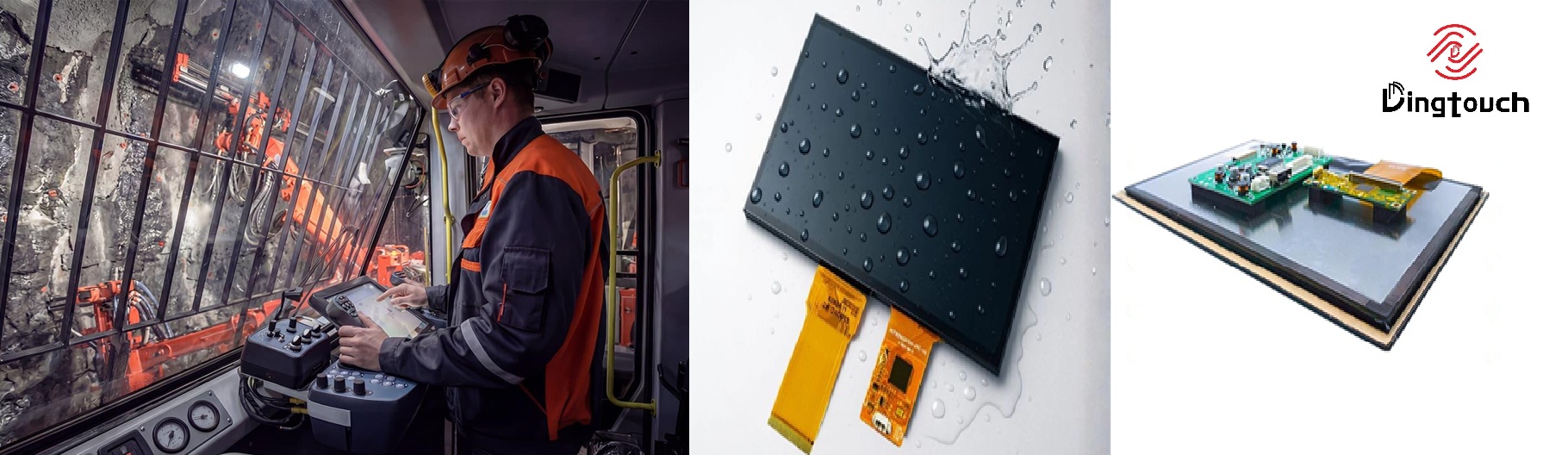
What Defines a True Industrial Display or HMI touchscreen?
A genuine industrial display is engineered to maintain stable performance under demanding operating conditions while integrating seamlessly into industrial control systems.
Several critical characteristics distinguish industrial-grade displays from standard monitors.
Rugged Mechanical Construction
A strong metal enclosure provides long-term structural stability and resistance to vibration, shock, and mechanical impact.
Industrial displays are often installed on machinery that operates continuously, making mechanical durability essential for long service life.
IP-Rated Environmental Protection
Industrial environments inevitably expose equipment to dust, oil mist, cleaning chemicals, and moisture.
Displays with IP65 or IP66 protection ratings offer reliable protection against contaminants and are suitable for most factory-floor applications.
Without proper sealing, even minor environmental exposure can significantly reduce equipment lifespan.
Industrial Power Stability
Industrial systems commonly operate on 12V or 24V DC power architectures where voltage fluctuations are normal.
Industrial monitors are designed with robust power protection circuits capable of handling:
- Voltage spikes
- Electrical noise
- Power interruptions
- Electromagnetic interference (EMI)
Stable operation under unstable power conditions is a critical requirement for industrial automation systems.
Thermal Management for 24/7 Operation
Heat is one of the primary causes of electronic component failure.
Industrial displays incorporate optimized thermal design, industrial-grade components, and efficient heat dissipation systems to support continuous operation around the clock.
Proper thermal management directly impacts reliability and product lifespan.
Long-Term Product Availability
For OEM manufacturers and system integrators, product lifecycle support is often more important than technical specifications.
Industrial displays should remain available throughout the lifecycle of the equipment they support, ensuring:
- Reduced redesign costs
- Easier maintenance
- Consistent qualification standards
- Long-term spare part availability
Designed for Seamless Industrial Integration
Industrial displays are rarely standalone products.
They function as integrated components within larger systems and must fit seamlessly into mechanical, electrical, and software architectures.
Key integration requirements include:
Flexible Installation Options
- Panel Mount
- Open Frame
- VESA Mount
- Rack Mount
Multiple Industrial Interfaces
- HDMI
- VGA
- DisplayPort
- USB Touch
- RS232
- LVDS
- eDP
Consistent Product Architecture
Once a display platform has been validated, engineers should be able to deploy the same architecture across multiple machine models without repeating extensive testing.
Consistency reduces engineering effort and accelerates deployment.
Typical Applications of Industrial Touch Display
Industrial touch display play a critical role in factory automation and industrial control systems.
Common applications include:
Human Machine Interface (HMI)
Machine operation and process control.
Factory Automation Equipment
Real-time monitoring of manufacturing processes.
Industrial Control Cabinets
Control and visualization for production equipment.
SCADA and Process Monitoring Systems
Monitoring production performance and system status.
CCTV and Security Monitoring
Industrial surveillance and facility management.
Access Control and Time Attendance Systems
Employee management and facility security.
Diagnostic and Service Terminals
Equipment maintenance and troubleshooting.
In these environments, displays become mission-critical infrastructure where downtime can result in significant operational losses.
The Platform-Based Approach to Industrial Display Selection
Most system integrators are not selecting a display for a single project.
Instead, they are building a standardized hardware platform that can support multiple products, customers, and deployment environments over many years.
At DINGTouch, our industrial display and HMI touchscreen solutions are developed around a unified mechanical and electronic architecture.
This platform approach provides:
- Simplified engineering integration
- Reduced qualification costs
- Consistent user experience
- Easier procurement management
- Long-term supply stability
The result is lower total ownership cost and greater deployment confidence.
Choosing an Industrial Display Is a Risk Management Decision
Selecting an industrial display is ultimately a decision about reliability, operational continuity, and long-term risk reduction.
The right industrial touchscreen monitor integrates smoothly, operates reliably, and remains available throughout the life of the system.
The wrong display introduces unnecessary failure points into critical infrastructure where unexpected downtime is unacceptable.
Understanding these differences before deployment—not after the first field failure—is what separates successful industrial automation projects from costly lessons.
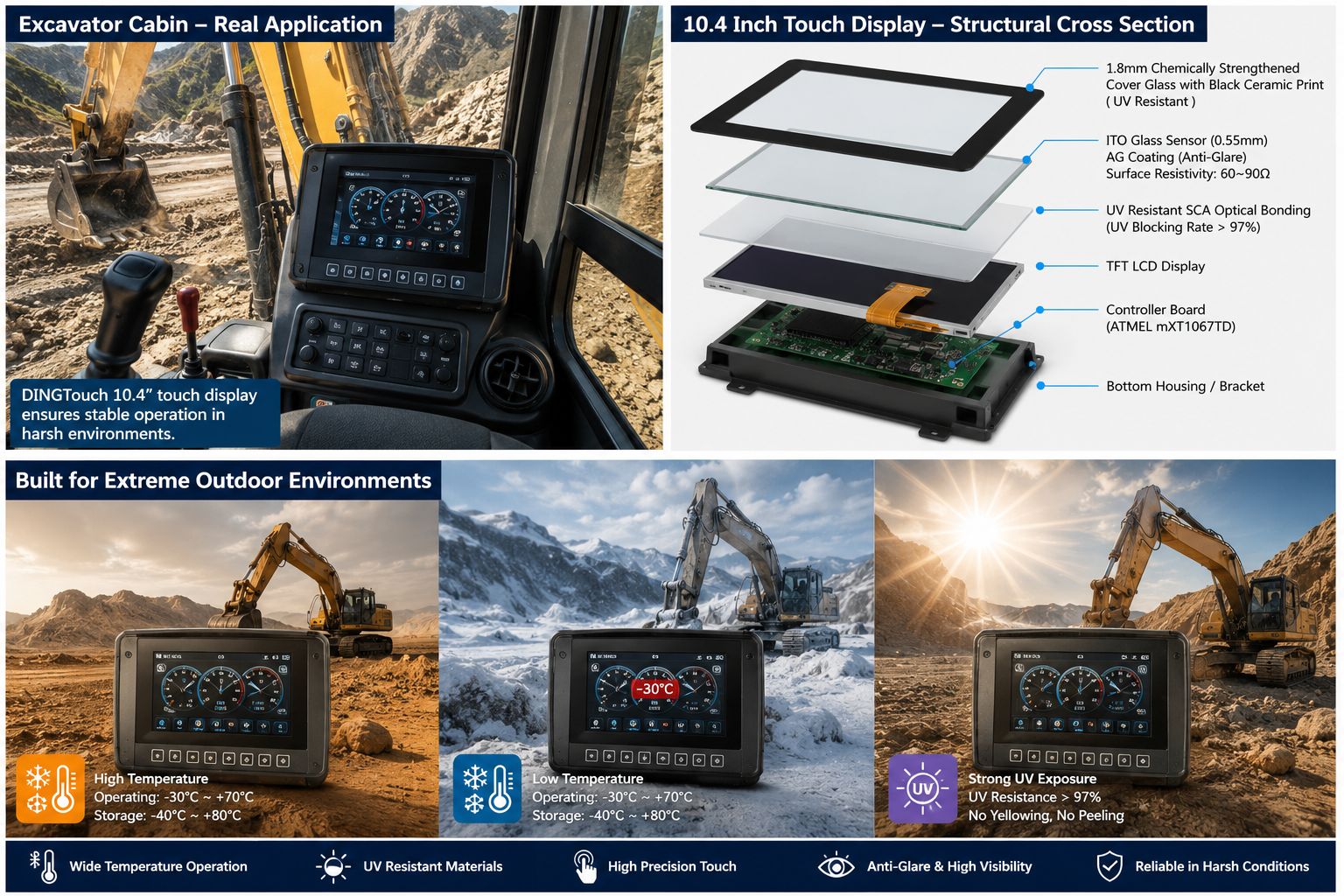 Why Choose DINGTouch Industrial Touch Display Solutions?
DINGTouch specializes in custom industrial touchscreens, TFT LCD display, and integrated touch display solutions for industrial automation, medical equipment, self-service kiosks, transportation systems, and smart manufacturing applications.
Available Sizes
Customization Options
- PCAP Capacitive Touch
- IK10 Vandal-Proof Glass
- Optical Bonding (OCA)
- High Brightness up to 2000 nits
- AG / AR / AF Surface Treatments
- Waterproof Designs
- Glove Touch Support
- Wide Temperature Operation
- EMI/EMC Optimization
Industrial Certifications
- ISO9001:2015
- IATF16949:2016
- RoHS
- REACH
Explore DINGTouch Industrial Display Solutions
Whether you are designing an HMI control panel, factory automation system, industrial computer, or custom equipment interface, DINGTouch provides reliable industrial touch display solutions engineered for long-term deployment.
CATEGORIES
CONTACT US
Contact: Dingtouch
Phone: +8615815536116
Tel: +8615815536116
Email: sales@szdingtouch.com
Add: Building A, Bailu Plaza, No. 48, Gonghe Industrial Road, Gongle Community, Xixiang Street, Baoan District, Shenzhen,China. 518126
 Dingtouch