News
TFT LCD Displays: The Ultimate 2026 Guide for Industrial and Medical Applications — How to Choose High-Performance TFT Display Solutions
 TFT LCD Displays: The Ultimate 2026 Guide for Industrial and Medical Applications — How to Choose High-Performance TFT Display Solutions
Table of Contents
- Introduction: Why TFT LCD Remains the Core Display Technology for Industrial and Medical Applications
- What Is TFT LCD Technology?
- How TFT LCD Displays Work
-
Advantages and Challenges in Industrial and Medical B2B Applications
- 4.1 Core Advantages of TFT LCD
- 4.2 Limitations and Optimization Solutions
- TFT LCD Applications in Industrial and Medical Industries
- TFT Display Technology Trends and Innovations in 2026
- B2B Buying Guide: How to Choose the Right TFT LCD Display
- Conclusion
- Frequently Asked Questions (FAQ)
 Introduction: Why TFT LCD Remains the Core Display Technology for Industrial and Medical Applications
The year 2026 continues to drive rapid growth in industrial automation, smart medical equipment, and digital terminal technologies. From intelligent factories to modern hospitals, user interaction increasingly depends on display performance and reliability.
Among various display technologies, TFT LCD (Thin Film Transistor Liquid Crystal Display) remains the preferred choice in industrial and medical markets. It provides an ideal balance between reliability, cost efficiency, long-term availability, and image quality, making it especially suitable for mission-critical equipment that requires continuous operation.
As a professional display solution provider, DINGTouch specializes in the development, design, and manufacturing of industrial TFT LCD and touch display modules, offering:
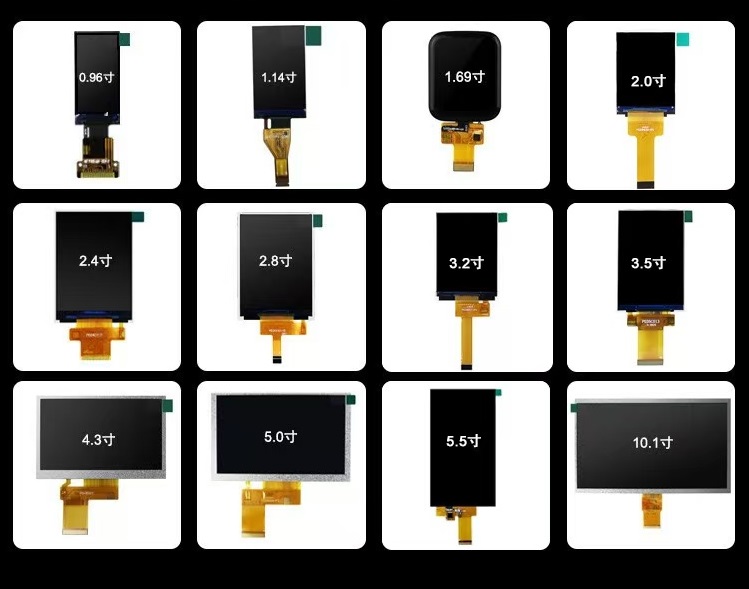
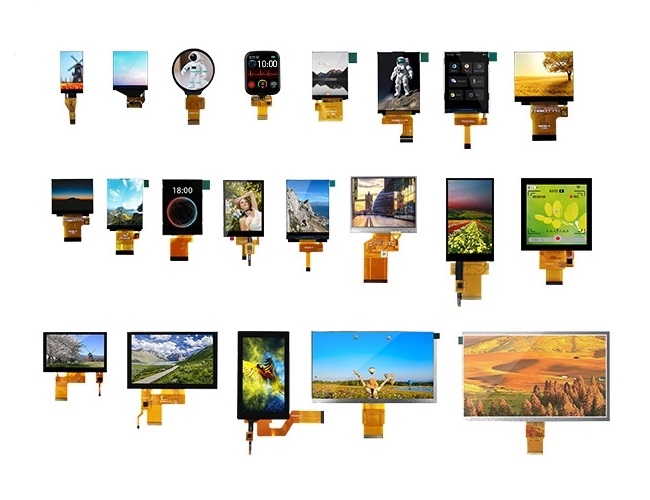
- Custom display solutions from 0.96 inches to 65 inches
- Industrial-grade wide-temperature display modules
- Medical-grade touch displays
- High-brightness outdoor display solutions
- Capacitive and resistive touch integration solutions
Whether for industrial Human Machine Interfaces (HMI), medical monitoring devices, or outdoor smart terminals, DINGTouch delivers highly customized display solutions.
What Is TFT LCD Technology?
TFT LCD stands for Thin Film Transistor Liquid Crystal Display technology. Its key feature is the use of an independent thin-film transistor behind every pixel for precise control.
Compared with traditional passive matrix LCD, TFT technology provides:
✔ Faster response times
✔ Higher image clarity
✔ More accurate color reproduction
✔ Higher refresh rates
✔ Greater long-term operational stability
These advantages make TFT LCD ideal for:
- Industrial control terminals
- Medical diagnostic equipment
- Automation systems
- Smart instruments
- Automotive displays
- Smart home control devices
For industrial applications, long product life cycles and supply consistency are essential. DINGTouch ensures stable product availability through strict supply chain management and quality control systems.
How TFT LCD Displays Work
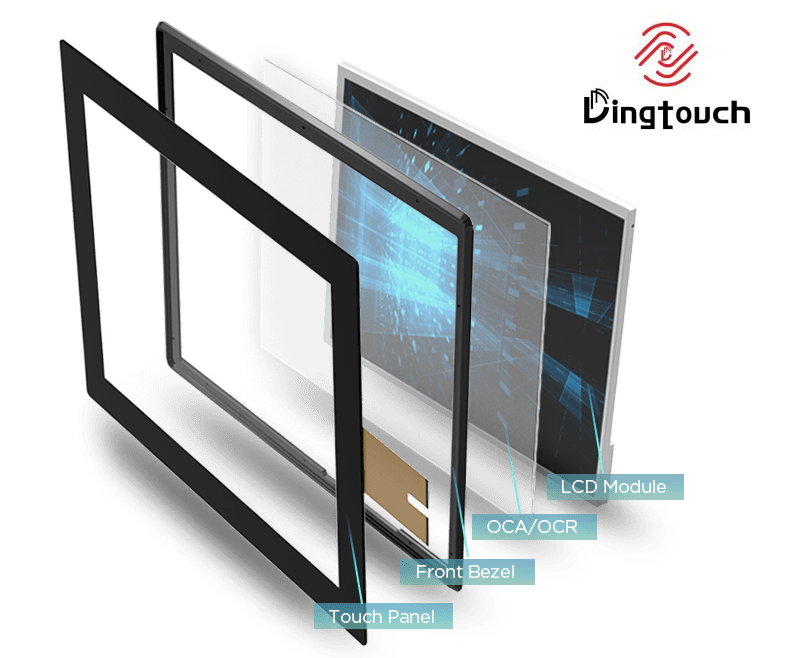
A TFT LCD display structure mainly consists of:
Liquid Crystal Layer
The liquid crystal layer is positioned between two glass substrates and controls light transmission by changing the orientation of liquid crystal molecules.
TFT Transistor Array
Each pixel is equipped with an independent transistor for precise image control.
RGB Subpixels
Every pixel contains red, green, and blue subpixels to generate full-color images.
LED Backlight System
The LED backlight provides a uniform light source and has become the standard solution due to lower power consumption compared to traditional CCFL systems.
In recent years, IPS (In-Plane Switching) technology has significantly improved display performance by offering:
- Up to 178° ultra-wide viewing angles
- Better color consistency
- Reduced color shift
- Improved viewing experiences for multiple users
This makes IPS displays ideal for:
- Medical surgical systems
- Factory control centers
- Data monitoring terminals
- Multi-user collaborative environments
 Advantages and Challenges in Industrial and Medical B2B Applications
4.1 Core Advantages of TFT LCD
High-Resolution Display Capability
Supports resolutions from WVGA (800×480) to ultra-high-definition 4K, allowing detailed image and data visualization.
Suitable for:
- Medical imaging systems
- Industrial process visualization
- Real-time monitoring systems
Fast Response Time
Typical response times below 20 ms support rapid updates and dynamic content display.
Long Service Life
LED backlight lifetime typically exceeds:
50,000+ hours
This significantly reduces maintenance costs.
Lower Power Consumption
LED backlight systems provide:
- Higher energy efficiency
- Better brightness uniformity
- Lower heat generation
Industrial-Grade Durability
Industrial TFT modules generally support:
- Operating temperatures from -30°C to +85°C
- Shock resistance
- Dust and moisture protection
- Continuous long-term operation
4.2 Limitations and Optimization Solutions
Some standard TN panels may experience:
- Limited viewing angles
- Color shifting
- Variations in backlight uniformity
To address these issues, DINGTouch provides:
IPS Wide Viewing Angle Technology
Achieves viewing angles up to 178°.
High-Brightness Display Solutions
Brightness levels up to:
1000–1400 nits
Suitable for:
- Outdoor devices
- Agricultural machinery
- Industrial control cabinets
- Direct sunlight environments
Optical Bonding Technology
Key benefits include:
- Reduced reflections
- Enhanced sunlight readability
- Prevention of internal fogging
- Increased impact resistance
TFT LCD Applications in Industrial and Medical Industries
Industrial Applications
Industrial automation heavily depends on reliable display systems.
Human Machine Interface (HMI)
Applications include:
- Factory automation systems
- PLC control terminals
- Intelligent manufacturing equipment
Instrument Panels and Control Interfaces
Applications include:
- Power equipment
- Construction machinery
- Agricultural equipment
- Energy management systems
Smart Self-Service Terminals
Applications include:
- Industrial information terminals
- Self-service systems
- Smart logistics equipment
Medical Applications
Medical equipment requires extremely high standards for display precision and long-term reliability.
Patient Monitoring Systems
Applications include:
- Patient monitors
- Vital signs display systems
Medical Imaging Equipment
Applications include:
- Ultrasound systems
- Endoscopic devices
- Diagnostic instruments
Surgical Display Systems
Applications include:
- Real-time image display
- Multi-screen monitoring systems
DINGTouchfollows industry-standard manufacturing procedures and provides customized medical display solutions according to customer requirements.
TFT Display Technology Trends and Innovations in 2026
| Trend | Technology Direction | Market Impact |
|---|---|---|
| Higher Resolution | Full HD → 4K | Enhanced image detail |
| High-Speed Interfaces | Advanced MIPI and LVDS | Simplified system integration |
| AI-Enhanced Displays | Adaptive brightness and diagnostics | Improved user experience |
| Sustainable Manufacturing | Low power consumption and eco-friendly materials | Supports sustainability goals |
| High-Brightness Displays | Up to 1400 nits | Expands outdoor applications |
These technologies will further improve industrial TFT display performance while reducing Total Cost of Ownership (TCO).
B2B Buying Guide: How to Choose the Right TFT LCD Display
When selecting a display solution, consider the following specifications:
Display Size and Resolution
Choose according to application requirements:
- WVGA (800×480)
- HD
- Full HD
- 4K
Brightness Requirements
Indoor applications:
≥ 500 nits
Outdoor applications:
≥ 1000 nits
Operating Temperature
Recommended for industrial environments:
-30°C to +85°C
Interface Compatibility
Verify support for:
- MIPI DSI
- LVDS
- HDMI
- RGB
- USB
Touch Technology
Capacitive Touch (PCAP)
Recommended for:
- Multi-touch interaction
- High-sensitivity operation
Resistive Touch
Recommended for:
- Gloved operation
- Industrial environments
Certification Requirements
Key certifications include:
- ISO13485 (Medical)
- IATF16949 (Automotive)
- RoHS
- REACH
B2B Purchasing Quick Checklist
| Item | Recommended Specification |
|---|---|
| Brightness | Indoor ≥500 nits / Outdoor ≥1000 nits |
| Operating Temperature | -30°C to +85°C |
| Backlight Lifetime | ≥50,000 hours |
| Interface | LVDS / MIPI / HDMI |
| Certifications | ISO13485 / IATF16949 |
Conclusion: Mature Technology Continues to Deliver Long-Term Value
As we move through 2026, TFT LCD remains one of the most competitive display technologies for industrial and medical applications. With advancements in high brightness, AI-assisted displays, wide-temperature operation, and intelligent touch technology, its application range continues to expand.
For OEM and B2B buyers, selecting a partner with a stable supply chain, certified manufacturing processes, and customization capabilities is critical.
DINGTouch leverages years of display industry experience, strong R&D capabilities, and reliable manufacturing systems to provide stable, high-performance, and customizable display solutions for industrial and medical markets.
Frequently Asked Questions (FAQ)
Q1: What is the difference between TFT LCD and traditional LCD technology?
TFT LCD uses active matrix technology with an independent transistor for each pixel, delivering faster response times, higher refresh rates, and improved display quality compared to traditional passive LCD technology.
Q2: Why do medical devices require wide-temperature TFT displays?
Wide-temperature designs maintain stable brightness and display performance under changing environmental conditions, improving equipment reliability.
Q3: What brightness level is recommended for outdoor industrial equipment?
Typically:
1000–1400 nits
This ensures clear visibility even under direct sunlight.
Q4: Which interface is recommended for industrial HMI systems?
MIPI is suitable for compact embedded systems, LVDS provides stable long-distance transmission, and HDMI works well for external computing devices.
Q5: How can buyers evaluate a supplier’s long-term supply capability?
Consider evaluating:
- Industry certifications
- Supply chain stability
- Long-term product availability commitments
- Customization capabilities
- Technical support services
RELATED NEWS
- Customer support2021-03-26
- Industrial Touch screen for Kiosks and V2021-04-08
- How are touchscreen manufactured2021-04-09
- Why a Touch Screen Overlay is a Good Ide2021-04-10
- Get Customized Touch Screen Panel in Onl2021-04-13
CATEGORIES
CONTACT US
Contact: Dingtouch
Phone: +8615815536116
Tel: +8615815536116
Email: sales@szdingtouch.com
Add: Building A, Bailu Plaza, No. 48, Gonghe Industrial Road, Gongle Community, Xixiang Street, Baoan District, Shenzhen,China. 518126
 Dingtouch